Friday, January 29, 2021

My Reverse CV

Photo by Dylan Collette on Unsplash
If you've watched me from a distance, it might look like things come easily for me or that everything works in my favor. It's simply not true. 

As academics we usually don't advertise our failures -- rejections, unsuccessful applications, awards we didn't win, discouragements -- at least not publicly. But failure is par for the course. 

Academics just getting started need to know this. It's demoralizing to be rejected if you're assuming that your career is over before it even gets started.


So here's a select list of my academic disappointments spanning the past 10 years (at least those I could recall today):

  • article rejected by JETS
  • article rejected by Tyndale Bulletin
  • did horribly on my first Hebrew exam in seminary (after trying to teach myself)
  • PhD application rejected by Princeton
  • PhD application accepted provisionally (with deficiencies) by Asbury Theological Seminary
  • barely passed my Theological German exam
  • did not score well on the written portion of the GRE
  • a whole chapter of my dissertation, representing months of work, hit the cutting floor
  • first dissertation submission was unsuccessful (18 more months of work to do before resubmission)
  • 7 unsuccessful teaching job applications (Ambrose University, George Fox University [3x], Palm Beach Atlantic University, Regent College, Biola University [withdrew due to dissertation delay])
  • article rejected by New Man Magazine
  • article rejected by Christianity Today
  • grant application rejected by the Wabash Center for Teaching and Learning
  • dissertation rejected for publication in the Siphrut series (Eisenbrauns)
  • ETS paper proposal rejected (Psalms)
  • SBL paper proposal rejected (Biblical Law)
  • did not win the SBL Regional Scholar Award for the Pacific NW after being nominated
  • unsuccessful book proposal with Zondervan
  • unsuccessful book ideas with Eerdmans and IVP
  • Bearing God's Name did not win the following awards for which it was entered: Word Guild, Alberta Book Award, Foundations (Midwestern), IVP Reader's Choice Award, Christianity Today

When I received my first rejection letter, I shared the sad news with one of my mentors. He told me he could wallpaper a whole room of his house with rejection letters. (I was surprised to hear that!) Not every idea is a good one. Not every application is the right timing. Sometimes the rejection has very little to do with you. Sometimes the reviewer is just having a bad day.

That failed Hebrew exam? I went back to the books, tried again, and passed.

Those discouraging PhD applications don't tell the whole story, either. I ended up with a full-ride scholarship to Wheaton College with a stipend, in spite of my mediocre score on the written portion of the GRE.

That dissertation that didn't make it to the defense the first time? Two years later I defended successfully with only minor revisions (a committee member said "flying colors"). And although the first series I pitched it to rejected it, the second one (with the SAME publisher!) said "yes" and the book went on to win a prestigious award from the Canadian Society of Biblical Studies.

That dissertation chapter that hit the cutting floor? It became the basis for Bearing God's Name, which is in its 7th printing in just 13 months (and has almost won several awards).

Those failed job applications? They have led to some wonderful friendships with people who were on hiring committees as well as those who landed the jobs. Those applications have led to other opportunities as well -- speaking and writing and podcast interviews and collaboration. In short, I learned a lot and gained new friends in the process. Just today I spoke at Regent College, a connection facilitated by my unsuccessful job interview there.

Remembering these "failures" reminds me that no rejection spells the end of God's calling on my life, or of yours. In some seasons, it takes creativity to find ways to be faithful to God's calling. I landed a job here on the frozen prairies of Alberta at a small school where I am the whole Old Testament department. Not everyone is that lucky. 

If you're still waiting for good news, hang in there. Keep plugging away at your work. Rejection is not a dead end. It's simply a step on the journey. I can't promise that your hard work will turn into a tenure-track position, but in my experience, none of gets wasted. Your day will come.

Tuesday, January 19, 2021

Whose Side is God On? An Inauguration Day Reflection

Four years ago, President Donald Trump took the oath of office and all over America hundreds of thousands of people took to the streets in protest, some of them violent, all of them deeply concerned. Christians from Catholic, mainline, Black, and Brown churches expressed shock and concern over the appointment of a man who seemed to delight in exploiting women and to cozy up to dictators while snubbing America's allies. They feared that the most vulnerable members of our cities, especially immigrants and people of color, would be further marginalized by an administration aimed at the angst of blue-collar workers in rural America who were watching their way of life disappear. Meanwhile, many Evangelicals celebrated the possibility of greater religious freedom, conservative appointments to the judiciary, and legislation that upheld traditional family values and protected the unborn. Charismatic prophets heralded President Trump as God's man for the job.

Today, President Joe Biden will take the oath of office. Those troubled by the outgoing administration are breathing a sigh of relief, hoping for four years of police and prison reform, support for schools, greater equality women and minorities, and better cooperation in international concerns such as immigration and climate change. It remains to be seen how President Trump's supporters will respond, but the breach of the US Capitol building two weeks ago is still a vivid memory. Evangelicals who celebrated a Trump presidency are nervous about losing their freedom -- some desperate enough to break past police barriers to make their voices heard. The Coronavirus pandemic has already curtailed religious gatherings. Evangelicals fear that a Biden presidency will mean more pandemic-related restrictions that will cripple businesses and prevent the church from being the church. They fear a legislative agenda that will make it more difficult for faith-based organizations to live by their values.

Our nation is deeply divided. Many families are split right down the middle over politics.

Photo: Joshua Hoehne on Unsplash
So whose side is God on?

Scripture provides a crystal clear answer to this question. Tucked away in the book of Joshua is a brief episode that should stop every one of us in our tracks. It stopped Joshua. It stopped me.

First, some context. Moses died. Before he did so, he passed the baton to Joshua as Israel's new leader. The people have just crossed the Jordan River and are preparing to take up residence in the land God promised them. Their first battle will be at Jericho. 

Joshua is alone, apparently scouting the territory around Jericho, when he encounters a man with sword drawn. Joshua asks him a logical question:

"Are you for us or for our enemies?" (Joshua 5:13 NIV)

The answer comes loud and clear:

"Neither," he replied, "but as the commander of the army of the LORD I have now come." (Joshua 5:14 NIV)

Neither?! This is remarkable. Joshua is the authorized leader of the only nation with whom Yahweh ("the LORD" in English translations) has made a covenant at Sinai. He has instructed them to enter the land and drive out its inhabitants. He has promised them this land. And yet -- with all these things in their favor, the commander of Yahweh's armies will not pledge exclusive loyalty to the Israelites.

God is not on their side.

And he is not on ours.

God does not take sides. Not then and not now. He acts of his own free will. We are the ones who must decide if we will be on God's side. He refuses to back human agendas. He calls us to surrender in obedience to his will.

Joshua gets this. He falls on his face before the angel of Yahweh, asking if God has a command he needs to fulfill.

If God was not unequivocally on the side of the Israelites -- the covenant people he rescued from Egypt and led through the wilderness to the land he promised -- if God is not on their side, then God is not on ours. He does not side with the United States (or modern day Israel, for that matter!), and he does not side with the Republicans or the Democrats. God does not take sides. Instead, he asks our full and complete obedience. Our allegiance to anyone other than God is idolatry. 

The truth of the angel's words is borne out in the chapters that follow. Joshua and his soldiers win their battle with Jericho, having followed God's unconventional instructions for war (Joshua 6). Feeling cocky, they attack the next city with only part of their army (Joshua 7). They lose miserably. God does not fight for them because a single Israelite man has violated God's strict instructions regarding the battle at Jericho. Achan keeps some of the plunder for himself, hiding it under his tent, rather than devoting everything to God. This battle was never meant to make the Israelites rich. They were not to fight out of greed, but out of obedience. The moment they forget this, they lose their divine protection.

God knows what's under the tent, then and now.

He's asking us to clean house. To search our hearts. To release our hold on what does not rightly belong to us.

God did not lose this election. Neither did he win. He wasn't running for office. 

Joshua 5 offers American Christians the foundation for a renewed political theology, one not tied to a political party or a certain candidate, but marked by deep humility. We must stop presuming that God is on our side, supporting our favorite candidate. It's the other way around. This scene issues an invitation for us to bow before the presence of the only one who deserves our allegiance. This is the only way forward.

Friday, January 1, 2021

ICYMI: Articles Around the Web in 2020


Normally at the end of the year I post a list of top blog posts of the year from my own blog (and I might still do that), but if you're a regular reader, you might have noticed that my blog has been quieter this year. In that relative silence, I was busy writing for other websites. I keep a complete list of articles here, but that page doesn't notify subscribers when I update it, so here's a handy list of the 15 articles I published elsewhere in 2020. 

From reflecting on Exodus to COVID, and from teaching and writing to Deuteronomy, these are the things that have been on my mind this year. I've starred a few of my personal favorites.

The Art of Taleh

* “Telling the Old, Old Story (Deut 26:5-10),” April 20, 2020.
The Biblical Mind
* "Freedom Fighters of the Exodus," November 17, 2020.

Canadian Society of Biblical Studies

"Misunderstanding Sinai? Author Interview with Carmen Imes," March 24, 2020.

Cateclesia

Re-Interpreting the Name Command (Exodus 20:7)” May 6, 2020.

Christianity Today

"Connections that Count," Jesus Creed, Dec 30, 2020. 

* "What God Sees" and "Peace in the Storm," Advent Devotional, Dec 2020.  

* "Church after COVID--Why bother going back?," Jesus Creed, Sept 28, 2020. Reblogged at ChurchLeaders.com, Oct 13, 2020. 

"2020: The Gift Nobody Wanted," Jesus Creed, June 23, 2020. 
"Finding Life in Limbo," Jesus Creed, March 19, 2020.

Political Theology Network

Prairie College

 "How Do You Know if a 'Bible College' is Right For You?" Prairie blog, February 2020.

The Well (InterVarsity's blog for Women in the Academy and Professions)

"Pursuing Tough Conversations with Students," September 3, 2020. 

"A Prayer for Writers," April 15, 2020. 
"Notes from the Pandemic: Social Distancing and the Presence of God," March 23, 2020. 

Thursday, December 31, 2020

A Fool-Proof Guide to the Evangelical Church Calendar

We’re about to ring in the new year, which will prompt a host of new diets, exercise plans, and decisions to bring the family to church (or at least tune in online!). Trying to decide which church to attend can be confusing if you don’t know how to tell one from the other. So here’s a handy-dandy visitor’s guide to your typical neighborhood evangelical church (that would include Baptist, non-denominational, “community” churches, anything with “evangelical” in the title, and pretty much any other church that lacks stained glass windows). 

Photo by John Price on Unsplash
Be encouraged -- being an evangelical is much easier than being Catholic, Anglican, or even Reformed. Our religious calendar is simple, with very few holidays to worry about. We promise not to bother you with obscure holidays such as Epiphany, Ash Wednesday, Maundy Thursday, Ascension Day, or Pentecost – whatever those are. For the majority of the year, you can simply check the entryway to Walmart and take your cues from there about any upcoming celebrations. We basically follow the secular calendar, and our décor will shift to match the seasons you already know by heart – winter, spring, summer, and fall.

So here’s what you need to know:

January 1 – Today’s the day to begin a new Bible read-through. Most evangelicals will burn out in mid-February when they get to Leviticus, but the truly devoted will finish the entire Bible a few days before the end of December.

Lent – This one is totally optional. The start date is rather mysterious, and you won’t hear about it at all in church, but if you follow the hipster Christians on Twitter, they'll let you know when they are signing off for lent and you can follow suit. The main idea is that you give up something you like until Easter (say, chocolate, or at least afternoon chocolate or whichever social media you can survive without). 

Palm Sunday – We recently decided to retire this one because it’s too difficult to corral the preschoolers around the sanctuary while they whack each other in the head with palm branches. You're welcome.

Good Friday – You can expect dim lighting and sad songs about Jesus’ death. But since we wouldn’t want anyone to feel depressed, we’ll throw in some upbeat songs at the end about how Jesus rose from the dead. You are guaranteed to leave encouraged.

Easter – This is when we celebrate Jesus’ resurrection. Ladies, if you are joining us in person, fancy hats and white shoes are no longer necessary, but if you are ever going to wear a dress, this is the time. Gentlemen, now is your chance to wear a tie without getting snide comments about “dressing up.” Kids can look forward to an Easter Egg Hunt in Sunday School.

Mother’s Day and Father’s Day – These are not in the Bible, but we are all about family, so we’ll hand out flowers to the moms and snack mix to the dads. If you don’t fit easily in either category, feel free to skip these Sundays.

Summer – Summer is the youth group's time to party. Bible studies are replaced by bonfires and barbecues. Ambitious churches will throw in a two-week mission trip to Mexico. Sunday sermons will be stand-alone, rather than part of a series, so that you can easily go on vacation without missing anything. Please make sure you’re in town for Vacation Bible School, because we’ll need all the help we can get herding kids from one station to another where they can eat Bible-inspired snacks and make crafts to clutter your refrigerator. There’s also likely to be an outdoor baptism service at a nearby lake, river, or pool.

In early July you can expect to see our national flag on stage, and the worship team will feature patriotic songs. This will ensure that the lines between patriotism and piety are sufficiently blurred so that you will never forget that God loves our country the most. 

September – Back-to-school Bible studies will start up again. Some of these will be on Zoom this year. If you are a working mom, you might be out of luck (no evening meetings for women), and if you’re a single dad or dual-career family, you’ll have to find your own childcare.

October - Don’t forget pastor appreciation month! You may give online or in person. On the 31st, since we’re committed to engaging with our community, we will sponsor a “harvest party” or “trunk or treat” for the neighborhood. We don’t want anyone to feel weird (like we’re “religious” or anything), so we’ll decorate with spider webs and skeletons and have friendly witches hand out candy. 

November – A few weeks prior to the national election we’ll provide voters’ guides so that you don’t have to think too deeply about politics. Someone else has done the dirty work, so you can easily choose the candidates who side with your pastor on hot-button issues.

Thanksgiving – Thanksgiving is pretty low key. We won’t hold a church service so that you can spend your day preparing your big meal and watching football. You can easily redeem this holiday by reading Psalm 100 and saying what you are thankful for before you stuff yourself.

Photo by Rodion Kutsaev on Unsplash
Advent
– Beginning the last Sunday in November, serious evangelicals begin reading a daily Christmas-themed devotional. At the very least, you should buy one of those cardboard calendars at Walmart with a little chocolate for each day until Christmas. To avoid a family feud, buy one for each child in your home. We’ll decorate the sanctuary with lighted Christmas trees to get everyone in the holiday spirit.

Christmas Eve – We’ll offer several candlelight services to accommodate all the families that show up out of the woodwork. Just to make everyone feel right at home, Santa Claus will likely join the festivities. Please talk with your little ones about fire safety before you come because we’ll be handing them real candles to light during “Silent Night.” You won’t hear much about Mary (that’s a Catholic thing), but we will sing “Mary Did You Know?” (even though she did). 

Christmas Day – Evangelical churches don’t actually hold services on Christmas Day any more because families will be busy opening presents. But don’t worry! Reading Luke 2 before you tear into the pile under the Christmas tree will remind everyone of the reason for the season.

And that’s all there is to it! Didn’t I tell you this would be easy? You have a few days before January 1 to binge read the rest of the Bible so you can finish on time. Next year, you can change things up a bit by using a different Bible read-through plan.

The best thing about being an evangelical is that we won’t require much from you during our services -- no kneeling or responsive reading or awkward confessions or drinking out of a common cup (hello, germs!). If you’re inspired during the music, feel free to raise a hand or two in the air (the chorus is usually a good time to do that). Think of the worship time like a concert and the sermon like a TED talk. We’ll provide the coffee. If you’d rather watch the service from home in your pj’s, you won’t miss much (except childcare). You can send your donation through the church website. 

So glad to have you join us!


Saturday, December 26, 2020

Best Books of 2020

As is my custom, I'm writing to tell you about the most important books I read this year. The only criteria are that I read them in full and found them well written, helpful, and worth sharing. I read 45 books this year, ranging from youth fiction to published dissertations. Many of them were very good! These are the books I hope you will read, too.

Best Books Every Christian Should Read:

These first two are tied for best overall book I read in 2020. Both issue a timely and illuminating message for the church, and both are written in such a way that non-academics will be able to read and appreciate them. I blogged about both of them earlier this year, so I won't repeat myself here, except to say that both of them show us what's in plain sight in the biblical text that the church has often missed.

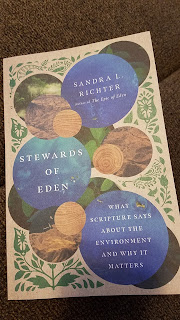
Stewards of Eden by Sandra Richter weaves solid biblical exposition with current case studies in environmental stewardship. It's a challenging and illuminating book.

Reading While Black by Esau McCaulley demonstrates the tremendous value of reading the Bible with and for the Black church. His book cuts to the heart of issues facing society today and calls us to a faithful, faith-filled response. Reading While Black is the Christianity Today best book of the year 2021 for Beautiful Orthodoxy.


Best Academic Books:

The Liberating Image 
by J. Richard Middleton is a consistently careful and thought-provoking explication of Scripture. Middleton never feels cliché or shallow, and even where you disagree, you'll find him thought-provoking. I'm grateful for his insight.

Exclusion and Embrace by Miroslav Volf came highly recommended by several friends. It is a dense read that took me a few months to finish, but his penetrating analysis was worth the effort. Volf issues a powerful call to self-giving love and charts a path for reconciliation and restoration of relationships.


Best Books for those who Write and Teach:

Adorning the Dark
by Andrew Peterson is a beautiful book about the creative process. Peterson is a songwriter whose music I discovered during quarantine, and fantasy novelist whose stories carried us through this dark year (see below). Although I don't write songs or novels, Adorning the Dark expressed powerfully the challenges and joys of any type of creative work shared with the public (including visual art and writing books of any kind). I loved it.

From Research to Teaching by Michael Kibbe releases in 2021, but I jumped at the chance to read it early and couldn't put it down. It would make the perfect gift for a recent PhD graduate -- seasoned with wisdom and practical help for navigating the transition to teaching. 


Best Books for those who Preach:

A second edition of The Art of Preaching Old Testament Narrative by Steve Mathewson is releasing in April 2021. Steve is a good writer, but more importantly an able interpreter of biblical narrative who offers practical suggestions for engaging your audience. I expect I'll turn to this again and again, not just for preaching advice, but for illuminating exegesis.

Simplify the Message, Multiply the Impact by Talbot Davis distills his many years of preaching experience into a focused model for sermon preparation. Talbot is an expert at connecting with people where they are. He preaches engaging and clear messages without notes, and he will show you how to do the same. Whether you're preaching to a full house or to a camera lens, Talbot will help you get your audience and get the message across.


Best Fiction:


The Wingfeather Saga 
by Andrew Peterson was a gift in this brutal year. My 12-year-old and I spent long evenings at home listening to Peterson read his stories on YouTube. His brilliant writing is matched by his incredible skill in voicing each character. The stories are full of high adventure but offer deep insight into human character. 

Killing a Messiah by Adam Winn is an engaging work of historical fiction about Jesus' last weeks. He weaves a plot that ushers readers into the political intrigue of first century Palestine. The storyline is complex and believable. A great read to save for Holy Week.


Thursday, December 10, 2020

Celebrating YOU!

It's been a year of all years in so many ways. Although I could list the many losses, disappointments, and kicks to the gut, today I'm in the mood to celebrate.

Today Bearing God's Name is one year old and I'm celebrating YOU, the readers who have made this a year to remember!

In the first six weeks on bookstore shelves, I had a chance to speak a handful of times. After the pandemic hit? Months' worth of speaking engagements evaporated off the calendar. Everyone says this was the hardest year of all to launch a book.

But YOU made it amazing!

So many of you have taken the time not only to buy and read the book, but to talk about it with your friends, to recommend it to your pastors and your small groups, to share about it on social media, and to post reviews. You've preached on it and used it in your classes. You've invited me to speak via Zoom to your students and congregations and ministry staff, and you've written to tell me what it has meant to you. I've been blown away by how generous and thoughtful my readers -- including YOU -- have all been. I've gained so many new friends around the globe. What a joy it's been!

In the midst of a pandemic, with so much uncertainty all around, you have used your voices to get the message out that the Old Testament still matters. You've helped Christians around the world re-discover their identity and vocation as the people who bear God's name. Thank you!!

A year later, Bearing God's Name is still hanging out at at the top of the charts. Incredible!


Thanks to you . . .

  • enough copies sold that we're on our 6th printing!
  • over 200 of you left ratings on Goodreads!
  • over 250 of you left reviews on Amazon!
  • Bearing God's Name is repeatedly ranked in the top 10 in Old Testament Bible Study, Christian Ethics, and Bible History and Culture on Amazon. 
Only readers can make these things happen!

I'm also grateful for all the podcasters, bloggers, magazines, and others who have helped get the word out:

  • 25 podcast and radio interviews
  • featured in Christianity Today, Faith TodayBible Study MagazineLibrary JournalBible Today, the Journal of the Evangelical Theological SocietyThemelios, and Servant Magazine
  • Jesus Creed Old Testament Book Award for 2020
  • Finalist for the Biblical Foundations Award in Old Testament from Midwestern Baptist
  • Finalist for the IVP Academic Reader's Choice award (just 2 months after release!)

Authors can write, but it's readers who determine its success. I am profoundly grateful for all of you. You ROCK!


Saturday, November 28, 2020

Pandemic Advent: Restoring Hope

Advent begins tomorrow. 

Usually this weekend marks a transition to the bustle of holiday events -- school parties, work parties, family parties, neighborhood parties, concerts, dramatic productions, travel, shopping. For most of us, the 2020 advent season will be much lower key. Concerts are cancelled. Many stores are closed. Parties are limited or not allowed. Travel is complicated.

Perhaps this year, we will finally catch the spirit of Advent.

As one devotional resource puts it, "Advent is a season of expectant waiting, tapping into the sense we have that all is not well, the longing for the world to be made right again. It's a season for restless hearts and people weary of a broken world who want, with all our being, to know there's more than this." (Seeking God's Face: Praying with the Bible Through the Year, 23)

If ever there was a time when we were collectively aware that all is not well, it's now. We long to break free from the dark clouds of the pandemic that shadow every empty square on the calendar.

This year I had the honor of contributing to an Advent devotional for Christianity Today, along with John Goldingay, Fleming Rutledge, Vincent Bacote, Ken Shigamatsu, Thabiti Anyabwile, Rich Villodas, Marlena Graves, and others. You can access it freely using the links below. Join us as we consider together the HOPE of Jesus' coming and of God's transformative power.


This year, more than ever, we know how much our world needs this.

If your year has been like mine, then you are acutely aware of your own need for transformation. The fallout of disrupted plans and routines this year has exposed places in our hearts where we have clung to the wrong things for security.

At minimum we are tasting the bitter tears of grief mixed with anticipation of Christmas. This year won't be the same. There are empty seats at the table, unfulfilled hopes, lonely hearts, and cancelled plans. May our disappointments turn our collective gaze to the author of hope. In him alone will we find strength for a new year that offers little certainty.

Week 1

Week 2

Week 3

Week 4

May the first coming of our king bolster our hope in his imminent return to make all things new!