Showing posts with label church. Show all posts

Thursday, January 23, 2025

Cover Reveal for Becoming God's Family!

I'm thrilled to share the cover of my forthcoming book! Becoming God's Family: Why the Church Still Matters releases October 28, 2025 from IVP Academic. 

Church isn't obvious anymore. Perhaps you're among the 40 million Americans who have lost the habit of attending weekly services. Or maybe you're on the fence about whether its worth your time or energy to stay connected. After all, you can listen to a sermon online, crank up your favorite worship artist, and skip the hassle of showing up. Right?

But what if there's more to church than a sermon and a few songs? What if something powerful but invisible is happening when we gather that can't fully happen any other way? Do we get any glimpses of this on the pages of Scripture? Do I have any stories that show you what I mean?

Yes and yes!

Like the other two books I've written for IVP, Becoming God's Family traces a theme through the entire Bible. This time the theme is the presence of God in the community of God's people. We'll explore how God shows up in our midst as we make time with others to wait for God. Along the way, I share the stories of how I and others have experienced God knitting together an intergenerational, multiethnic family of believers.

I can't wait to share this book with you. It was a joy to write and it comes straight from my gut. The book went live online TODAY, so it's available for preorder wherever books are sold. I hope you will order a copy for yourself. Who else do you know who's wrestling with disillusionment or questioning whether to bother with church? Could you pre-order a copy for them as well and plan to read it together? October will be here before we know it!

In a few weeks, I'll be able to share with you who's writing the foreword to the book. So delighted to have his name on the cover! Hint: It's a fellow academic who LOVES the church as much as I do and is pouring himself into it week after week.

Wednesday, October 26, 2022

Rethinking Disability in the Church

It was 1991 or thereabouts. My Dad's cousin had come for a visit, and we had the glorious opportunity of bringing Jane to church with us. We had recently made a major church transition -- from Christian Reformed to (wildly) charismatic. Our new church had lively worship, dancing in the aisles, prophetic words, and (cue dramatic music) healing prayer. The latter was of particular interest to us because Jane had been in a car accident as a teenager and become a quadriplegic. 

Everyone loved Jane. She was the glue that held the extended family together. Her penmanship was stellar, even without the use of her hands. She carefully held her pens in her mouth to write letters that were pages long. She drew incredible art with her mouth -- beautiful enough to print and sell as greeting cards. Jane was keeper of memories, planner of reunions, and our family's favorite destination in Southern California (ok, Disney was fun, too, and if Aunt Jane came along, you could get to the front of every line!). 

Traveling with a wheelchair was not easy, so her visit to Colorado to see our family was highly anticipated. Her parents drove out with their wheelchair-accessible van for a visit. My grandfather built a ramp so that she could easily access the house. Jane's parents and my grandparents were not interested in visiting our church. (They were convinced we had fallen off the deep end!) But my Dad was allowed to borrow the van to bring Jane with us to church.

Although it was 30 years ago, I can still vividly remember our drive to church. My anticipation soared. I had seen a person in a wheelchair go forward for prayer, and I had watched them get up and walk. I was utterly convinced that Jane would leave church walking on her own two feet. All the way to church my brother and I gushed about what the Holy Spirit would do. We couldn't wait to witness a miracle!

Photo by Hans Moerman on Unsplash
I was only 14 or so at the time. Chalk it up to immaturity, but I never once considered how our effusive faith might have felt to Jane. It never occurred to me that our excitement might have been painful or awkward to her. We never asked whether she wanted healing prayer. We just assumed. I never wondered what would happen to her faith or to ours if she didn't walk out of that service on her own two feet.

I don't clearly remember the service or the drive home, but we were sober. Quiet. Disappointed. I wonder how Jane felt. A few days later we went on an outing to a park. A group of Christians approached and surrounded her wheelchair and asked if they could pray for healing. That was the first time I realized how awkward it must be to have so much attention from well-meaning people--even strangers--who wanted to "fix" her broken body.

During those years in a charismatic context, I mainly thought about disability as a physical problem that needed medical or miraculous healing. While I still believe that Jesus can and does heal, I 've begun thinking differently about disability. Perhaps the places where healing is most urgently needed are our attitudes and our communities.

Twenty years after that "unsuccessful" healing service, I was in seminary. Gordon-Conwell offered seminars each semester on special topics. One was on disability in the church. Our focus was on accessibility and inclusion. One assignment was to interview someone with a disability to find out what barriers prevented their full participation in the life of the church. It was eye-opening to think for the first time about how much body strain a wheelchair user may experience when their wheelchair is parked on a slope or when conversation partners are standing. I learned that churches rarely have accessible platforms and that sometimes the fellowship hall or classrooms are impossible to reach. I learned that I should always ask first before pushing someone's wheelchair.

When someone using a wheelchair or walker enters our community, if we're paying attention, we quickly discover ways we have failed to make our institutions accessible to all. Thankfully, building codes ensure accessibility for new construction projects, but churches and schools often have older buildings. We were so blessed to have a student in a wheelchair a few years ago at Prairie College. She had a can-do attitude about participating in the community, so I didn't hear her complain that the only bathroom she could access was on a different floor of the dorm than her bedroom, or that a couple of guys had to carry her upstairs in her wheelchair to reach the campus social events, or that the wheelchair ramps weren't always shoveled after snowstorms. Most classrooms could not be reached by elevator, so the registrar had to schedule hers in the the rooms she could access. Her presence gave us eyes to see where we needed to prioritize renovations. 

Bethany McKinney Fox does not consider herself disabled, but she has offered a similar gift to the church by opening our eyes to the ways we cause unintentional hurt or fail to remove barriers to inclusion. Her book, Disability and the Way of Jesus: Holistic Healing in the Gospels and the Church investigates Jesus' healing stories from the perspective of disability. By sharing her experiences as a friend of those with disabilities, Fox has helped me to see areas where I need to grow. 

For one, I had never considered how the healing stories in the Gospels might be painful or awkward for people with disabilities. Even more, the way we teach these stories can cause harm. Fox walks readers through biblical stories from various points of view -- medical practitioners, people with disabilities, pastors and church leaders -- showing how what we see depends on who we are. She demonstrates how Jesus' healing ministry involves far more than bodily restoration. Jesus's healing addresses the whole person and their community. It says as much or more about who he is than about the disabled person.

Her last chapter casts a vision for church communities that include a wide range of people from able to disabled, participating fully. She challenges churches to think not only about providing access but also reshaping corporate worship to better meet the needs of the entire congregation. In a recent article for Christianity Today magazine, Fox and Rosalba Rios consider how the pandemic has expanded our vision of what is possible. They suggest, "Now that we are in an extended season of adaptation, churches that have been less flexible or unwilling to change their structures may be called to a new sense of imagination."

Improving accessibility for people with obvious disabilities yields benefits for so many others whose disabilities are less obvious. This is true in schools as well as the church. For example, at Biola University, when we post a scanned book chapter for students, it must be an accessible pdf (one page at a time, rather than a 2-page spread, with extra space trimmed away and optical character recognition so that e-readers can successfully read them). This obviously benefits blind students, but it also benefits the significant percentage of students we serve with dyslexia, whose reading comprehension is much higher when they can hear the text. 

Fox's congregation includes people with physical and intellectual disabilities on staff. They've reshaped their services around shared meals and community. Multisensory experiences and interpersonal interaction are essential to effective teaching in her context. Fox's vision presents new possibilities for the full participation of all its members. The result is messy, but beautiful.

Fox describes able-bodied people as "temporarily abled." We're all dependent as babies, and we'll be dependent again at the end of life. Any of us could be just moments away from some debilitating injury or disease. Rather than thinking of the able-bodied as normative, we could think along a spectrum of abilities. Many people who appear able-bodied carry hidden disabilities such as chronic pain, learning disabilities, or social anxiety.

Some people with disabilities long for healing. Others embrace their embodied limitations as part of their identity -- whether blind or Downs syndrome or wheelchair bound. Yes, Jesus could heal their bodies, but he hasn't chosen to do so. Perhaps Jesus' greater hope is to heal the community from our inattention to the ways we have made it difficult for others to fully participate. One treasure in Fox's book is the stories she includes, told in first-person by disabled friends about their experiences in the church. This is one reason I've shared Jane's story.

Being God's Image:
Why Creation Still Matters
Coming May 2023 from IVP
In 2018, Jane went home to be with Jesus after 45 years after her accident. At the time she was the longest surviving quadriplegic in California history. Maybe that was the miracle? She, her parents, and her other caregivers figured out the right routines to keep her hydrated and nourished and to ensure that she didn't get bed sores. The community of care gathered around her was rich in love. She often told us that she didn't feel like she belonged in her broken body, like she was trapped. Maybe today she's walking streets of gold. But maybe, just maybe, Jesus is pushing Jane's wheelchair and feeding her manna and Jane finally feels fully at home in her own skin. I don't know exactly how these things work in the new creation, but I'm open to a wider range of possibilities than before.

I explore this and many other aspects of what it means to be human in my forthcoming book, Being God's Image: Why Creation Still Matters (IVP, May 2023). I learned so much while researching and writing this book. I hope it helps others the way it helped me!

Sunday, November 14, 2021

Reflections on The Rise and Fall of Mars Hill

It's likely that I'll remember 2021 in part as the year in which Mike Cosper narrated my solo drives and weekend walks. Often I wondered if I could take yet another heart-sickening story of the abuse of power in the church, but I kept coming back, like a moth to the flame. 

If you're not familiar with it, The Rise and Fall of Mars Hill is an audio documentary sponsored by Christianity Today about the Seattle mega-Church called Mars Hill pastored by Mark Driscoll -- its origins, rapid growth, M.O., and the toxic culture of leadership that lead to its messy end. 

I have never met Mark Driscoll, never listened to one of his sermons, and never read one of his books, so why did I invest over a dozen hours listening to this podcast?

In the first place, it's well produced and well articulated. The sound design is fantastic and the stories are compelling. Christianity Today set a high bar with this one.

More importantly, it helps to explain a movement I could not understand at the time -- among other things, how a conservative pastor could say such crass things about sex, gender roles, and manhood from the pulpit and get away with it. Like most evangelicals with an ear to the ground, I had seen and heard clips of inflammatory things that Mark Driscoll said from the stage (around 2012), and I was deeply concerned. I later learned about his highly unethical ploy to get one of his books on the New York Times bestseller list. It was hard to miss the news about the raft of plaigiarism found in his books. And I knew that in spite of his church elders' attempt to lead him through a disciplinary process, Mark had resigned and headed to Arizona . . . where he planted a new church.

The Rise and Fall of Mars Hill shines a spotlight on abusive power dynamics that are too-often operative in Christian churches and institutions. Cosper traces various threads to help us see the origins of unhealthy ideas and the ways that they hurt people. At the same time, he highlights the stories of those who experienced radical transformation in their lives in the early days of Mars Hill. 

I believe God calls the church to bear his name with honor. In the case of Mars Hill, the quest for growth-at-all-costs was paired with Mark Driscoll's growing refusal to be accountable to seasoned leaders in his church network or even to his own board of elders. We can learn a lot from this story. It stands as a modern day parable of sorts, warning of the dangers associated with a leader having too much power, too fast, without godly character and life experience to prevent that leader from going off the rails. Unlike a parable, this one has real collatoral damage. So many former members are still trying to pick up the pieces and make sense of what happened.


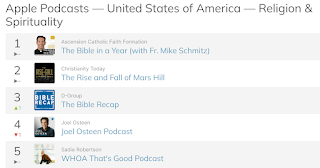
Ironically, the podcast has been a sensation of its own. Today it's ranked #2 in religion podcasts in the US. This probably says something about our our collective desire to hear grizzly tales of others' demise. It probably also points to how widespread these problems are in the church. I'm guessing it appeals to a lot of people who would like to understand a conservative brand of Christianity that prides itself on fidelity to Scripture but puts up with a bully in the pulpit. Probably all of these reasons. (As a side note, it's in very interesting company on the top 5!)

I've listened to The Rise and Fall in part because of its popularity. As an educator and lover of the church, I want to be in the loop about what people are hearing and how they are processing. If you've listened to at least part of the series, how has it personally challenged you? Leave me a note in the comments below.

Personally, I've been sobered by what well-meaning people will tolerate when a strong personality is at the helm. The podcast has given us much to lament. It renews my appreciation for institutional structures that have rigorous checks and balances in place. It's also a reminder that character matters a whole lot. For Driscoll, his popularity became the "proof" of his effectiveness and the "fruit" of "his ministry" -- but how many of those metrics could be traced to people who tuned in because they were incredulous? Just because people are listening, that doesn't mean the teaching is sound. The Old Testament prophet Jeremiah warned against false prophets who told people what their itching ears wanted to hear (Jeremiah 6:14).

If the podcast series has left you disillusioned about the church, a good next step might be to read Scot McKnight and Laura Barringer's book, A Church Called Tov (tov is the Hebrew word for "good"). It's on my short list of books to read next. McKnight and Barringer write about how to cultivate a healthy church culture where stories like this one will not keep happening. May the overwhelming popularity of this podcast awaken the church to stop tolerating abuses of power and instead cultivate communities marked by faithful and humble service!

Thursday, December 31, 2020

A Fool-Proof Guide to the Evangelical Church Calendar

We’re about to ring in the new year, which will prompt a host of new diets, exercise plans, and decisions to bring the family to church (or at least tune in online!). Trying to decide which church to attend can be confusing if you don’t know how to tell one from the other. So here’s a handy-dandy visitor’s guide to your typical neighborhood evangelical church (that would include Baptist, non-denominational, “community” churches, anything with “evangelical” in the title, and pretty much any other church that lacks stained glass windows). 

Photo by John Price on Unsplash
Be encouraged -- being an evangelical is much easier than being Catholic, Anglican, or even Reformed. Our religious calendar is simple, with very few holidays to worry about. We promise not to bother you with obscure holidays such as Epiphany, Ash Wednesday, Maundy Thursday, Ascension Day, or Pentecost – whatever those are. For the majority of the year, you can simply check the entryway to Walmart and take your cues from there about any upcoming celebrations. We basically follow the secular calendar, and our décor will shift to match the seasons you already know by heart – winter, spring, summer, and fall.

So here’s what you need to know:

January 1 – Today’s the day to begin a new Bible read-through. Most evangelicals will burn out in mid-February when they get to Leviticus, but the truly devoted will finish the entire Bible a few days before the end of December.

Lent – This one is totally optional. The start date is rather mysterious, and you won’t hear about it at all in church, but if you follow the hipster Christians on Twitter, they'll let you know when they are signing off for lent and you can follow suit. The main idea is that you give up something you like until Easter (say, chocolate, or at least afternoon chocolate or whichever social media you can survive without). 

Palm Sunday – We recently decided to retire this one because it’s too difficult to corral the preschoolers around the sanctuary while they whack each other in the head with palm branches. You're welcome.

Good Friday – You can expect dim lighting and sad songs about Jesus’ death. But since we wouldn’t want anyone to feel depressed, we’ll throw in some upbeat songs at the end about how Jesus rose from the dead. You are guaranteed to leave encouraged.

Easter – This is when we celebrate Jesus’ resurrection. Ladies, if you are joining us in person, fancy hats and white shoes are no longer necessary, but if you are ever going to wear a dress, this is the time. Gentlemen, now is your chance to wear a tie without getting snide comments about “dressing up.” Kids can look forward to an Easter Egg Hunt in Sunday School.

Mother’s Day and Father’s Day – These are not in the Bible, but we are all about family, so we’ll hand out flowers to the moms and snack mix to the dads. If you don’t fit easily in either category, feel free to skip these Sundays.

Summer – Summer is the youth group's time to party. Bible studies are replaced by bonfires and barbecues. Ambitious churches will throw in a two-week mission trip to Mexico. Sunday sermons will be stand-alone, rather than part of a series, so that you can easily go on vacation without missing anything. Please make sure you’re in town for Vacation Bible School, because we’ll need all the help we can get herding kids from one station to another where they can eat Bible-inspired snacks and make crafts to clutter your refrigerator. There’s also likely to be an outdoor baptism service at a nearby lake, river, or pool.

In early July you can expect to see our national flag on stage, and the worship team will feature patriotic songs. This will ensure that the lines between patriotism and piety are sufficiently blurred so that you will never forget that God loves our country the most. 

September – Back-to-school Bible studies will start up again. Some of these will be on Zoom this year. If you are a working mom, you might be out of luck (no evening meetings for women), and if you’re a single dad or dual-career family, you’ll have to find your own childcare.

October - Don’t forget pastor appreciation month! You may give online or in person. On the 31st, since we’re committed to engaging with our community, we will sponsor a “harvest party” or “trunk or treat” for the neighborhood. We don’t want anyone to feel weird (like we’re “religious” or anything), so we’ll decorate with spider webs and skeletons and have friendly witches hand out candy. 

November – A few weeks prior to the national election we’ll provide voters’ guides so that you don’t have to think too deeply about politics. Someone else has done the dirty work, so you can easily choose the candidates who side with your pastor on hot-button issues.

Thanksgiving – Thanksgiving is pretty low key. We won’t hold a church service so that you can spend your day preparing your big meal and watching football. You can easily redeem this holiday by reading Psalm 100 and saying what you are thankful for before you stuff yourself.

Photo by Rodion Kutsaev on Unsplash
Advent
– Beginning the last Sunday in November, serious evangelicals begin reading a daily Christmas-themed devotional. At the very least, you should buy one of those cardboard calendars at Walmart with a little chocolate for each day until Christmas. To avoid a family feud, buy one for each child in your home. We’ll decorate the sanctuary with lighted Christmas trees to get everyone in the holiday spirit.

Christmas Eve – We’ll offer several candlelight services to accommodate all the families that show up out of the woodwork. Just to make everyone feel right at home, Santa Claus will likely join the festivities. Please talk with your little ones about fire safety before you come because we’ll be handing them real candles to light during “Silent Night.” You won’t hear much about Mary (that’s a Catholic thing), but we will sing “Mary Did You Know?” (even though she did). 

Christmas Day – Evangelical churches don’t actually hold services on Christmas Day any more because families will be busy opening presents. But don’t worry! Reading Luke 2 before you tear into the pile under the Christmas tree will remind everyone of the reason for the season.

And that’s all there is to it! Didn’t I tell you this would be easy? You have a few days before January 1 to binge read the rest of the Bible so you can finish on time. Next year, you can change things up a bit by using a different Bible read-through plan.

The best thing about being an evangelical is that we won’t require much from you during our services -- no kneeling or responsive reading or awkward confessions or drinking out of a common cup (hello, germs!). If you’re inspired during the music, feel free to raise a hand or two in the air (the chorus is usually a good time to do that). Think of the worship time like a concert and the sermon like a TED talk. We’ll provide the coffee. If you’d rather watch the service from home in your pj’s, you won’t miss much (except childcare). You can send your donation through the church website. 

So glad to have you join us!


Thursday, March 12, 2020

Being the Church during the COVID-19 Pandemic

You know that scene in "The Sound of Music" where the Von Trapp family sings their farewell at the Salzburg Music Festival? Everyone is emotional at the thought of how WWII is changing everything. People are leaving who should not have to leave. Everyone is uneasy.

Chapel this morning felt like that.

No, we had no armed guards at the exits, but one student after another stopped at the hand sanitizer station and entered the room lathering their hands. Greetings were awkward as we all tried to be friendly without shaking hands or hugging. Our main speaker was piped in on video, rather than risking exposure, since he'd been traveling in affected areas. All these are silent reminders of how in one week, we have all become much more aware. Aware of germs. Aware of the real possibility that meeting together is a luxury we may have to relinquish.

We're in the middle of our Global Connections Conference (GCC) at Prairie College. Our theme this year is NOW. HERE. THIS.

It's hard to imagine a more pressing world concern at this moment than COVID-19. Friends of mine at institutions across the United States are scrambling to move classes online while grieving the loss of embodied community for the rest of the semester. Conferences, classes, services, athletic competitions, concerts, lectures, class trips -- all cancelled for friends south of the border. And while Canadians are good about taking everything in stride and no one in our community is freaking out, there is a growing sense that even out here on the prairies we, too, will be affected. Soon. As I write this, our contingency team is meeting.

Singer-Songwriter Steve Bell at Prairie College's 
Global Connections Conference, March 2020

Our morning speaker was singer/songwriter Steve Bell. His stories were balm to anxious souls. His vulnerability made space for our own grief. And he closed with a song based on the words of Teresa of Avila, "Christ has no body here but ours."

Steve told the baffling story of the rapid spread of Christianity in 150 CE. This backwater sect following a crucified leader should not have captured the hearts of the Roman empire, but it did. Why? A plague. Citing the work of sociologist and historian Rodney Stark, Bell told us how early Christians embraced the news that "God so loved the world," and that this news should have sounded ridiculous. In the Roman world, "gods don't love, they are users," he said. In that day, worship was the equivalent of someone in a cage with a hungry lion desperately saying, "Nice kitty!" People didn't worship their gods out of love or in response to love, but in order to placate them. In contrast, Christians really believed that God loves people. And they knew that love is our way to God because God is love (he picked up this sentence from a sermon by David Witticum, who got it from Augustine).

So, in the face of the plague, when everyone else fled, Christians stayed. They knew they must love what God loves. They loved radically, at risk to their own lives. Steve's closing words to us felt like the farewell of the Von Trapp family. There was a palpable sense that today could be our last meeting as a community for quite some time--that everything was about to change. (Note: I have no official word on this. It just seems inevitable, given how many other schools have closed their doors.)

The risk of death appears to be much lower with the Coronavirus than it was with the plague of 150 CE. Still, the risk is real for the elderly and those with compromised immune systems. We will know people who die from this. Current estimates hover around a 4-5% death rate. How can we love well in this strange new world?

We may not personally feel at risk, but there are people in our circles who are. Taking precautions protects them, too. It's not a matter of fear, but of love. If you don't like people telling you what you CAN'T do, here's a list of what we CAN do:
  • We can wash our hands more thoroughly and more often. 
  • We can minimize human-to-human contact.
  • We can regularly disinfect door handles, light switches, and hard surfaces, even if it's not in our job description.
  • We can cancel or postpone unnecessary meetings.
  • We can think creatively about how to be the church even when we can't meet in person.
  • We can think creatively about how to teach online.
  • We can refrain from stockpiling resources that everyone needs, such as toilet paper.
  • We can offer to pick up groceries for friends who aren't safe to go out.
  • We can offer to pray over the phone with those feeling anxious.
  • We can text and email to check on people we would normally encourage in person.
  • We can curtail all unnecessary travel and take a hard look at what seems necessary.
  • We can pray for stamina for health care workers and let them have the masks.
  • We can pray for wisdom for civic and community leaders who are making difficult decisions.
  • Above all, we can STAY HOME if we have a fever or cough.
A pastor friend posted on Facebook that all meetings of more than 250 people in the state of Washington were strictly prohibited, including churches, for the time being (Oregon made a similar announcement today, and so did Alberta, just a few moments ago). Someone responded angrily, implying that this is a breech of first amendment rights--the right to congregate. He seemed to feel this was a form of persecution. Please hear me: This is not religious persecution and it's not unbridled fear. Quarantine is a form of love. Experts are telling us this is the best way to stop the spread and protect the vulnerable in our communities, and that we need to act fast to have the highest success rate. So for the love of God and the love of your neighbor, stay home. 

Maybe COVID-19 will re-teach us what we have forgotten--that we are made for embodied community. As wonderful as social media is, it can never replace a handshake or a hug. And as inspiring as online sermons can be, they cannot replicate the taste of bread and wine or deep-throated song in community. This quarantine won't last forever. Hopefully it will be just long enough to help us more deeply appreciate that we were made for each other and that we can't be fully ourselves in isolation. See you on the other side!

Tuesday, November 19, 2019

N. T. Wright and a Book for Both Bedside Tables

What books are sitting on your bedside table?

About 10 years ago I had an opportunity to meet New Testament scholar and Anglican bishop the Right Rev. Dr. N. T. Wright. We shook hands. Although it was spontaneous, I knew instantly what I wanted to say to him. It went something like this:

N.T. Wright is an especially gifted communicator
who writes for the academy and the church
(Photo: C Imes)

"It's an honor to meet you, Dr. Wright. My husband and I would like to thank you. You are nearly the only writer who has the distinction of appearing on both of our bedside tables."

I was in seminary at the time. I spent my days reading books like his Jesus and the Victory of God. My husband, on the other hand, did not gravitate towards non-fiction, and certainly not academic books. But he picked up a copy of Wright's Simply Christian and loved it. What a gift to have found a respected scholar who also had the ability to connect with wider audiences, beyond the academy! Wright gave us things to talk about as a couple that connected our worlds. That was just what we needed.

I can think of two other biblical scholars whose books my husband and I have both read and enjoyed: Sandra L. Richter and Christopher J. H. Wright. Scholars like Wright, Wright, and Richter are my models. They know their stuff academically, but they also take the time to communicate in an accessible way for the church at large.

That's what makes me so excited about my new book release. I've done the scholarly research, defended the dissertation, and published it as well as other articles on related subjects. But this new book is totally down-to-earth. Our 17-year-old daughter read the entire manuscript of Bearing God's Name before we sent it off to the publisher so that we could get rid of all the words she didn't know.

This one's for the church. It's for men and women and teens and grandparents who struggle to know what to do with the Old Testament. It's for people who want to obey Scripture but aren't sure where to start. It's for new
Academic and Accessible books by C.J.H. Wright
and Sandra Richter (Photo: C Imes)


Christians as well as Christians who've been around the block a few times and still feel like they're missing something. It's for Earl, who hasn't read a book since high school other than a welding manual. It's for Marilyn, who kindly tried to read my dissertation and just got frustrated. It's for my parents, who have cheered me on for decades and now can finally benefit from all the hard work. It's for my former students, who can re-experience Torah class and share it with their families.

My published dissertation along with my new 
book, Bearing God's Name, which is an
accessible book that presents what I learned
(Photo: C Imes)

Bearing God's Name doesn't officially release until December 10th, but I'm already getting messages from readers almost every day who say that it's making a difference in their lives.


Not sure which book to choose for your bedside table? Here's a comparison:

If you're married and anything like my husband and me, you might need to pick up one of each.


Thursday, September 12, 2019

The Body of Christ, Broken for You: What Communion Taught Me About Church

It may not seem like such a big deal to stand there holding a tray of bread squares. Don't be fooled. It's a very big deal.

Let me back up. Two years ago I arrived at Prairie College as professor of Old Testament. I was ready to teach and ready to serve. In my first couple of weeks here, a colleague approached me to see if I'd be willing to help serve communion at our convocation chapel. I was surprised at how much this meant to me. Forty years old at the time, I couldn't recall having ever been asked to serve communion before. I've attended church my entire life -- not casually, but devotedly. If there is such a thing, I'm a professional Christian. I've dedicated my life to this faith, to this message. I've been to Bible college and seminary. I spent 15 years as a missionary. But I'm a woman. Perhaps that's why I had never been asked to pass out bread squares and tiny cups of juice to fellow believers.

For chapel we passed the trays down long rows. Somehow I messed up the every-other rhythm or sent the wrong tray first down the row, which meant that people were trying to hold a cup while passing a tray and taking bread. That didn't work very well (these things take practice, of which I had none!). In the end, everyone was served and our job was done. I felt mostly like an imperfect cog in a machine. Happy to help, but nervous and clumsy.

The body of Christ, broken for you (Photo: C Imes)
This year was different. This year at our convocation chapel those of us serving stood at the front of the auditorium. Everyone came forward to receive communion. I held the tray of bread as people passed in front of me. I looked each one in the eye and told them, "The body of Christ, broken for you."

The music was a bit loud. I'm not sure whether most of them even heard me. But something powerful happened as I said over and over, "The body of Christ, broken for you." I knew most of these people by name. I knew many of their stories. Some of them I loved deeply. Others -- to be frank -- not so much. In context of these relationships, those simple words became profound as my heart silently completed each sentence:

"The body of Christ, broken for you . . . whose body is also broken."
"The body of Christ, broken for you . . . whose spirit is crushed."
"The body of Christ, broken for you . . . whose mental health is tenuous."
"The body of Christ, broken for you . . . whose family is estranged."
"The body of Christ, broken for you . . . whose sin is still hidden."
"The body of Christ, broken for you . . . who is growing in grace."

A few people approached who I've never really clicked with. People who annoy me. They've never seemed to like me, either, but they had no choice but to come to me for bread.

"The body of Christ, broken for you."

My words to them were the same as to all the others, and this time the Spirit gently convicted me. Would you withhold love from one I love enough to die for?

I felt ugly places in my heart close over with forgiving love as I silently repented.

I heard a still small voice say to me, "The body of Christ, broken for you . . . who have failed to love." I needed as much grace as every other person I served. The ground is level at the foot of the cross.

This story didn't take place in church. It was in a college chapel. But it illustrates one reason why listening to a sermon via podcast can never replace church attendance. Sunday morning is not primarily an intellectual transaction, nor is it primarily concerned with my vertical relationship with God, though it includes both of those dimensions. When we show up together at the foot of the cross, divisions are healed, grace is conveyed from one person to another, and we become just a little bit more like the family of faith God intended. As Kevin Peters said in his message that day,
"Our God is radically relational. . . . God designed us to be connected to him and to each other."
Mark Jonah had introduced communion with Hebrews 12:1-2, focusing particularly on the words, "Jesus . . . for the joy set before him, endured the cross." Mark always assumed that this joy was the joy of heaven awaiting Jesus, an eternal reward for faithfulness. Lately, though, he has been discovering a new dimension of Jesus' joy -- the joy of restored relationships now. Jesus knew that his death would have an immediate effect on relationships here. That joy made his suffering worth it. That joy is the reason we bother with church.

Yes, the body of Christ is broken. But it's brokenness brings life to you . . . and to me.

Sunday, July 28, 2019

Book Review: Richard Mouw's "Restless Faith"

Do you wrestle with your evangelical identity? Do you ever wonder whether it's time to throw in the towel and walk away?

If so, this book is for you.

As president of Fuller Seminary and former professor at Calvin College, Richard J. Mouw has spent many decades as an evangelical. All of them, he says, were restless years. This book is his explanation of why he's choosing to stay.

These are trying times for evangelicals. Cultural pressures from the outside and deep disagreements on the inside make evangelicalism an uncomfortable place for many Christians. The most recent national election in the US, to cite just one example, threatened to split families right down the middle.

Mouw takes us behind the scenes in the institutions where he has served to demonstrate that evangelicalism has always been this way. He reminds us of the core tenets that hold such a diverse group together, suggesting that these central values -- belief in the need for conversion, the authority of the Bible, the centrality of the cross, and an emphasis on daily discipleship -- cannot be found in this combination anywhere else.

He talks about Billy Graham, Christianity Today, Ann Voskamp, World Vision, and the National Association for Evangelicals on the one hand, as well as Norman Vincent Peale, Robert Schuller, Rob Bell, and the National Council of Churches on the other. We learn about his efforts to promote Mormon-Evangelical and other types of inter-faith dialogue without watering down his own Evangelical commitments. We read of his lonely engagement in the civil rights movement and politics during the 1960s when many Evangelicals' only concern was to "save souls." He wrestles with the individual and communal aspects of salvation and considers the value of both hymns and contemporary worship songs. In the end, he advocates "holding on while staying restless" as an Evangelical.

Speaking as an academic, I did not find the book to be heavy reading, but rather patchwork autobiography in accessible prose. Yet one does not have to know Richard Mouw to appreciate his reflections -- his wisdom shines through on every page and offers hope for Evangelicals who are feeling squirmy in today's politicized climate. He concludes,
"For me, the only way to be a properly functioning evangelical is to keep arguing about what it means to be an evangelical. Restlessness in claiming that label has long been the way I have kept moving. I hope that many of us can stay restless as we hold on while exploring together whether the best way to remain faithful to the legacy is to let go of the label. . . . For the present, I am inclined to go with the second option -- working for evangelical renewal, rather than simply allowing the movement's label to be co-opted by leaders who have departed from the best of the legacy." (174)
If you share his restlessness, this book may be just the thing you need to refresh your perspective and refuel your evangelical commitment. Mouw does not suggest that we hold doggedly to the label "evangelical," but he offers good reasons to keep it for the time being.

Tuesday, July 16, 2019

Book Review: Ben Witherington's "Priscilla" and Paula Gooder's "Phoebe"

Two of the most recent contributions to the burgeoning collection of novels written by biblical scholars are worth reading. Historical fiction about the Bible is not a new genre. What's new is that reputable scholars, with PhD's in New Testament and an impressive array of other academic publications, are harnessing their training for this unique genre and publishing these works with academic publishers (in this case IVP Academic).

Ben Witherington III fills out the story of the biblical Priscilla, or Prisca, mentioned in Acts 18 and Romans 16. The New Testament does not tell us much about her -- she's a tentmaker and church leader with her husband Aquila, both of whom work with the apostle Paul, and mentor the young evangelist named Apollos. Witherington weaves these facts about Priscilla into a coherent narrative in which the aging church leader tells her story to her adopted daughter, who is coming of age.

Witherington's story is well researched and loaded with historical and theological insight. Each chapter begins with an excerpt from a historical document (e.g. Pliny the Younger). And yes, this novel has footnotes. Historical fiction is an enjoyable way to learn about life and culture in the first century, making history more accessible to students and laypeople. The chapters are short. The plot is believable. His interpretation of scripture and its context is plausible.

We're introduced to the apostles Peter and Paul as well as Apollos, the emperors Nero, Claudius, and Domitianus, seasons of persecution and pressure for the young church, the tension between Jewish and Gentile followers of Jesus, the gladiatorial games, and even the eruption of Mt. Vesuvius. We're given Witherington's conjecture about Paul's mission to Spain, his return to Rome, and his death -- none of which are recorded in the New Testament but are matters of great curiosity for biblical scholars. 

If I have one complaint, it is near the end of the book, as Priscilla and her daughter discuss the relationship between Jews and Gentiles. Their re-reading of Paul's letter to the Romans (chapters 9-11) is surprisingly flat. I've not read much of Witherington's voluminous contribution to New Testament scholarship, so perhaps his interpretation here is in keeping with what he has said elsewhere. For a stronger reading of that passage, see N. T. Wright's work. Still, my disappointment with this one chapter should not detract from the overall quality of the book. It remains a solid introduction to the contributions of women in the earliest churches.

Witherington's other books of this genre include A Week in the Fall of Jerusalem (IVP, 2017) and A Week in the Life of Corinth (IVP, 2012).  

Another outstanding book in this genre is Phoebe, by Paula Gooder (IVP, 2018) which reconstructs the life of the female deacon who delivered Paul's letter to the Romans. It's a page-turner and well worth reading!

How does a woman with a slave name end up delivering Paul's letter to the Romans? How does she have the means to undertake such a journey? How was she educated to the point that Paul chooses her to explain his letter? What did she think of the church in Rome? Gooder answers all these questions in a compelling way. She kept my attention from beginning to end. Friends who are not biblical scholars have enjoyed the book, too. Highly recommended. 

One of these days, biblical scholars need to start writing historical fiction on the Old Testament . . .

Saturday, April 27, 2019

A Foot in Two Worlds

Make a careful exploration of who you are and the work you have been given, and then sink yourself into that. Don't be impressed with yourself. Don't compare yourself with others. Each of you must take responsibility for doing the creative best you can with your own life.  —Galatians 6:4-5, The Message

Recently our entire campus participated in the Global Connections Conference, an opportunity to hear about some of the greatest needs in the world and consider how God might be calling us to contribute. It was at a conference just like this that Danny and I first explored the possibility of mission work, initiating what would become 15 years of service with SIM. Ironically, we resigned from SIM in order for me to pursue a full-time faculty position teaching Bible. I say "ironically" because now more than ever my work is leaning in to the ministry for which we long prepared and for which I'm best suited. By opening up the Scriptures with my students, I'm addressing the acute need of this generation to understand and encounter the Living Word.

But finding our identity and calling as a believer is not a one-time-fits-all experience. With every changing season of our lives or changing circumstance, we may find ourselves asking again: Who am I? How is God calling me to invest my time and training? I was back in that space during the conference, needing clarity about my role, prayerfully considering the path ahead. A barrage of opportunities had me feeling muddled. 


Foot in Two Worlds (Photo: C Imes)
Bishop Dr. Joseph D'Souza began by challenging us to see what God sees and to commit ourselves to doing something about it. In the course of sharing his own story, D'Souza said one thing that especially piqued my interest:  "I am called to have one foot firmly planted in the church and the other firmly planted in the world." His point was not prescriptive; he was not trying to impose his calling on anyone else. But his words brought my own calling more clearly into focus:

I work at the intersection between the church and the academy in the field of biblical studies. I am called to have one foot firmly planted in the church and the other firmly planted in the academy, with my work forming a bridge between these worlds. My aim in the church is to be and invite others to be lovers of God -- loving God with our minds as well as our actions. My aim in the academy is to produce quality scholarship, representing Christ well. I write and speak across this spectrum -- for laypeople, college and seminary students, pastors, and fellow academics -- showing the relevance of academic inquiry to those in the church and modeling respectful but discerning engagement with the academy.

Having this kind of clarity frees me to respond to invitations to speak, teach, write, endorse, edit, and consult without guilt. Rather than asking, 'What would my colleague do?' or 'What would my peer do at another institution?' or 'How will this look on my CV?' I can ask, 'Does this fit with my mission?' or 'Is this the work to which I've been called?'

I'm standing on the cusp of summer now. My grading is finished. In a few hours my students will have graduated and/or headed home. I have a whole slate of projects lined up for the summer that I am eager to begin! These projects align with my mission. A lot of no's and the occasional strategic yes has put me in a joyful place. Having made the careful exploration Paul describes, I'm eager to sink right in!
Make a careful exploration of who you are and the work you have been given, and then sink yourself into that. --Galatians 6:4, The Message
Have you taken the time lately to prayerfully reconsider your involvements in light of how God wired you? The clarity of a personal mission statement can bring so much freedom. Instead of feeling pulled in multiple directions by every request for your time, you can develop a confident "no" that will make room for the right "yes."