In this
post I'm taking you behind the pages of Stewards of Eden to meet the
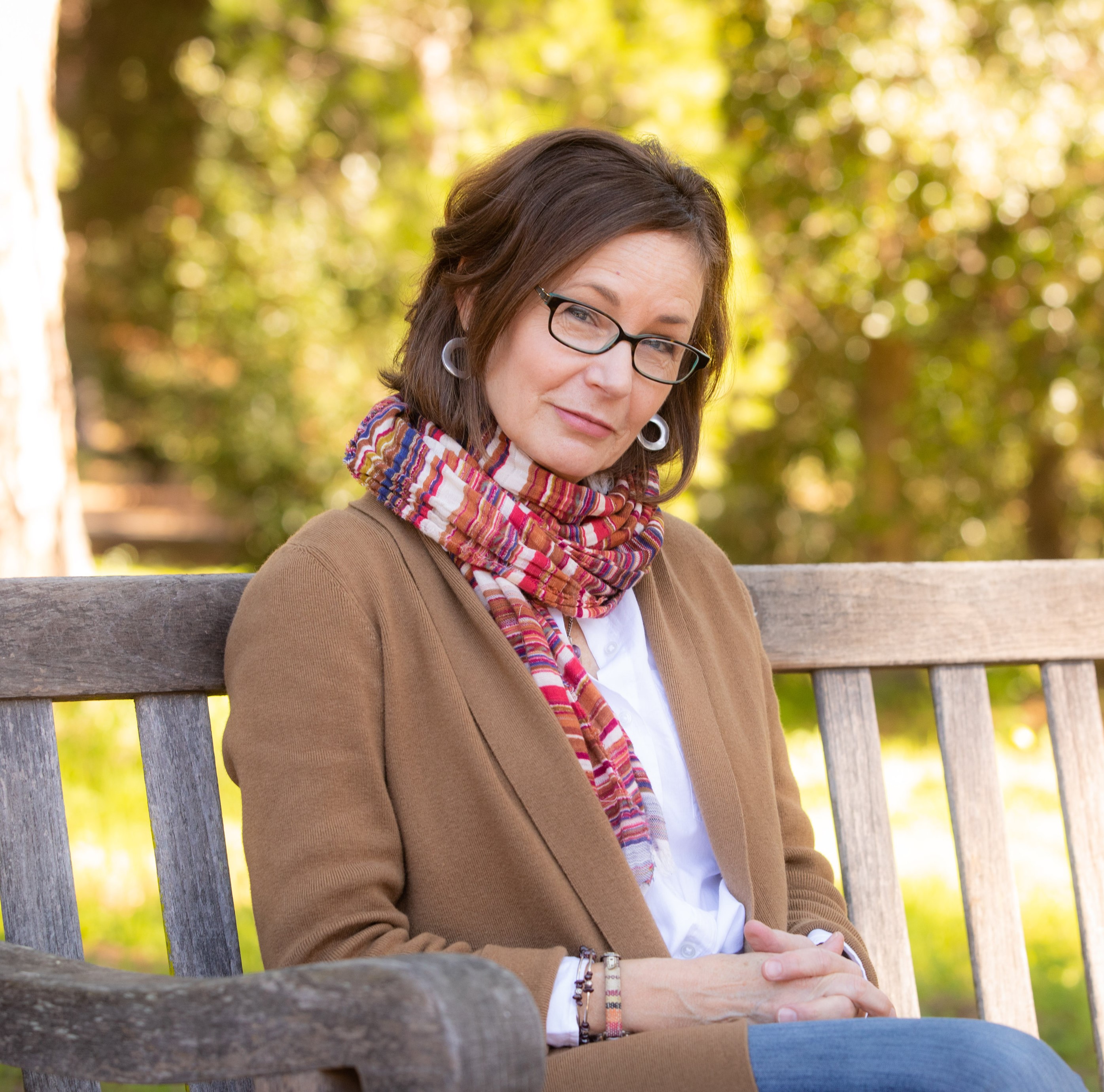
author, Sandra Richter. Sandy, thanks for taking the time to tell us about your
work!
So great to get to interact on this important topic, Carmen. Thank you for the invitation!
When did
you first know that you wanted to write this book?
Hmmm … that is a good question, and one I haven’t answered before. Although my love for God’s creation goes back to before I was even a Christian, the whole business of writing and speaking on this topic in Christian circles just sort of “happened.” As I narrate in the book, the first time I had the privilege of sharing a message of environmental stewardship from a pulpit was 2005 at Asbury Theological Seminary. The response was everything I could have hoped for. And to my surprise, I was asked to publish that message in the Asbury Journal. At the time of publication, I was serving on the Institute of Biblical Research planning committee, and we were casting about for a topic for the following year. I suggested that we do a plenary session on creation care. They said “yes,” if I would be one of the speakers. I was thrilled, but it also meant I had to seriously up my ante—now I needed a message appropriate for an academic conference. Man did I work hard on the research for that presentation. And in the fall of 2008 at the annual meeting … once again the response was everything I could have asked for. Rick Hess, editor of BBR was at the gathering and asked me to publish that presentation. Then there were a slew of speaking engagements—some more enthusiastically received than others. (There was a certain week-long “Holiness Conference” at a not-to-be-named Christian College where I think 17 people total showed up; then there was that walk-out at another not-to-be-named college; and, oh, the conference where I presented on humane animal husbandry in the heart of cattle country in Tulsa--that was a bit awkward!). In each of these my material evolved and developed. Usually the response was beautiful. (I’m thinking of Darryl Williamson’s "Arise City Conference" in Tampa, FL, and the older sister who stood to her feet at the end of my talk, called everybody out, and ran what could be called an altar call for me!) But I think the first time I knew I wanted to publish this book was during my tenure at Wheaton College. I realized (as I narrate in the book), that the Christian community needed a short, accessible, biblical treatment of this topic. A book that didn’t get lost on side issues. A book students could read (quickly), hand off to their parents, and they to the grandparents. I wanted to offer the Church their own book on this topic: “What Scripture says about the environment and why it matters.”
Sandra Richter, author of Stewards of Eden
Did you
grow up in a home that valued conservation? If so, how did your parents
practice conservation? If not, when did you become passionate about creation
care?
No, I can’t say that I did. Like yours, my family was frugal. And like yours we camped a lot (there were a lot of us and we were military—cheap vacations!). I do think the camping and some of the adventurous places we lived as an oft-relocated Navy family awakened my deep empathy for the trials of creation. But I wasn’t raised with any sort of tutelage in environmentalism. Honestly, I think my passion for creation is part of my journey to faith. I believe that it was the image of God in me (prevenient grace for the Wesleyans out there!), and the Spirit of God calling me, that caused the majestic and fragile beauty of creation to resonate so deeply with me. As I say in the book: “When I stand at the ocean’s edge and feel the spray of its raging force on my face, when the wind silences me, when I am privileged to hold a wild creature in my hands” … my response is worship. This has always been true of me—even before I knew the Creator’s name.
What are the biggest hang-ups for evangelicals when it comes to creation care? Do you have a theory about why this is?
Having lectured and written on this topic for more than a decade at this point, I am pretty convinced that the “hang-ups” can be distilled to three issues. (1) The fact that in American politics environmentalism has been pigeon-holed into a “liberal” political agenda and has become guilty by association. Essentially, the accusation is that if you care about stewarding the planet you must also be a “liberal.” (2) The fact that we as Americans don’t typically see the impact of environmental degradation. We export most of our mess and never see the widow and the orphan picking through the trash piles we create. (3) The very unfortunate theological agenda that teaches that this earth will be annihilated at the end of the age. I deal with this misunderstanding of the New Covenant in chapter seven of the book.
You're a busy professor married to a professor with two growing daughters. What inspired you to raise chickens in your backyard? Surely not boredom?
Hah! The infamous chickens! Well Greta, Maggs, and Lucy will be thrilled to know they made the blog! Buttercup, may she rest in peace, will be grieved to have missed out. And we’ll be sure to send a note over to their sisters Sadie and Penelope who are keeping our friends Jack and Maggie in eggs these days! So, yes, I am “wicked busy,” but you make time for what you love don’t you? The chickens were a project for my youngest daughter and me. We both really wanted to do it, and Santa Barbara is a perfect place to raise chickens. California is a very libertarian state, so you can have chickens (not roosters) in pretty much any suburb. Better, you don’t have to heat your chicken coop to keep any of your hen’s feet from freezing off! More seriously, it is important to me that I practice what I preach. So in our house we recycle everything, we compost, we hang out our wash, we read labels, we eat very little meat, we have a vegetable garden, I drive a used Prius, we have rain barrels, and we’ve dropped all sorts of $$$ to landscape with native plants (which in SoCal means less water). Like any homeowner, I’m still learning (like what about solar panels?), but as I believe that environmental stewardship is a part of my responsibility as a Christian … I’m doing my best.
Climate
change is one of the most controversial aspects of the current debate about
environmental concerns. Why did you choose not to talk about it in your book?
Great question. Several reasons. The first and most obvious is that the Bible has nothing to say about climate change. So any biblical theology of climate change is going to have to be an extrapolation—something I did not want to be doing in a book I promised was “just the Bible for those justly concerned.” Second and closely related, the steps any believer should be taking to curtail their own over-use of this planet and its resources will help to reverse climate change. So in many ways, climate change is a moot point. If we’d been doing our job as good stewards, we wouldn’t be having this problem. So what changes are needed? As Gus Speth, Chairman of the council on Environmental Quality under President Jimmy Carter has stated:

"I used to think that the top environmental problems were biodiversity loss, ecosystem collapse and climate change. I thought that thirty years of good science could address these problems. I was wrong. The top environmental problems are selfishness, greed and apathy."
I say it this way in the book: “The earth is the Lord’s and all it contains. He has given it to us to use in our need, but not to abuse in our greed.” When we get serious about our careless consumption of fossil fuel; when we start thinking about the supply chain for that fuel, our manufactured goods, our food; when we take stock of reckless land development … climate change will begin to unchange. So, yes, climate change is a huge issue that our carelessness has brought to the tipping point, but it is one that regular old responsible stewardship would have/still can resolve.
One of
our first purchases when we moved to our current house was a 3-part trash bin
for the kitchen, so that we could sort trash from plastic and paper
recyclables. Our town has no recycling pick-up program, but we do have a local
recycle center where we can bring our own recyclables. We've been pretty
diligent about sorting trash making trips there. However, we heard a year or
two ago that all the plastic recycling ends up in a landfill anyway because
China will no longer accept plastics for recycling, and North America lacks the
facilities to handle the volume of plastic waste. Have you explored this issue?
Why should we keep sorting recyclables if it all ends up in the landfill
anyway?
Yes, in 2018, China said, “We don’t want your trash anymore.” This, of course, sent major reverberations through many US businesses. If China wasn’t going to take our trash anymore, and we are now packaging everything from blueberries to underwear to new tools for our work bench in plastic, what are we going to do? The first question we should ask, of course, is why were we sending our trash overseas in the first place? Where is our sense of national responsibility? And what about the widow and the orphan in China?
The next question is, “Uh oh, if China has been recycling our plastic, do we have the infrastructure in the US to take care of our recycling ourselves?” And the answer right now is, no. At this point we have more than 20 types of plastic packaging—and every time I go to the grocery store I see that COSTCO and Kroger have figured out a new way to use plastic for stuff that used to come loose or in cardboard. As a result, “virgin plastic” accounts for most of the plastic you and I see, which is produced by petro-chemical companies. These guys make billions producing their plastic (and will make billions more as current plans are to double the industry in the next five years). As the name implies, petro-chemical companies are using fossil fuels to make their stuff. And right now, virgin plastic costs less than 10% of the cost of recycled plastic. So what is a capitalist economy to do? The first thing we need to do is to be disturbed. Statistics such as those below should be a huge wake-up call:
Then we need to do something. What to do? Vote with your pocket book. Buy plastic packaging as little as possible. Choose the “avoid plastic packaging and extra packaging” option with Amazon. When you have to buy plastic, look for “recycled” on the label. Tell your grocery store manager you don’t want your food in “clam shell” packaging. Tell COSTCO that apples don’t occur naturally in plastic bubbles. Basically, let us make it as socially inappropriate to buy and sell in plastic as it is to smoke cigarettes in the work place!
Your book
goes beyond recycling to talk about mining and food production. Those case
studies were incredibly eye-opening for me, especially in light of the
biblical teaching on agriculture and animal husbandry that you
so powerfully explain. What can one person do to make a difference in a
culture marked by greed and consumerism?
Thanks for this question, Carmen. The last section of Stewards of Eden is entitled “Resources for the Responsive Christian.” This appendix gives very practical, hands-on, “I can do this,” suggestions for the average human. Things like getting informed (subscribe to an environmental magazine in order to educate yourself); voting your informed conscience (Sierra Club offers a voting guide every year); voting with your purchase power are a great way to start. Links and addresses are all in there. As above, one powerful thing all Americans and Canadians can do is vote with their purchase power. We are capitalists, oh, yes we are. And if it doesn’t sell, the industry makes changes! So when you go to the grocery store, the hardware store, the car dealership, be willing to spend a bit more to invest in the industries you want to thrive. As with all things in our fallen world, we are not actually going to be able to fix this. The Rider on the White Horse is going to have to do that. Just as I will never succeed in emptying all the brothels in Thailand, finding a home for every abused child abandoned to the foster care system, or feed every orphan in Sub Sahara Africa—I am not going to fix this either. But as a Christian, it is my sworn duty to stand in the gap. It is our calling as salt and light to demonstrate to our bruised and broken world what a citizen of heaven looks like, “to live our lives as Adam and Eve should have, as Jesus Christ has.” Environmental degradation is a global and a local issue, our neighbors are impacted by this, our neighbors care about this. Where is our witness in the mix? In sum, what I attempt to demonstrate in the book is that God cares about this, and we must too.


