Showing posts with label creation. Show all posts

Friday, February 11, 2022

Becoming Human: My Visit to an SBC Seminary

It was an unlikely invitation. 

Would I travel to Wake Forest, NC to speak on personhood at Southeastern Baptist Theological Seminary? 

I, who am neither a member of the SBC nor the daughter of a member of the SBC. 

I, a woman who teaches Bible and even preaches on occasion.

It was not my first SBC connection. First, my book appeared in the book store at The Southern Baptist Theological Seminary in Louisville, where Al Mohler is president back in early 2020. (Unexpected!) Then, the same book was a finalist for an award from Midwestern Baptist Theological Seminary in Kansas City. (Who knew?!) The next thing I knew, Lifeway Publishing asked me to contribute to a women's study Bible. (Huh.) And then Southern invited me to present my research to their PhD students and faculty over Zoom in 2021. (!!)

And then this. A plenary address at an SBC seminary. What did I have to lose? Plenty, actually.

As I said, I'm not a member of the SBC. But I am SBC-adjacent. I'm close enough to the movement to know that all is not well. I watched Beth Moore walk away (gulp!). I watched Russell Moore make his exit (wow.). I saw the troubling statement released by the six white SBC seminary presidents on Critical Race Theory -- a statement crafted without the input of any people of color or anyone who had even studied CRT (um...). I watched talented African American leaders cut ties with the denomination. I waited on pins and needles while the delegates voted for a new president at last year's convention, and while they decided how to handle allegations of sexual abuse and how to care for survivors. I groaned a few months later when the Executive Committee waffled over whether to submit to outside investigation.

I care very much where things go in the SBC because the denomination wields enormous influence. People's faith and health are at stake. And so is the witness of the church at large.

Here was my conundrum: attending the conference would allow me to learn from the other presenters and work on issues related to my current book project and get feedback. But would taking the stage at an SBC seminary somehow align me with the denomination and its problems? Would it make me complicit? (If you think I'm overreacting, consider that the invitation was issued from a building named after Paige and Dorothy Patterson, the seminary's notorious former president and his wife.)

I concluded that I could not participate without addressing the problems as I see them. I refuse to pretend that all is well. It would be irresponsible to talk about the biblical doctrine of the image of God without pointing to the myriads of ways that evangelicals as a whole and the SBC in particular have failed to live these truths. That would compromise my integrity.

So I took a deep breath, said yes, and submitted this title:

The Rise and Fall of the Imago Dei?: Assessing Evangelical Theology and Practice

My title intentionally evoked the long-form journalistic podcast produced by Christianity Today that investigated a particularly egregious form of "evangelical" ministry with a narcissistic leader. I took my cues from Mike Cosper, who demonstrated the value of evangelical self-critique. Here is my abstract:

Evangelicals all agree that human identity and vocation are rooted in the creation accounts of Genesis, but the particulars are often a matter of debate. We’ll consider the recent work of several evangelical scholars on the imago Dei—Ryan Peterson, John Kilner, Catherine McDowell, and Richard Middleton—each of whom has clarified Old Testament teaching in profound ways. Building on their work, we will reassess the priorities of the contemporary evangelical church and suggest ways of embodying practices that align with Scripture’s clear teaching on the imago Dei.

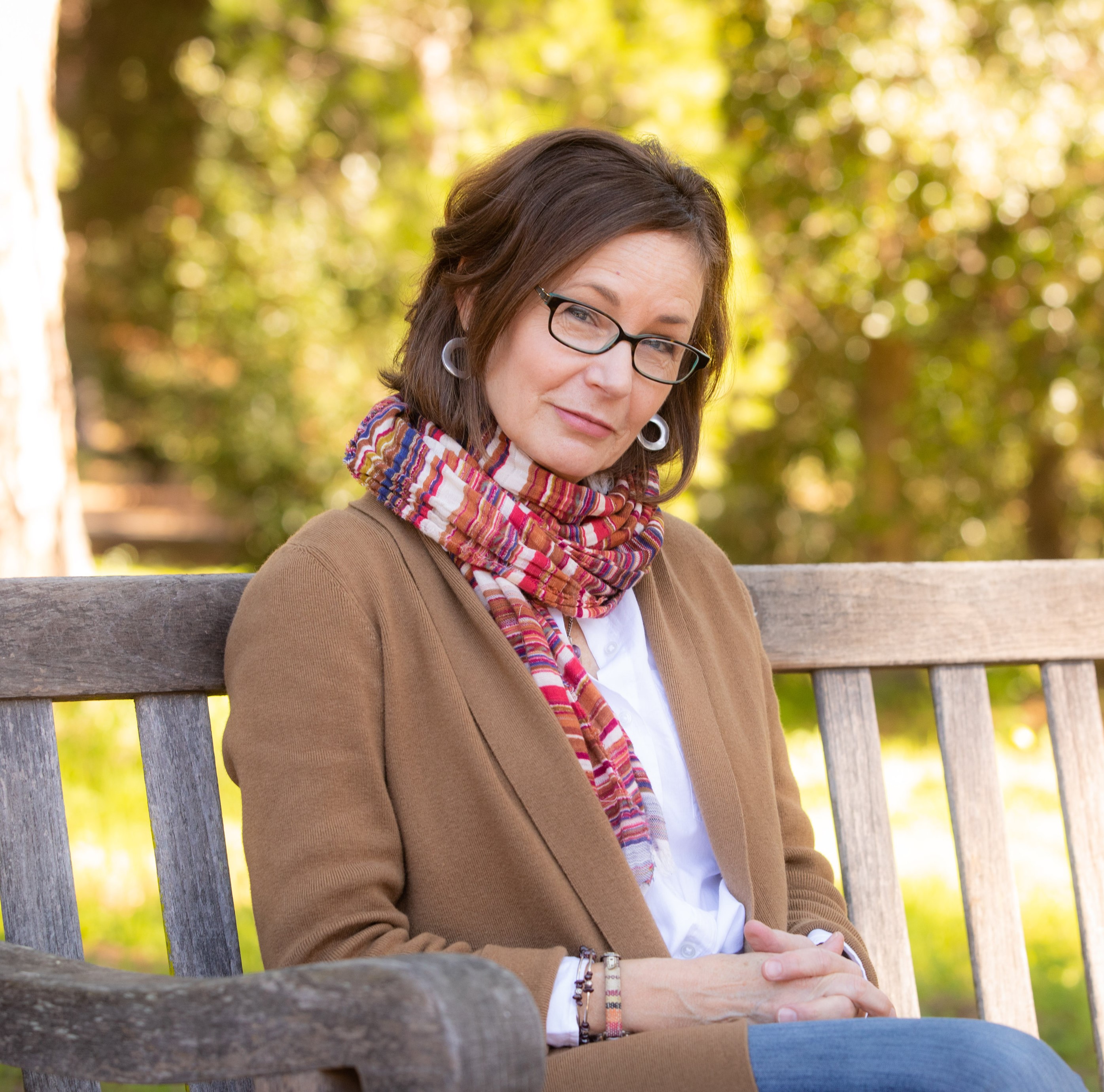
Carmen Imes speaking at the Exploring
Personhood Conference sponsored by
the Bush Center for Faith and Culture
(Photo: Chip Hardy)
The first half of my presentation drew out insights from the four scholars named above, with a bit of extra nuance from me in the area of gender. But then came the scary part -- I addressed head on the ways that evangelicals have failed in three broad areas: sanctity of human life (ahem, after birth), partnership of men and women, and creation care.

My talk will be posted soon on the Bush Center for Faith and Culture's website, so there's no need for me to repeat the litany here. It's enough to say that I pointed to examples of racism, ableism, sexism, LGBTQ-related issues, inhospitality to singles, failure to protect and advocate for victims of abuse, and neglect of creation care. I hit all these hot topics, issued a clear call for change, and cast a vision for a different way of living out what we say we believe. With my integrity intact, the question became 'would I lose my voice?' Would this be the first and last opportunity to speak on this campus?

I've been mulling over all of this for months, reading widely, and imagining how this might go. I asked people to pray and I prayed about it myself. I sought advice and wondered if this was career suicide. In the end, I said what I felt I must be said with as much love and empathy as I could muster. One thing is true -- of all the possible reactions I imagined, a standing ovation was not one of them. Everyone clapped, and more than half a dozen stood in solidarity.

Conference Panel Discussion
(Photo: Bush Center for Faith and Culture) 
This message struck a chord with so many, who thanked me with tears in their eyes. Faculty, students, and guests alike shook my hand and new friendships were born. To be clear, the warm reception is not a sign that all is well, of course. It's a sign that the problems I listed truly are problems. On that we agree.

And this is what gives me hope.

Because agreeing on the problem is the first essential step toward finding solutions.

So now the real work begins. Now we must invest our energies into the work of listening to new voices, reexamining how we do things, building new alliances, and prayerfully finding new ways forward. Change takes time, but the road is not so lonely as it seemed.

This conference taught me something about human personhood that was not on the stated agenda: Caricatures are difficult to maintain in person. I'm under no illusion that 48 hours on campus gave me an accurate picture of the SBC as a whole, or even SEBTS in particular. But it reminded me of the value of embodied community and courageous conversations. It showed me that the loudest voices on Twitter do not always (or even usually?) represent the majority. I found far more allies than I dared to hope. I'm relieved that a bridge has been built, rather than burned.

As we learned from Dr. Justin Barrett, compared to animals, humans are immensely social creatures capable of shared attention, mental space, expertise, and cooperation across a remarkably large group of unrelated humans. I saw this in action at Southeastern. 

Father John Behr and Dr. Jeff Schloss both talked about the telos of love, helping us think about the uniquely human capability of self-sacrifice for another. According to Behr, it is in laying down our lives for another that we truly become human. I felt this in the way people thanked me for saying hard things, and in the way Dr. John Hammett offered loving pushback to each of us.

If Behr is right, then all of us who participated in this exchange became a bit more human this week.

For that I am profoundly grateful.

Wednesday, June 24, 2020

Author Interview: Sandra Richter

In this post I'm taking you behind the pages of Stewards of Eden to meet the author, Sandra Richter. Sandy, thanks for taking the time to tell us about your work!

So great to get to interact on this important topic, Carmen. Thank you for the invitation!

When did you first know that you wanted to write this book?

Sandra Richter, author of Stewards of Eden
Hmmm … that is a good question, and one I haven’t answered before. Although my love for God’s creation goes back to before I was even a Christian, the whole business of writing and speaking on this topic in Christian circles just sort of “happened.” As I narrate in the book, the first time I had the privilege of sharing a message of environmental stewardship from a pulpit was 2005 at Asbury Theological Seminary. The response was everything I could have hoped for. And to my surprise, I was asked to publish that message in the Asbury Journal. At the time of publication, I was serving on the Institute of Biblical Research planning committee, and we were casting about for a topic for the following year. I suggested that we do a plenary session on creation care. They said “yes,” if I would be one of the speakers. I was thrilled, but it also meant I had to seriously up my ante—now I needed a message appropriate for an academic conference. Man did I work hard on the research for that presentation. And in the fall of 2008 at the annual meeting … once again the response was everything I could have asked for. Rick Hess, editor of BBR was at the gathering and asked me to publish that presentation. Then there were a slew of speaking engagements—some more enthusiastically received than others. (There was a certain week-long “Holiness Conference” at a not-to-be-named Christian College where I think 17 people total showed up; then there was that walk-out at another not-to-be-named college; and, oh, the conference where I presented on humane animal husbandry in the heart of cattle country in Tulsa--that was a bit awkward!). In each of these my material evolved and developed. Usually the response was beautiful. (I’m thinking of Darryl Williamson’s "Arise City Conference" in Tampa, FL, and the older sister who stood to her feet at the end of my talk, called everybody out, and ran what could be called an altar call for me!) But I think the first time I knew I wanted to publish this book was during my tenure at Wheaton College. I realized (as I narrate in the book), that the Christian community needed a short, accessible, biblical treatment of this topic. A book that didn’t get lost on side issues. A book students could read (quickly), hand off to their parents, and they to the grandparents. I wanted to offer the Church their own book on this topic: “What Scripture says about the environment and why it matters.”  

Did you grow up in a home that valued conservation? If so, how did your parents practice conservation? If not, when did you become passionate about creation care?

No, I can’t say that I did. Like yours, my family was frugal. And like yours we camped a lot (there were a lot of us and we were military—cheap vacations!). I do think the camping and some of the adventurous places we lived as an oft-relocated Navy family awakened my deep empathy for the trials of creation. But I wasn’t raised with any sort of tutelage in environmentalism. Honestly, I think my passion for creation is part of my journey to faith. I believe that it was the image of God in me (prevenient grace for the Wesleyans out there!), and the Spirit of God calling me, that caused the majestic and fragile beauty of creation to resonate so deeply with me. As I say in the book: “When I stand at the ocean’s edge and feel the spray of its raging force on my face, when the wind silences me, when I am privileged to hold a wild creature in my hands” … my response is worship. This has always been true of me—even before I knew the Creator’s name.

What are the biggest hang-ups for evangelicals when it comes to creation care? Do you have a theory about why this is?

Having lectured and written on this topic for more than a decade at this point, I am pretty convinced that the “hang-ups” can be distilled to three issues. (1) The fact that in American politics environmentalism has been pigeon-holed into a “liberal” political agenda and has become guilty by association. Essentially, the accusation is that if you care about stewarding the planet you must also be a “liberal.” (2) The fact that we as Americans don’t typically see the impact of environmental degradation. We export most of our mess and never see the widow and the orphan picking through the trash piles we create. (3) The very unfortunate theological agenda that teaches that this earth will be annihilated at the end of the age. I deal with this misunderstanding of the New Covenant in chapter seven of the book.

You're a busy professor married to a professor with two growing daughters. What inspired you to raise chickens in your backyard? Surely not boredom?

Hah! The infamous chickens! Well Greta, Maggs, and Lucy will be thrilled to know they made the blog! Buttercup, may she rest in peace, will be grieved to have missed out. And we’ll be sure to send a note over to their sisters Sadie and Penelope who are keeping our friends Jack and Maggie in eggs these days! So, yes, I am “wicked busy,” but you make time for what you love don’t you? The chickens were a project for my youngest daughter and me. We both really wanted to do it, and Santa Barbara is a perfect place to raise chickens. California is a very libertarian state, so you can have chickens (not roosters) in pretty much any suburb. Better, you don’t have to heat your chicken coop to keep any of your hen’s feet from freezing off! More seriously, it is important to me that I practice what I preach. So in our house we recycle everything, we compost, we hang out our wash, we read labels, we eat very little meat, we have a vegetable garden, I drive a used Prius, we have rain barrels, and we’ve dropped all sorts of $$$ to landscape with native plants (which in SoCal means less water). Like any homeowner, I’m still learning (like what about solar panels?), but as I believe that environmental stewardship is a part of my responsibility as a Christian … I’m doing my best.  

Climate change is one of the most controversial aspects of the current debate about environmental concerns. Why did you choose not to talk about it in your book?


Great question. Several reasons. The first and most obvious is that the Bible has nothing to say about climate change. So any biblical theology of climate change is going to have to be an extrapolation—something I did not want to be doing in a book I promised was “just the Bible for those justly concerned.” Second and closely related, the steps any believer should be taking to curtail their own over-use of this planet and its resources will help to reverse climate change. So in many ways, climate change is a moot point. If we’d been doing our job as good stewards, we wouldn’t be having this problem. So what changes are needed? As Gus Speth, Chairman of the council on Environmental Quality under President Jimmy Carter has stated:

"I used to think that the top environmental problems were biodiversity loss, ecosystem collapse and climate change. I thought that thirty years of good science could address these problems. I was wrong. The top environmental problems are selfishness, greed and apathy."

I say it this way in the book: “The earth is the Lord’s and all it contains. He has given it to us to use in our need, but not to abuse in our greed.” When we get serious about our careless consumption of fossil fuel; when we start thinking about the supply chain for that fuel, our manufactured goods, our food; when we take stock of reckless land development … climate change will begin to unchange. So, yes, climate change is a huge issue that our carelessness has brought to the tipping point, but it is one that regular old responsible stewardship would have/still can resolve.

One of our first purchases when we moved to our current house was a 3-part trash bin for the kitchen, so that we could sort trash from plastic and paper recyclables. Our town has no recycling pick-up program, but we do have a local recycle center where we can bring our own recyclables. We've been pretty diligent about sorting trash making trips there. However, we heard a year or two ago that all the plastic recycling ends up in a landfill anyway because China will no longer accept plastics for recycling, and North America lacks the facilities to handle the volume of plastic waste. Have you explored this issue? Why should we keep sorting recyclables if it all ends up in the landfill anyway?

Yes, in 2018, China said, “We don’t want your trash anymore.” This, of course, sent major reverberations through many US businesses. If China wasn’t going to take our trash anymore, and we are now packaging everything from blueberries to underwear to new tools for our work bench in plastic, what are we going to do? The first question we should ask, of course, is why were we sending our trash overseas in the first place? Where is our sense of national responsibility? And what about the widow and the orphan in China?

The next question is, “Uh oh, if China has been recycling our plastic, do we have the infrastructure in the US to take care of our recycling ourselves?” And the answer right now is, no.  At this point we have more than 20 types of plastic packaging—and every time I go to the grocery store I see that COSTCO and Kroger have figured out a new way to use plastic for stuff that used to come loose or in cardboard. As a result, “virgin plastic” accounts for most of the plastic you and I see, which is produced by petro-chemical companies. These guys make billions producing their plastic (and will make billions more as current plans are to double the industry in the next five years). As the name implies, petro-chemical companies are using fossil fuels to make their stuff. And right now, virgin plastic costs less than 10% of the cost of recycled plastic. So what is a capitalist economy to do? The first thing we need to do is to be disturbed. Statistics such as those below should be a huge wake-up call:

  • More than 1 million seabirds and 100,000 marine animals die from plastic pollution every year; 100% of baby sea turtles have plastic in their stomachs. 
  • Every day around 8 million pieces of plastic make their way into our oceans.
  •  The Great Pacific Garbage Patch (made up primarily of plastic) is bigger than Texas. 
Then we need to do something. What to do? Vote with your pocket book. Buy plastic packaging as little as possible. Choose the “avoid plastic packaging and extra packaging” option with Amazon. When you have to buy plastic, look for “recycled” on the label. Tell your grocery store manager you don’t want your food in “clam shell” packaging. Tell COSTCO that apples don’t occur naturally in plastic bubbles. Basically, let us make it as socially inappropriate to buy and sell in plastic as it is to smoke cigarettes in the work place!

Your book goes beyond recycling to talk about mining and food production. Those case studies were incredibly eye-opening for me, especially in light of the biblical teaching on agriculture and animal husbandry that you so powerfully explain. What can one person do to make a difference in a culture marked by greed and consumerism?

Thanks for this question, Carmen. The last section of Stewards of Eden is entitled “Resources for the Responsive Christian.” This appendix gives very practical, hands-on, “I can do this,” suggestions for the average human. Things like getting informed (subscribe to an environmental magazine in order to educate yourself); voting your informed conscience (Sierra Club offers a voting guide every year); voting with your purchase power are a great way to start. Links and addresses are all in there. As above, one powerful thing all Americans and Canadians can do is vote with their purchase power. We are capitalists, oh, yes we are. And if it doesn’t sell, the industry makes changes! So when you go to the grocery store, the hardware store, the car dealership, be willing to spend a bit more to invest in the industries you want to thrive. As with all things in our fallen world, we are not actually going to be able to fix this. The Rider on the White Horse is going to have to do that. Just as I will never succeed in emptying all the brothels in Thailand, finding a home for every abused child abandoned to the foster care system, or feed every orphan in Sub Sahara Africa—I am not going to fix this either. But as a Christian, it is my sworn duty to stand in the gap. It is our calling as salt and light to demonstrate to our bruised and broken world what a citizen of heaven looks like, “to live our lives as Adam and Eve should have, as Jesus Christ has.” Environmental degradation is a global and a local issue, our neighbors are impacted by this, our neighbors care about this. Where is our witness in the mix?  In sum, what I attempt to demonstrate in the book is that God cares about this, and we must too.
It's hard to imagine a more compelling book on this topic for Christians who care about what the Bible teaches about creation. Thanks for your excellent work to help us think well about environmental stewardship! 


Wednesday, June 17, 2020

Book Review: Sandra Richter's 'Stewards of Eden'

I grew up in a white, American, conservative Evangelical context, where "environmentalist" was a derogatory term. To us, environmental concerns were a liberal agenda. We certainly didn't want to be guilty of getting all wrapped up in saving the planet when the thing that mattered was people and their eternal destiny. 

At the same time, being of Dutch descent, it came naturally to avoid waste. We washed and reused ziplock bags, kept scraps of paper to use for craft projects, wore hand-me-down clothes, shopped at thrift stores, hung our laundry out to dry (at least for a while), and planted a garden. We were delighted to find free stuff on the side of the road on trash day or go dumpster diving behind the local craft store to rescue stuff from the landfill. Once, when my brother and I were young, we picked up cans on the side of the highway for miles with my parents to help pay for a new Red Flyer wagon. It's probably fair to say that we did all this to save money, not to save the planet. But we also enjoyed nature as a family, camping as often as we could. 

These days I'm puzzled over the apparent disconnect between our thrifty way of life and the aversion we had to environmental concerns. The more I study Scripture, the more I see how the mandate to care for creation is actually a central part of what it means to be human! Genesis 1:26-28 outlines God's vision for human vocation, and it's directly tied to our involvement with the animals and our shared habitat: 
Then God said, "Let us make mankind in our image, in our likeness, so that they may rule over the fish in the sea and the birds in the sky, over the livestock and all the wild animals, and over all the creatures that move along the ground." So God created mankind in his own image, in the image of God he created them; male and female he created them. God blessed them and said to them, "Be fruitful and increase in number; fill the earth and subdue it. Rule over the fish in the sea and the birds in the sky and over every living creature that moves on the ground." 
Stewards of Eden, by Sandra Richter

One book that is helping me rethink my relationship with this planet is Sandy Richter's brief introduction to creation care entitled Stewards of Eden: What Scripture Says about the Environment and Why It MattersSandy is a master at making rigorous biblical exegesis accessible to laypeople. 


She knows her stuff. Her Harvard dissertation was published by de Gruyter under the title The Deuteronomistic History and the Name Theology: lešakkēn šemô šām in the Bible and the AncientNear East, which sounds intimidating before you even open the cover,
but her Epic of Eden: A Christian Entry into the Old Testament is one of the most down to earth and accessible books you'll find on the Old Testament. I've come to expect illuminating insights expressed in powerful prose. But Sandy is more than a respected author to me. She was a member of my dissertation committee and has slaved over my writing to help me improve. Were it not for her approval, I would not be Dr. Imes. We attended the same church in Wheaton for 2 years and I am honored to call her my friend. Stewards of Eden is just like Sandy -- short, but powerful, insightful and challenging.

One of the really compelling parts of Sandy's book is the chapter on Widows and Orphans. In it, she shows how our failure to practice sustainable stewardship disproportionately affects those who are economically and socially disadvantaged. In other words, the way we treat the planet affects people, especially the poorBecause most of our food and consumer products are produced and disposed of far from us, we are shielded from the sometimes devastating effects of their production and disposal. We "export" our environmental waste by manufacturing products in countries (or counties!) with looser restrictions. The implications of these business decisions will be felt for decades to come as the rich keep getting richer and the poor keep getting poorer -- their lands crippled by toxic waste. In my mind this may be one of the most persuasive sections for Evangelicals who value people over the natural world. 

The CoronaVirus pandemic is providing us with a current case in point. Sandy and I can easily work from home as professors, and while our institutions are dealing with new financial challenges, we still have homes, food, and access to health care. "Shelter in place" is more likely to feel like a "staycation" for us than a death sentence. Meanwhile, blue collar workers are in large part unable to work from home and may have very little 'cushion' with which to weather the loss of income. Lower income neighborhoods have limited access to testing and less reliable health care coverage. The Navajo Nation is a sobering example. Limited access to water (right here in North America!) and limited access to healthcare and a lower overall level of community health are contributing factors to their higher-than-average COVID19 infection and death rates. The crisis of this pandemic exposes the inequities of our society and chastens our complacency.

Sandra Richter, author of Stewards of Eden
One thing I deeply appreciate about Sandy's book is that she consistently demonstrates that Sinai still matters. Sandy takes us through God's instructions for ancient Israel to show how creation care -- including trees, fields, and animals -- is an integral part of God's expectations for the covenant community. These instructions help us see what matters to God and to human flourishing. Under Sandy's tutelage, your eyes will be opened to what these laws would have meant for the ancient landowner, an invitation to a radically generous way of life dependent on God's provision. While she does not suggest that we try to implement Old Testament law wholesale, she shows how the laws should continue to inform our ethics and practice. We, too, are invited to practice radical generosity. Sandy leaves readers with a whole list of practical ways to begin right now to reverse these trends and make a positive difference.

In my next post, I interview Sandy about Stewards of Eden -- what motivated her to write it and how we can begin to respond. You won't want to miss it!

Thursday, December 26, 2019

My Favorite Books of 2019

I entitled this blog Chastened Intuitions as a way of recognizing that our gut feelings about something need reshaping in light of research and exposure to other perspectives. Reading is a powerful way to pursue that kind of learning. I read 40 books in 2019. The five listed below made the most significant contribution to my own growth, chastening my intuition in important ways.

Surprised by Jesus Again: Reading the Bible in Communion with the Saints
by Jason Byassee

I encountered this book as a skeptic, but I was quickly disarmed, even charmed. I did not find every reading persuasive, but I was won over by his central thesis. Byassee winsomely, playfully invites Christian readers of Scripture to delight in its mysteries and to participate in God's passionate quest to lavish his love an on ever-widening circle of faithful followers. He is right to chide biblical scholars for our lack of imagination. Reading this book has reignited my passion for a pedagogy that ushers fellow readers of Scripture into a place of wonder. A finalist in the Christianity Today 2019 Book Awards, this book is well worth reading.


The Liturgy of Creation by Michael LeFebvre

Given LeFebvre's brilliant doctoral work on Old Testament law, I expected this book to be carefully researched and lucidly written. I was not disappointed. LeFebvre skillfully brings into focus the parts of the Pentateuch readers are most likely to skip, showing how the purpose of each calendar notation in the Torah, including its opening chapter, is liturgical―to order the work and worship of the covenant people. His reassessment of Genesis 1 moves beyond the stalemate in the creation debates without recourse to extrabiblical or scientific arguments. His thesis grows organically from a close reading of the biblical text. LeFebvre shows himself to be a master teacher with pastoral sensitivity, able to patiently explain what he has so carefully studied. This book will change the way I teach the Torah. I can't wait to share it with my students!
Blood Brothers
by Elias Chacour

A powerful and enlightening story of a Palestinian Christian living in the aftermath of WWII. His story unveils the dark side of the Israeli-Palestinian conflict, its origins outside the land of Palestine, and the way both sides have been caught in the crossfire between nations whose complex interests are not above board. Chacour's hope is that Arabs and Jews can learn to live together as neighbors. He has devoted his entire life to this aim: PEACE. Such an eye-opening and hope-filled book!
Hope for the Oppressor by Patrick Oden

Hope for the Oppressor is a brave undertaking. Patrick Oden suggests that efforts to liberate the oppressed will never be successful until oppressors experience liberation, too. Without true liberation of all parties, new cycles of coercion result. But there's hope. He locates that hope in Christian community, where our notion of selfhood can be reconceived and our fractured selves healed in light of God's holy love. Oden's thesis is grounded in theologically rich readings of biblical texts and skillful engagement with historical and systematic theology. His book issues a life-giving invitation for all of us — those with privilege and those without — to participate in a different kind of kingdom. His book has the potential to fuel a revolution for those who dare to reexamine their lives in light of his claims.

Phoebe by Paula Gooder

How does a woman with a slave name end up delivering Paul's letter to the Romans? How does she have the means to undertake such a journey? How was she educated to the point that Paul chooses her to explain his letter? What did she think of the church in Rome? Gooder answers all these questions in a compelling way. She kept my attention from beginning to end. Friends who are not biblical scholars have enjoyed the book, too. Together with Holly Beers' A Week in the Life of a Greco-Roman Woman and Ben Witherington III's Priscilla, 2019 was my year to discover what is was like for women of the Roman Empire in the first century.

Tuesday, June 26, 2018

TIME, Trump, The Death of Socrates, and The Art of Biblical Interpretation

Journalism ethics is all the rage this week (literally), with a provocative TIME magazine cover on the topic of immigration. (With apologies to readers interested in the politics of immigration and assurances to those weary of the debate, this post is not about immigration, but rather the relationship between art and truth). Are the facts at odds with the truth?

The Facts: President Trump has never met this girl from Honduras. Her separation from her mother at the border was only momentary, as her mom was searched. Afterward they were (at least temporarily) reunited as they awaited processing.

The Truth: Still, the girl comes to represent the many hundreds of children who have been separated from their parents while seeking a better life. The moral outrage following the public's realization of this is understandable, no matter how you propose to handle illegal immigration.

TIME's cover reminds me of a painting from the 1700's -- "The Death of Socrates," by Jacques-Louis David. David depicts Socrates surrounded by his disciples, on the verge of drinking his death sentence in poison. He teaches until the final moments of his life, remaining stoic in the face of death.

"The Death of Socrates" by Jacques-Louis David (1786)
Public Domain / Wikimedia Commons
Here's the connection with TIME's cover: Plato, from whom we learn the story of Socrates' death, was not present when it happened, yet David depicts him seated at the foot of the bed, slumped over and facing away.

Why include such an inaccuracy in this painting?

The Facts: David knew from Plato's own writings that he was not present at Socrates' death.

The Truth: Plato was deeply affected by Socrates' death and opposed it. By positioning him at the foot of the bed, looking away, the artist accurately captured Plato's disposition toward the death of his esteemed colleague. If Plato had been missing from the painting, we would lose this central point the artist is trying to make -- a point that coveys the truth of history creatively.

From time to time, feathers are ruffled when someone dares to suggest that the writers of Scripture  were brilliant artists. To some, this implies a disconnect with truth and a denial of divine inspiration. The second objection is easily solved. The God who created all things endows humans with creativity and invites us to participate in his work. As a prime example, take Bezalel and Oholiab, the men charged with designing the tabernacle (Exodus 31). These men were Spirit-filled and skilled creatives, in spite of the fact that their task was to construct something that already had very detailed blueprints. If their creativity was not a valuable asset for this project, God would have been better served finding an automaton. No, he chose humans, men who had spent years honing their skills in weaving and engraving and woodworking and all types of art.

But does art imply a disconnect with truth? Put another way, would the exercise of artistic license in the production of sacred Scripture get in the way of truth?

A great place to test this theory is in the Gospels. Matthew, Mark, Luke, and John each tell us the story of Jesus. With their words they paint a portrait for us of his life and ministry. They share much in common, at times even whole episodes or chapters. But there are differences, and some of these are rather puzzling. Did Jesus drive out the money changers in the temple at the beginning of his ministry (as John tells it)? or at the end (as Matthew, Mark, and Luke recount)?  Some Christians assume that Jesus must have driven them out twice -- once at the beginning and another time at the end of his ministry. But could this be an example of creative license?

Each Gospel writer introduces us to the historical Jesus by showing us something distinct about who he really is -- the Jewish Messiah (Matthew), the suffering Son of God (Mark), the Savior for all people (Luke), the Son who reveals the Father (John). To show us what is true about Jesus, in some instances they are best served by rearranging events so that everything will point in the direction they want us to look. This is not because they are trying to hide the truth, but because truth is their main concern. They arrange the details so that we as readers don't get muddled -- so that we can see what they see.

Matthew, Mark, and Luke may have saved this story until the end to illustrate how the opposition to Jesus gained momentum, resulting in his crucifixion. On the other hand (I suspect this is the better explanation), John may have chosen to tell us about the temple cleansing earlier because he's arranging the episodes of Jesus' life topically. The temple cleansing fits a string of stories illustrating Jesus' redefinition of Jewish institutions (sacred vessels, temple, rabbis, and sacred sites; John 2:1-4:54).* The cluster of stories among which the temple cleansing sits is followed by a series of stories in which Jesus redefines Jewish festivals (Sabbath, Passover, feast of Tabernacles, and feast of Dedication). Together, these two clusters make up the "Book of Signs," where John presents 7 signs that reveal Jesus' identity and call people to faith, setting us up for the "Book of Glory," where Jesus is glorified by offering his life on the cross.

However you slice it, artistic license is clearly at work. Either somebody moved this event out of chronological order, or all four gospel writers chose to omit a second occurrence. In my opinion, the truth has been gloriously served.

*For a fuller discussion of John's arrangement of material, see Gary M. Burge, Lynn H. Cohick, and Gene L. Green, The New Testament in Antiquity (Zondervan, 2009), 216-219.

Tuesday, May 23, 2017

Under Our Noses

We were in the mood to explore. Up for something new. Felt like we needed to get "out." But where?

Falls in Downtown Oregon City
(Photo: C Imes)
Then I had an idea. I doubted it would be anything dramatic, but there was a waterfall nearby that we'd only passed by and never seen up close.

We've lived in our small, historic town on the Willamette River nearly three years now. This waterfall was right smack dab in the downtown area. We pass it multiple times each week. It's about time.

I tried to make it a secret adventure but our resident teenager and pre-teen insisted on knowing where we were going. I told them. Their response: "Seriously?" They opted out, so Danny, Easton and I piled in the car. (This post is my "I told you so!")

Oregon City 7th Street Elevator
(photo: C Imes)
Hardly more than five minutes from home, we parked and walked a half block to the top of the stone stairs. Our unique community has an elevator that doubles as a public street linking upper downtown to lower downtown. But it was closed for the evening, so we took the stairs. And that's where I wanted to be anyway, because I had never climbed them. I didn't realize that the waterfall went right beneath them. What a pretty spot! Leafy green trees created a tunnel of shade for our descent.

Taking the Stairs in Oregon City
(photo: C Imes)
In the mood to meander, we headed past shops and restaurants and across the highway to the edge of the Willamette River to see what could be seen. We've driven by that spot hundreds of times in three years. Other than a few fishing boats and kayaks, we had never noticed anything worth writing home about. But we were in for such a surprise!


Our Surprise Visitor: A Sea Lion! (photo: C Imes)
We stared at the water, foam still swirling from the Willamette Falls. Danny noticed the river seemed almost alive in places. Then suddenly the surface broke—two sea lions! We're more than an hour drive from the coast. How can this be? But it was.

I-205 Bridge over the Willamette
(photo: C Imes)


We watched the sea lions for quite some time, following one fellow as he lazed his way down the river, poking his head up for air now and then. (It turns out the local fishermen are deeply concerned. There are at least 30 sea lions this year, and they're eating too many salmon!)

West Linn-Oregon City Bridge
(photo: C Imes)
By the time we headed back to the stairs and up to the car, I was all the more convinced: You never know what you'll discover if you slow down. Linger longer. Park and walk. Take it all in.

There's a whole lot of life happening right under our noses.

Wednesday, May 17, 2017

Life After Heaven

I've written about heaven before, saying that we typically get it wrong, that it's not what you think. So what am I to make of a man who claims to have been there and back again? How credible do I find his story?

Paul Pastor, writer and fellow alum of Multnomah University, saw my blog post on heaven and asked me to read this story and blog about it, too. At first, Paul was also a skeptic. But Steven Musick had a story to tell and needed help telling it. After Paul met Steven and heard his story, he was convinced that something was different about this heaven-and-back experience. Together they wrote this book. 

Life After Heaven: How My Time in Heaven Can Transform Your Life on Earth is an amazing story, but there's nothing flashy or sensational about the way Musick tells it. Instead, he invites us to see how God has made a difference in his day-to-day life by giving him a glimpse of what comes next. He relates his difficult childhood, early successes, and the unexpected illness that sent him on ahead.

"This Place must be heaven," he writes of what happened when he died. "This Place—heaven—is physical, real. In fact, it's more physical and real than the world I have known. It's not an ethereal, disembodied state, as some people might think. Senses, all my senses, are brilliant and deep. There is weight. There is movement. My body feels an overwhelming sense of freedom. It is wonderful. Totally free." (40)

After a brush with death and 5 weeks in a coma, Jesus sends him back and Musick wakes up.

He is crushed. After experiencing heaven, Steven's longing to be with Jesus again is almost debilitating at first. As he explains, "Heaven is all you want once you've tasted it" (155). He faces an incredibly painful recovery and over a decade of limited activity because his lungs were deeply scarred by his illness.

I don't want to spoil Musick's story by telling you what happens next, but through it he discovers that God is at work in profound ways right here on earth. Musick begins to realize that heaven is not as far away as we might think, and that we can experience it here and now if we're sensitive to what God is doing. He tells one story after another of "bubbles," moments when the kingdom of God shows up on earth, enveloping, exhilarating, fragile, and momentary.

Steven is honest about his doubts, his unanswered prayers, and his awkward moments. He takes no credit for his frequent encounters with kingdom of God. He offers no formula for guaranteeing divine presence. But he wants to awaken our sense of anticipation: "There's more that we should be experiencing in the here and now. Our expectations are far too low. Heaven is much closer than we think." (176)

It's been 40 years since Musick visited heaven. Why tell his story now? He wants it to make a difference in our lives the way it has in his. 

"Do we all need to have a near-death experience to overcome the fear of giving God the totality of our lives, time, and resources? To give him our fears of loss? of suffering? of death?" (166) Musick hopes not. He aims to fill us with anticipation about what awaits us after death so that we're unafraid to embrace the fullness of life here. 

Life After Heaven won't hit the bestseller lists. It's not sensational enough. The story is not exactly gripping. But Musick doesn't want it to be. It reads like a conversation over breakfast, a gentle nudge to look deeper, to long for more, and to be available to participate in the kingdom of heaven here and now. 

That's what I like best about this book. It unveils the intersection between heaven and earth and gives us a taste of the vibrancy and healing of the presence of Jesus that we can begin to experience right now. Call it what you will—heaven, the kingdom of God, eternity, the new creation—we have a lot in store for us! 

When Jesus travels around Palestine preaching, he isn't telling people the good news about what awaits them after death. He doesn't preach "heaven." He claims that the kingdom of God is near. He offers glimpses of that kingdom by healing people, casting out demons, telling stories, rebuking wickedness. His victories over the kingdom of darkness are tangible, earthy, working their way into the nitty gritties of life—bleeding, disease, conflict, ambition, death. He doesn't primarily show people how to die well, he shows them how to live well.

And that's exactly Musick's message. If you're curious, read his story for yourself!

Saturday, February 25, 2017

Confronting Modern Day Slavery—closer than you think

The music was loud enough that I could feel the bass pulsing through the floor. The vocalists were captivated, joy flooding their faces. The musicians were in sync. The environment was perfect. A young worship leader, flown in from Germany, stood at the microphone with his guitar. He meant business. The room was full—college students crammed shoulder-to-shoulder, faculty, guest missionaries. It was a recipe for revival. We were standing, singing our hearts out. Some hands were raised. Tastefully-designed slides gave us the lyrics. He who the son has set free is free indeed. 

This was not where I expected to confront modern day slavery. Not here in the Pacific Northwest. Not at a Christian University. But there he was—a real slave—at the end of the row directly in front of me. He was standing along with everyone else . . . but his eyes were captive to his phone. If he had been texting, I could have understood. Relationships are important to him. Maybe he's dealing with a family crisis. But that was not the case. He was playing a game. I cringe just typing those words. I could see the handcuffs cutting into his flesh.

A few times he turned off the screen and slipped the phone into his pocket. But within 60 seconds it was out again, and he was back into his game.

I was baffled. He wasn't sitting in the back row, wasn't making any effort to hide his addiction. He was sitting on the inside aisle in full view of everyone, including this professor.

And he was not alone. At one point everyone in my row and all 8 guys in the row in front of me were on their phones. At the same time the guys behind me were snickering. I looked out across the auditorium. Those in my row seemed to be especially distracted, but I could see phones out all over the room.

During the skit.
During announcements.
During worship.
During the main message.

I wanted to stand up and cry out. I wanted to interrupt our speaker and ask for the microphone. I wanted to say Here, let me hold that for you so you don't miss out. Don't you see you are enslaved? Don't you see that you have lost the art of being human? Lost the ability to be truly present? You are going to need these skills as an employee, as a husband, as a father, as a leader, as a friend.


How did we get here? How did this tiny computer manage to become the only thing that matters? The only thing alluring enough to capture our attention? Why have we let it fragment our focus into smaller and smaller pieces until we can no longer remember what it means to sit in silence and listen? When is the last time we have sat across from someone and looked into their eyes?

From time to time students come to see me. They sit in my office and bring their toughest questions and doubts out into the light—How could a good God allow this? Why doesn't God answer when I pray? How can I be sure what I'm supposed to do with my life? The Bible makes me angry, too angry to pray. I'm having an existential crisis. I'm struggling to keep up. This is all really new to me, so I might need some extra help. These are not the students who scare me. These students are my treasure—the ones who fill my heart with hope for this generation. These students are engaging life with eyes wide open. Their yearning for answers is their sure path to success.

It's the numb ones who scare me. Those who cross campus with faces illuminated by the eerie light of their screens. It's blinding them to the chains that entangle and weigh them down. They are tired. They feel pulled in so many directions. They never have enough sleep. Never enough time to get everything done. And they don't realize that they have willingly surrendered to this life of bondage. They don't even remember what it's like to be free.

Photo credit: John Blanding for the Boston Globe
Do you remember?
Do you remember family dinners filled with conversation?
Do you remember drives in the country soaking in the view?
Do you remember watching something incredible live, without trying to capture it so you could update your status?
Do you remember feeling challenged by a live speaker?
Do you remember meeting someone in line?

Don't misunderstand me. I have a smartphone, too, and I love social media. But at some point it ceases to be a tool and becomes a slave master.

Ironically, the speaker earlier this week, AJ Swoboda, had given us a powerful challenge. We need to care for creation, he said, because creation is the most effective argument for the existence of God. To look up and see the stars far from the city lights inspires awe. To hike above the treeline puts everything in perspective. If we fail to care for this planet, we will lose the most powerful evangelistic witness we have.

And if we don't look up, we'll miss it, too.

Thursday, December 29, 2016

Top 12 Posts of 2016

2016 has been deeply satisfying for me personally. This is ironic, considering the tumultuous waters we have traveled as a nation and the looming crises internationally. By the grace of God, the collective lament and angst and fear has opened doors for me to write, teach, and speak in ways that are more culturally connected than ever before. This is evident on my blog, as I've come out of my academic cave and touched on issues of race, immigration, social media, vocation, politics, death, and tough questions of the faith.

Perhaps you haven't read it regularly, and you'd like to catch the highlights. In case you blinked, my blog changed titles this year, and so did I! Here are the posts that have (mostly) generated the most hits this year. I've skipped a couple and added one of my own favorites.

On race, immigration, and politics
2/1   refugees and religious extremists -- what to do?
7/12 an open letter to people who think they're white
7/14 so you think you're white
11/7 election day encouragement

On living life fully in God's presence
4/4   learning how to celebrate
5/18 a simple path to joy, part 1 and part 2
11/2 the surprising beauty of unanswered prayer
12/7 undone by the Psalms

On finding our vocation
1/3   leaning in
4/12 lasting impressions and do-overs
7/4   perspective on cape perpetua
7/26 quilted hearts: mentoring for the long haul


Sunday, November 27, 2016

Amazon's Call for Sabbath

"Sundays should come with a pause button." 

So said Amazon in the email we just received.

Was Amazon trying to make a profoundly theological statement? Probably not. (They actually wanted us to "pause" what we were doing and go shopping.) But they capitalized on our collective longing for a break from a to-do list that never seems to end. And in so doing, they pointed to the wisdom of Yahweh's command at Sinai: "Remember the Sabbath."*

The fact is that we all need a break. A rhythmic time of rest. A chance to recharge so we can re-engage our work with fresh energy.

Sabbath is less about attending a worship service (this is important for other reasons) and more about recognizing that we are not machines. We all need to hit the "pause button" or we will quickly reach burnout.

For the Israelites, just rescued from slavery to Pharaoh in Egypt, the Sabbath was a weekly reminder of their freedom (see Deuteronomy 5:12–15). Yahweh was their provider. They no longer had a harsh taskmaster who required ceaseless labor. Six days of work was sufficient. Every member of the household, even the animals, were afforded a day of rest. The very architecture of God's creative work recognized the delightful rhythm of work and rest (see Genesis 2:1–3). As a nation, Israel was to model their work week after God's (see Exodus 20:8–11).

Our problem is that we often fall to one extreme or the other. On one side are those of us living a lifestyle of laziness, doing as little work as possible and prioritizing entertainment -- social media, TV, Netflix, and computer games absorb our attention hour after hour. On the other side are those of us who never unplug from work. Task-oriented emails, income generating activity, and household chores permeate our evenings and weekends until our days are indistinguishable from one another. We never stop because if we do, we're afraid we'll be snowed under. We can't rest because we'll fall behind. We must keep pushing or we'll lose our competitive edge.

For those of us in this latter category, Sabbath saves us from ourselves. We are our own most ruthless taskmaster. For us, Sabbath signals our surrender. Jesus is Lord. Not me. God is in control. Not me. The Almighty is my provider. Not me. I can rest in his tender care.

Sabbath is more than a schedule change. It involves a radical reorientation of our perspective. 

Sundays do come with a pause button. We just have to have the discipline to push it. When we do, we'll find that it is one of God's wisest and best gifts.

Did you hit the pause button today? If so, what life-giving and restorative activity took the place of the work you set aside?

-------

*I'm aware the Sabbath falls on Saturday, not Sunday. But in keeping with the rhythm of the early church to meet for worship on Sunday, I'm thinking of that day as the Christian "Sabbath."

Monday, July 4, 2016

perspective on cape perpetua

We had clamored over the volcanic rocks along with many others, their skin tones a wide range of hues and their languages sharply distinct — Spanish, French, Arabic, Russian, Japanese. Surely others, too. We were united in our fascination with the coastline and our awe as the pounding surf was thrown back by the sharp black rocks on which we stood.

Cape Perpetua (Phtoto: C Imes)
Every dozen yards or so the water had prevailed, with its persistent pounding, slicing a trench that progressively narrowed into stubborn rock. Here the waves picked up speed with a kind of focused frenzy, hurling themselves at the obsidian walls that taunted and restricted their progress.

The surge, the deep boom, the spray, and then the clatter of droplets, thrown helpless on the solid barrier, only to slide back down and drip into the churning sea.


Innumerable mussels clung fast to the hardened lava, daring the waves to pry them free, depending on the moisture and food delivered with each flailing attempt to carve stone.

Emma on the edge (Photo: C Imes)
We—my family and I, along with at least a dozen others—took our places around a deep bowl, hollowed out by the sea, which rushed to fill it through some unseen tunnel. Again and again the water would flood the enormous bowl and then be sucked out, leaving a gaping chasm encrusted with dripping mussels. Then, just as suddenly it would swell again with seawater, splashing and churning, lapping at the toes of the most foolhardy among us, eliciting gasps and shouts from all. Flush, fill, flush, fill. We watched, awestruck, as the sun slipped toward the horizon.

A few hours in the presence of such raw, unbridled power and my life feels very small indeed.
Cape Perpetua (Photo: C Imes)

Then, like the rapidly receding ocean water, we hurried to retrace our steps and climb the path to our parked car. We had just a few minutes to make it to the top of the cape for a birds' eye view of the sunset. The road wound up and up and up for two full miles, ending at the top of a coastal mountain. We rushed to the edge of the trail to look out across the expanse. I was dumbstruck.

View of the Coastline from Cape Perpetua (Photo: C Imes)
The powerful, churning waves were so far below us now that their pounding produced little more than a whisper. The sharp black rocks that held the waves at bay—merely a fringe for the heaped blanket of coastal mountains that towered above. The endless sea lay quiet and glistening beneath us as the sun slipped at last beyond the horizon.

The lesson in the crashing surf was merely a foretaste. If my life shrank beside the surge of seawater, it nearly vanished from the tip of Cape Perpetua.

And yet—

the incomprehensible mystery—

I, though infinitesimally small, have been invited to contribute, to partner with the One who designed all this.

Cape Perpetua 2016 (Photo: C Imes)
I am to cherish and share this creation with others. Still more—I get to participate in its ongoing development. I get to speak to it, engage with it, and shape it (for good or for ill).

The Creator shares with me the joy of co-creation, the dignity of service, the delight of influence.

And so I write, hoping to capture the brilliancy of a single evening in typed words so you can join me there on the cape, awestruck. You, too, are changing the world.

Saturday, January 16, 2016

learning to see

Two events, miles apart and so very different, linked hands in plain view, inviting me to consider them side by side.

The first, a memorial service. I had only met the man once in church before a dreadful disease took hold of his mind and dragged him on a downward spiral that ended this New Year's Day. I knew only the severity of his illness and saw the sorrow and courage of his wife as she came alone on Sundays. We connected briefly, the day I learned of his condition, and I held her in my heart for the ensuing weeks. When I heard of his death, I had to be there. For Char.

... for Dear Life (Photo: C Imes)
In that hour I learned volumes about the man whose rich life was cut short. An optometrist by profession, Don spent decades helping others to see. And on weekends? He explored the outdoors — camping, fishing, hunting, hiking — toting heavy camera lenses everywhere he went. Before the service started we were treated to a sampling of his award-winning work. He had such an eye for beauty! Butterflies up close, wildebeests crossing muddy rivers, birds in flight. Anyone can whip out a cell phone and snap a picture of nice scenery. It takes a special "eye" (and sophisticated equipment) to get the angle and the lighting and the aperture just right so that the picture comes alive. Don possessed that special sight.

From the service I headed directly to Newberg to teach my class on Wisdom Literature. The order of the day was understanding how Hebrew poetry works, especially proverbs. We began by discussing a chapter from Leland Ryken's Words of Delight: A Literary Introduction to the Bible. One student spoke up, "I really like how he related proverbs to photography. That's such an interesting way of thinking about it." Aha! Indeed, Ryken refers to these "wisdom teachers" as "the photographers of the Bible" (316, paraphrasing Robert Short, A Time to Be Born—A Time to Die).

And it's true, isn't it? The writers of proverbs have an extraordinary eye for ordinary things. They look at the same ship, the same busy street, the same plants, but they see beyond the surface, making connections that enlighten our minds and dazzle our ears. Here's a glimpse through the eyes of a sage:
"The LORD tears down the house of the proud,
but he sets the widow's boundary stones in place." (Proverbs 15:25)
The images evoked by this proverb, chosen at random, are so vivid! See Yahweh himself, muscles gleaming in the hot Mediterranean sun, as he demolishes a stone house. See him cross the field with stone after plaster-crusted stone and place each deliberately as a boundary, while the grateful widow looks on, tears streaming down her face. See the proud man with arms crossed and furrowed brow, sputtering frustration, but unable to defend himself.

The sage could have said, "It is inadvisable to be proud" and "You should not take advantage of the poor." But here instead we have a living image, painted in words, that joins both ideas. Yahweh himself takes action. We watch him at work. We stand at the sidelines feeling chastened or grateful or energized -- depending on the state of our own hearts.

Captured Alive (Photo: C Imes)
And as we seek to understand this picture in words, we begin to see what the wise one sees. We are overtaken by wonder.

More than one person at the memorial service told us that they had one of Don's stunning pictures on display at home. They were grateful to have been given his eyes, to experience his love of creation, and to have had their own wonder awakened. Don, a modern sage, helped others to see the wisdom and beauty of God's handiwork.

Ironically, in the final months of his life, Don's eyesight faded until he was completely blind. His caregiver spoke about the doctor's blindness. As he lost physical sight, he began to experience vivid visions of glory. He would take the hands of those around him and ask, "Do you see it? Do you see Jesus in all of his glory?" Don was learning to see in other dimensions, and his faith grew in leaps and bounds over those dark weeks and months. The eye doctor who possessed such extraordinary vision in this life far preferred his new-found spiritual sight.

May we, too, learn to see.