Showing posts with label human rights. Show all posts

Saturday, February 3, 2018

Racial Injustice Today? (Part Three)

Is racial injustice really a problem today? Or has the problem been exaggerated?

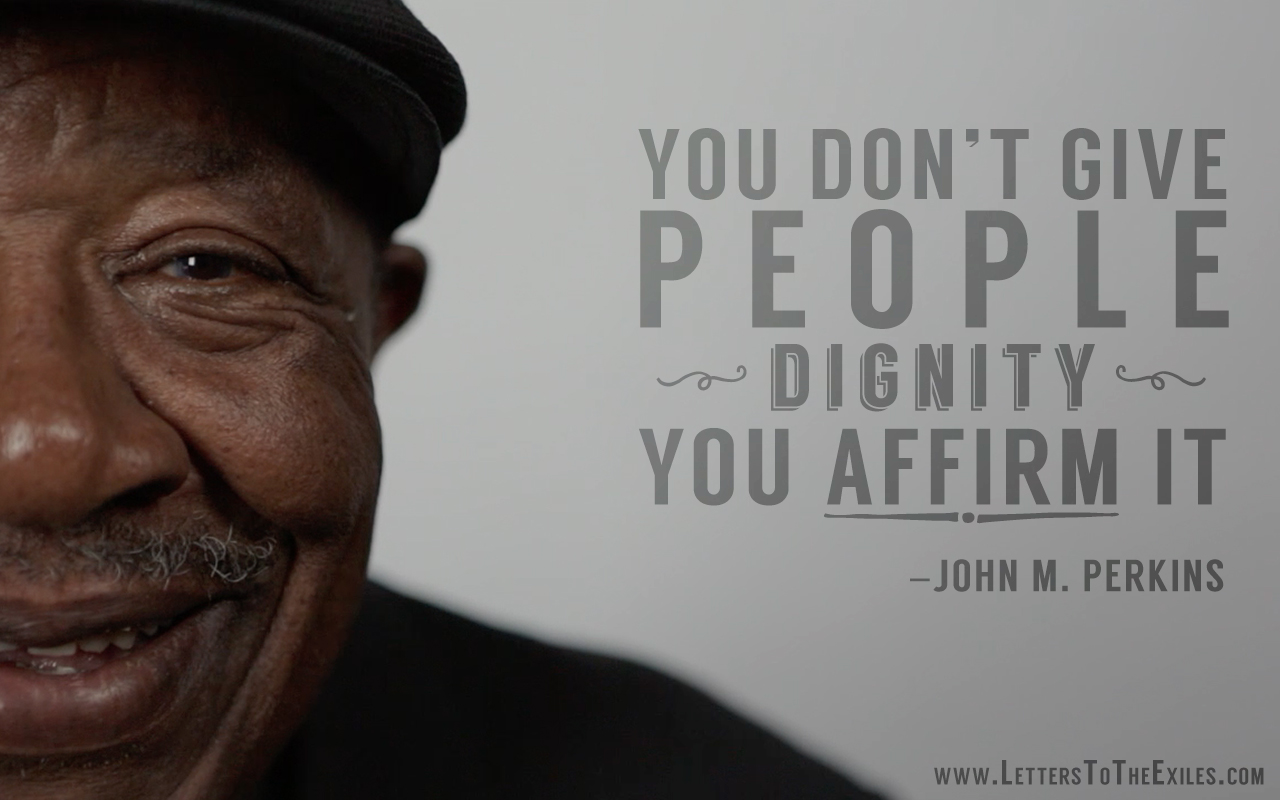
In my first two posts, I introduced the series and told of my chance meeting with John M. Perkins. A few examples from his book, Let Justice Roll Down, might help to set the stage for understanding racial tensions today.

Mississippi Department of Education
Statistics from the year preceding
Brown vs. Board of Education
-Perkins, Let Justice Roll Down, 86 
In my parents' lifetime, the "separate but equal" school system in Mississippi just prior to the famous Brown vs. Board of Education distributed funds in a way predicated on racial discrimination. Someone somewhere determined that black students "required" less money to educate, so black schools were allocated less than white schools in the same district. Although roughly half of the students in Mississippi were black, only a fifth of the transportation money was spent on getting them to school. Their teachers' salaries were only about 75% of what white teachers made. And almost three times more money was spent on instruction in white schools. (Perkins, Let Justice Roll Down, 86-87).

This is not our distant past. These statistics mean that a black man my Dad's age grew up using inferior textbooks, learning from teachers who were not fairly compensated, and likely walking long distances to school. He grew up hearing the strong message that he was not as valuable, not worth the investment, that he need not have any aspirations beyond manual labor. As a nation we failed these boys and girls and their parents, teachers, and communities. The men and women alive today who were educated in the 50s are still living with the repercussions of their most formative years. They have not forgotten. But have we?

John Perkins himself was unjustly imprisoned in 1969 for trying to help diffuse a tense public situation and again in 1970 for peacefully demonstrating in Mendenhall, Mississippi. He and his friends were beaten bloody and tortured by drunk police officers before being released, though they had done nothing wrong. He explains,
"After I was beaten by white policemen, I began to see things a little more clearly. I was able to see the needs of white people and what racism was doing to them. You see, I had gotten set to the fact that the sickness of racism had affected the black community in a way that kept them from functioning as a healthy community. A lot of our people were sick -- affected by generations of slavery, oppression and exploitation -- psychologically destroyed. But I had never thought much before about how all that had affected whites -- how they had been affected by racism, by attitudes of racial superiority, by unjust lifestyles and behavior." (166)
Most troubling of all was the effect racism had on white churches. Visiting a white church as a black man could get you thrown out by the police. Perkins laments:
"The most systematic haters are ministers and Sunday school teachers. In fact, most of the outstanding killings and murderings of blacks in the South have had white ministers involved in them. This was true even of the killing and secret burying of the three civil rights workers in Philadelphia, Mississippi, in 1964." (164) 
Not all white ministers were racists. Indeed, those who spoke out against racial injustice were themselves mistreated. Rev. James Spencer, a white Presbyterian minister, helped with initial efforts to start Bible classes in Perkins' community, but quit under pressure from the Ku Klux Klan (93-94).

Another white pastor, Dr. Odenwald, slowly started preaching about God's love for everyone, gently questioning whether the attitudes of the white community toward blacks was consistent with biblical teaching. His messages met with great resistance from his congregation. Under the strain, Dr. Odenwald ended his own life (96-97).

Such a legacy of injustice does not evaporate overnight. If we want to understand the tensions in our world today, it helps to know the history.

My aim in this series is modest. I'm writing to people like myself who have grown up in mostly white neighborhoods and who can't readily produce first-hand examples of racial injustice. Reading a few books and citing a few examples will not solve the world's problems. But it will help us to take a longer view on race relations, to become more aware of how the same community can be experienced in such vastly disparate ways. I hope we'll get a sense of what it's like living in someone else's skin. I hope we'll be bothered by these stories, and more aware of ways that "the system" benefits us at the expense of others. Most of all, I hope that blog posts like this one will foster our Christian commitment to living out the gospel in practical ways.

Sunday, January 21, 2018

Racial Injustice Today? (Part Two)

The year was 2008. I was in New Orleans for my first academic conference, the annual meeting of the Evangelical Theological Society. It was a giddy experience to walk the halls with those who had taught me so much through their writings. A living bibliography surrounded me. One thing that struck me was how white this conference was. As a woman, I represented less than 10% of those attending. But when I looked around, I was hard pressed to find anyone of color.

Perhaps that’s why he made such an impression on me. A friend and I were riding the elevator up to the ballroom level for a plenary session. Mid-way there, the elevator stopped and the door opened. Three men entered the elevator. I remember nothing about the other two men, except that they were taller but more deferential. Leading the way was a short, black man with a storied face. His eyes sparkled. He was the kind of man whose whole body exuded so much energy that he couldn’t stand still. Most people look down when they get on an elevator, avoiding eye contact. Not him. He surprised us by looking us straight in the eye, eager for conversation. I’ll never forget his southern drawl, “Now, are you ladies here for the theology-thang? Or for the nursing-thang?”

I’m sure we both smiled, almost giggled, at his energy. “We’re here for the theology thing.”

I wish you could have seen his face light up. “Oh! That’s wonderful!” Then, as if admitting a secret, he leaned in and added, “There aren’t near enough women here, are there?”

At that point the elevator arrived at our floor and we exited.

Imagine our surprise in the next plenary session when our elevator friend took the stage. It was the venerable John Perkins! I had heard his name before, but didn’t know him well enough to recognize him. Perkins had been imprisoned and beaten unjustly, and had labored long and hard for civil rights in some of the most segregated corners of our nation.

Our encounter was arresting. Here was a man who’d been invited to address thousands of (mostly white) participants. He was neither cocky nor self-centered. He had no chip on his shoulder. In our brief conversation he celebrated our presence at a conference that was planned, led, and addressed by only men. He saw us.


Ever since, I have wanted to read about his work. Last summer seemed the perfect time. Let Justice Roll Down is the amazing, heart-breaking, inspiring story of his struggle for justice in the South. It is neither textbook nor how-to manual. It is simply his story. But he opened my eyes to the ugly realities of racial inequality in our nation. It’s easy to imagine that because slavery ended in the 1800s and African Americans have gained the right to vote, that the struggle for civil rights is long over. But here is a man who has lived the struggle and still lives today. I can no longer imagine that the suffering of blacks in our nation is a thing of the distant past. This man – friend of Martin Luther King Jr. – steps into the elevator and looks me in the eye. His verve confronts my complacency. I can no longer say “That was so long ago.” This is now.


Monday, January 15, 2018

Racial Injustice Today? A Series in Honor of Martin Luther King Jr.

Today it’s his actual birthday, the man who refused to take ‘no’ for an answer. The man who spoke and kept on speaking until white America was listening, too. The man who would not be content until there was truly “liberty and justice for all” within our borders.
And he achieved it, didn’t he?
They got what they wanted, didn’t they?
Today there may be Americans who wonder about the value of yearly reliving our storied and painful past, about the emotions that it stirs.
Slavery was over a long time ago.
People should just get over it and move on.
If African Americans want to make something of themselves, then they should just work hard, the way we did.
Nobody has handed me anything free. I’ve had to work for everything I’ve got.
Inequality? What inequality? Everyone in America has the same opportunities.
I wish someone could give an example of prejudice today. How exactly are Blacks being mistreated?
I’ve heard these words often enough from the mouths of people who look like me that I went looking for answers. The claim from the African American community that injustice lives on sounds strange to fair-skinned Americans whose personal experience offers no pertinent examples. Sure, life’s not fair. We all get a raw deal sometimes. No need to get so bent out of shape over it. Of course black lives matter. All lives do. 

America is still so segregated that it’s possible to live one’s whole life without a friend of another color. As a result, we can be puzzled by public protests or cries for justice.

I wanted to understand. I wanted to see the world through the eyes of someone who grew up wearing different skin. In my quest for answers over the past year or two, I've done some reading:
Ta-Nahesi Coates, Between the World and Me 
John M. Perkins, Let Justice Roll Down 
Sharon Draper, Stella by Starlight
Mildred D. Taylor, Roll of Thunder, Hear My Cry
James Cone, The Cross and the Lynching Tree
Bryan Stevenson, Just Mercy
Daniel Hill, White Awake
These books gave me answers – loud and clear – a whole legacy of injustice that is far from over, a monstrosity that has been codified in law (in some cases) and petrified in our systems of criminal “justice.”  Racial inequality is not a thing of the past. It is heart-sickeningly present today. In the coming weeks, I’d like to share what I learned. If you’re looking for examples, you are invited to start right here.

It’s not enough to celebrate what was accomplished in the 1960’s. Let’s take a hard look at 2018 and see what remains to be done.

Sunday, October 13, 2013

solve world poverty in one simple step

Eliana and I attended a screening Friday night of a documentary produced by a team of researchers who set out to discover how to end global poverty. What they found surprised them. In every country they visited, poverty's grip could be relaxed in one generation by doing just one simple thing: sending girls to school.

Girls who go to school are healthier,
     less likely to be married before the age of 15,
          less likely to be sold into bonded labor or sex slavery,
                 and more likely to contribute to their family's earnings.
Girls who are educated grow up to become moms who make sure their sons and daughters go to school.
Children of literate moms are 50% more likely to survive past age 5!
And an extra year of education increases a girl's earning potential by 20%.

But in many countries, girls do not go to school because families cannot afford to send them or because they don't see the point. If there is money to send just one child, her brother gets to go. Far too often educating a girl is seen as a "waste of time" because her place in life is working at home (where knowing how to read and how to think are apparently unnecessary). 66 million school-aged girls are not in school today. That's fully twice as many girls as boys who are not in school.

In some heartbreaking contexts, a girl is actually forbidden to learn to read.

In a country where it's illegal not to send girls to school, this is hard for us to imagine. Women in the US not only attend school, but a great many go on to college, grad school, and beyond. Believe me, after watching this film, I do not take this privilege for granted!

If you want to be both inspired and challenged, I highly recommend Girl Rising. You can learn more at www.girlrising.com. According to a study reported by Christianity Today earlier this year, child sponsorship is the single most effective long-term development strategy. If we pair these two studies, the solution is simple. To sponsor a young girl makes schooling possible and sends a message to her family that she's worth educating. Child sponsorship can be the first step to break the cycle of poverty. So what are you waiting for? Start here.

Sunday, January 1, 2012

the clincher

If you've been following my blog since 2010, then you may remember a post I wrote last December about the global slave trade. It's a problem that's not going away anytime soon, but there is a groundswell of discontent over this issue -- women and men who are not only concerned, but courageous enough to do something about it. When the church that we've been visiting announced their plan to conspire together to spend less and give more this Christmas, and that 90% of the Advent offering would go to International Justice Mission, we knew we were ready to make this church our home. We attended an IJM film screening in December where we learned more about the work that IJM is doing to free slaves around the world. As the speaker reminded us, a video doesn't free slaves, but it does make us aware of the extent of the problem.

In the darkest and most secluded corners of our cities, 27 million people are still being held against their will. A full 80% of them are women and girls. They are forced to work for little or no pay. Most of what they are made to do would turn your stomach. It turns mine. And they can't escape . . . unless someone from the outside breaks into their world to rescue them.

Kinda like what Jesus did for us.

10,000 slaves are being held in the greater Chicago area. Most of them have been trafficked here from other countries. They don't speak our language, don't know where they are, and wouldn't know where to turn for help even if they could escape. The only Americans they've ever met are . . . shall we say . . . not very safe. Some of these precious women are locked up right here in Wheaton, Illinois, a town some say is the heart and soul of Evangelical Christianity, with a church on every street corner and one of the foremost Christian liberal arts institutions in the world. What can be done?

International Justice Mission is working around the clock and around the world to break into the dark corners of the world and rescue slaves. Rescue operations are risky and expensive. They require careful planning and strong relationships with law enforcement and legal personnel. Once men and women are freed the job is not over. They need trauma counseling, job training, a safe place to live where they can learn to trust again.

IJM provides this after-care for rescued slaves. And they work to bring perpetrators to justice. All the while they pray. They pray that the kingdom of God would be established, that hidden things would come to light, that the lost would be found, and that the people of God would rise up and take action.

A blog post doesn't free slaves, but perhaps it raises awareness. Knowing about the problem is the first step to doing something about it. You might be interested to know that IJM has an outstanding reputation in the way that they handle funds. Ministry Watch includes IJM on their top 30 ministries for 2011, calling them a "shining light" for financial accountability.

We learned two very exciting things at the IJM film screening in December. Both offer hope in the face of a global epidemic that can quickly seem overwhelming. (1) College students around the country are helping to end slavery in their own cities by helping police identify businesses where "employees" may be at risk. A bit of surveillance can indicate whether women who work at a massage parlor go home at night, or if employees are foreigners who never seem to stay very long. There are relatively easy ways to get involved and make a difference in your own community. (2) IJM is learning that they do not need to prosecute every perpetrator in order to achieve dramatic results. In Cebu, Philippines, they have worked together with law enforcement to end child prostitution. The high-profile arrest and prosecution of just a few slave owners has led to something like an 86% reduction in the availability of children for sex. Slave owners do what they do because they can get away with it. When they begin to realize that there is great risk involved in exploiting people, they quickly find other ways to make money.

How many slaves will be freed in 2012? That depends very much on what you and I decide to do about it.

Tuesday, December 7, 2010

blind spots

There are certain things we will simply never be able to see until someone brings them to our attention.  The global slave trade for one.  But there are other issues closer to home, like the barriers we erect for people with disabilities to function as full members of our communities.  And racial inequalities.  And other things.

When I showed up for the meetings of the Evangelical Theological Society last month in Atlanta, I wondered if I had made a mistake.  It looked more like men's retreat than anything else!  One participant joked that he had arrived at "White Males R Us."  I can count on my fingers the number of African-American attendees I saw over the course of 3 days.  And there seemed to be fewer women than last year.  In a crowd of 2500, I would be surprised if there were 250 women.  As confident as I am, my instinct was to head back home.  But what was obvious to me was not so obvious to everyone.

In the first session I attended I met a nice, white, balding man who teaches at a seminary not far from here.  At the end of our conversation he said, "Well, maybe I'll see you around."  I replied cheerfully, "I'll be pretty easy to spot!"  He looked confused.  "What do you mean?"  I quickly explained, "Well, I am a woman."  He frowned at that and insisted, "There are lot of women at ETS!"  I simply raised my eyebrows, surprised, and said nothing.  I watched as he turned in his chair and scanned the entire room.  His eyes changed as the realization washed over his face.  "Oh!  I see what you mean!"

Until we can put ourselves in someone else's shoes and see things through their eyes, we will never notice the ways we are complicitly contributing to their exclusion.  And as long as disparities of race or gender exist, we have not entered fully into the new creation realities made possible at the cross:

"There is neither Jew nor Greek, there is neither slave nor free man, there is neither male nor female; for you are all one in Christ Jesus."

May our friendships, our communities, our churches, and even our theological societies move towards a greater reflection of God's design for redeemed humanity.

Monday, December 6, 2010

27 million reasons

I was startled yesterday to learn that there are more slaves today than at any other time in human history.

27 million of them

And we can sit back and be glad that we were born free and that slavery was abolished from our nation a long time ago... or we can decide that we are not willing for any human being to be exploited on our watch.  We have 27 million reasons to take action.

I'm grateful to be part of a church that is willing to do something about it.  Our services for the entire month of December are devoted to the issue of the global slave trade.  And two of our offerings, including Christmas Eve, will be given entirely to the International Justice Mission.

That's cool, but it's not enough.  IJM has freed 1000 slaves so far.  But 200 people a day, many of them children, are captured and forced into slavery.  The sex industry is one of the largest forced labor industries in the world.  A growing demand for younger women has meant that girls as young as 8 are forced to work as prostitutes.

I'm not ok with that.  Are you?

Thursday, November 12, 2009

Bill of 'Whose' Rights?

I'm reading an article by Dr. Daniel Block, from Wheaton Graduate School, on the relevance of Old Testament law for us today.  He says something very profound about the Ten Commandments (literally: 'Ten Words' found in Ex 20 and Deut 5), which he calls "ancient Israel’s version of the Bill of Rights." 

You know ours, right?  According to the Constitution of the United States we all have the right to a fair trial, the right to bear arms, freedom of religion, freedom of speech, etc.  But God's Bill of Rights is really quite the opposite!  Block points out that in contrast to our nation's Bill of Rights, the Ten Commandmants are "concerned to protect not my rights but the rights of the next person."  Those of us who enter into covenant with God are bound to behave in such a way to respect God more than ourselves, and to protect the freedom of others rather than our own. 

This preference for God and others is why Jesus can sum up the whole law in just 2 commands:  “‘Love the Lord your God with all your heart and with all your soul and with all your strength and with all your mind’; and, ‘Love your neighbor as yourself.’” (Luke 10:27 NIV)  Jesus wasn't writing a new law in order to do away with the old one.  He simply made plain what was there all along.

Quotes taken from "Preaching Old Testament Law to New Testament Christians" Part 1, Ministry May 2006.