My blog has needed an update for quite some time. At first, "seminary mom" made sense. I was a mom in seminary, and this somewhat unusual combination of vocations defined my educational journey. Then we moved to Wheaton for PhD studies and happened to land on Seminary Avenue. That gave my url a few more years of relevance (at least for those who knew where to find me!). I've been running on fumes for two years now, far from seminary and from Seminary avenue. And though my hands and my heart are both full, it was time for a change of title as well.
So here it is!
Starting today you can find my blog at www.carmenjoyimes.blogspot.com. I've re-titled it "Chastened Intuitions," and for that I owe you an explanation. The idea came to me several years ago while reading John Barton's Reading the Old Testament: Method in Biblical Study. Barton has the guts to say what many biblical scholars avoid admitting (to themselves or anybody else): competent reading of Scripture involves a great deal of intuition.
In his words, "much harm has been done in biblical studies by insisting that there is, somewhere, a 'correct' method which, if only we could find it, would unlock the mysteries of the text" (5). He examines a whole spate of methods (literary criticism, form criticism, redaction criticism, the canonical approach, structuralist criticism, and new criticism), concluding that each method contributes something, but none is the be-all-end-all of biblical study. Any one of these, when taken to the extreme, collapses upon itself.*
He continues, "I propose that we should see each of our 'methods' as a codification of intuitions about the text which may occur to intelligent readers" (5). They are ways of circling the text and looking at it from different angles. Barton is not saying that the meaning of the biblical text is open to any and every interpretation, whatever a reader wishes to see, but that our intuitions are re-shaped by the reading process so that we become increasingly competent. In other words, we bring our intuitions to the text and in the process of reading we are chastened and changed by it.
This is true of life as well. We think we know how things ought to go, but they don't quite play out as we expected. We take a step back, readjust, and carry on, wiser for the experience.
I believe that when we approach the text and the world with eyes of faith, eager to learn and expecting to be changed, we become increasingly conformed to the image of Christ. Along the way our interpretations of the text and of life become more reliable.
This blog has been and will continue to be a place where I process the lessons God is teaching me as I study his word and engage his world. You're welcome to join me by reading along!
------
*Sometimes Christians resist the idea of "method" in biblical study altogether because they misunderstand the doctrine of perspicuity (that is, the doctrine from the Protestant Reformation that teaches that the Scriptures are clear). While the basics of God's saving grace in Christ are communicated at a level that even a child can understand and embrace, the Bible is not an "easy read." A host of theological and practical problems arise when we assume that we should simply take the Bible "literally," without regard for its ancient context, its genre, and figurative language.
Thursday, June 30, 2016
chastened intuitions
Labels:
Barton,
blogging,
hermeneutics,
historical criticism,
Old Testament
Dr. Carmen Imes is the Associate Professor of Old Testament at Biola University in La Mirada, CA, and serves the broader church through teaching, speaking, writing, and creating YouTube videos. She earned a PhD in Biblical Theology (Old Testament) from Wheaton College under Dr. Daniel Block, an MA in Biblical Studies from Gordon-Conwell Theological Seminary (Charlotte), and a BA in Bible and Theology from Multnomah University. She and her husband, Daniel, served as missionaries with SIM 15 years. They have three children: Ana, Emma, and Easton.
Thursday, May 26, 2016
a simple path to joy (part 3): faith for the bend in the road
In the first two posts of this series, I've suggested that true joy comes when we face life honestly and cultivate gratitude for what we have and where we are. These choices get us through the gate and onto joy's path, and they help us navigate each intersection.
The third choice on the pathway
to joy comes when we reach a bend in the road. It's a fact of life that we
can't see what's ahead. But joy does not depend on knowing what comes next or
being able to control it. True joy cannot
be seized or managed. We don't get there
by straining harder, but rather by releasing our hold on what we cannot control
anyway. Christian joy comes when we recognize our own helplessness. That is, it
comes through faith -- faith rooted in the reality of what God has done
for us in Jesus Christ, and in what he promises to do for all creation. We
await the renewal of all things. We believe it is coming. Trouble may lurk
around the next bend, but the pain, sorrow, and madness of this world is not
final. It is merely a symptom of our world's brokenness and need for
restoration. That restoration has been promised by the God who created all
things. We can count on it. And it has already begun to take effect with the
resurrection of Jesus.
The story of Jesus is powerful precisely because when he
became human he entered fully into the mess and the brokenness of this world.
But his life was fully surrendered to God the Father and therefore fully
energized by the Holy Spirit. His mastery of being human, his perfection, is
more than just a model for us to follow (though it is that). It's what
qualified him to break the power of sin and death by offering himself in our
place. He took the punishment we deserved. He died our death, so that we could
truly live.
The New Testament calls joy a fruit
— one of the character qualities that naturally arises from a life
energized by the Holy Spirit. This, too, suggests that joy comes not by
straining, but by surrender, not by trying, but by trust in the transforming power of God. That power is made available to us in Jesus
Christ. A gift to each of us who surrenders. We can walk in this joyful reality
by facing our brokenness with honesty, embracing our present with gratitude,
and responding in faith to life's uncertainties. We may not know what the
future holds, but we know who holds the future. And that makes all the
difference.
Now for a word of warning. The
pathway to joy is not a path we walk only once. Honesty,
gratitude, and faith are not quick fixes for joy. They must become habits. We
must continue to face life with honesty, to receive our circumstances with
gratitude, and to embrace the future with faith. As one Bible scholar puts it,
"Like muscles, the capacity for joy atrophies if we do not use it
regularly. Those who wait for some great occasion for joy and gratitude to God
are not likely to recognize it when it happens." (Ellen Davis, Proverbs,
Ecclesiastes and the Song of Songs, 221; quoted in James Limburg, Encountering
Ecclesiastes: A Book for our Time, 114). We begin practicing honesty,
gratitude and faith right here, with whatever we're facing.
Paul was among the early
Christians who traveled around the Roman world to spread the news about Jesus'
resurrection from the dead. He had some utterly strange things to say about
joy:
In his letter to the church in
Corinth he said, "In all our troubles my joy knows no bounds." (2 Corinthians 7:4) He spoke of others who had "overflowing joy" "in the midst
of a very severe trial (2 Corinthians 8:2). And Paul was not alone in noticing that joy
and trials often went hand-in-hand. James, the brother of Jesus, wrote
"Consider it pure joy, my brothers and sisters, whenever you face trials
of many kinds." (James 1:2) Pure joy? When facing trials? Why? He
goes on to say, "because you know that the testing of your faith produces
perseverance. Let perseverance finish its work so that you may be mature and
complete, not lacking anything." (James 1:4) James is saying we ought to be
grateful for the effects of those trials on our
character. Through the eyes of faith, we know that hard times help us to grow
in important ways -- provided we respond with open hands and open hearts. That
brings pure joy.
We no longer need to worry about
what's ahead. If something good happens, we can celebrate. If we face difficult
times, we can be glad for what those experiences will do in us so that we can
become who we were meant to be. We win either way! That frees us to face our
present situation honestly and receive it with gratitude.
And so can you!
Labels:
2 Corinthians,
devotional,
eschatology,
faith,
James,
Jesus,
joy,
Paul,
Philippians
Dr. Carmen Imes is the Associate Professor of Old Testament at Biola University in La Mirada, CA, and serves the broader church through teaching, speaking, writing, and creating YouTube videos. She earned a PhD in Biblical Theology (Old Testament) from Wheaton College under Dr. Daniel Block, an MA in Biblical Studies from Gordon-Conwell Theological Seminary (Charlotte), and a BA in Bible and Theology from Multnomah University. She and her husband, Daniel, served as missionaries with SIM 15 years. They have three children: Ana, Emma, and Easton.
Monday, May 23, 2016
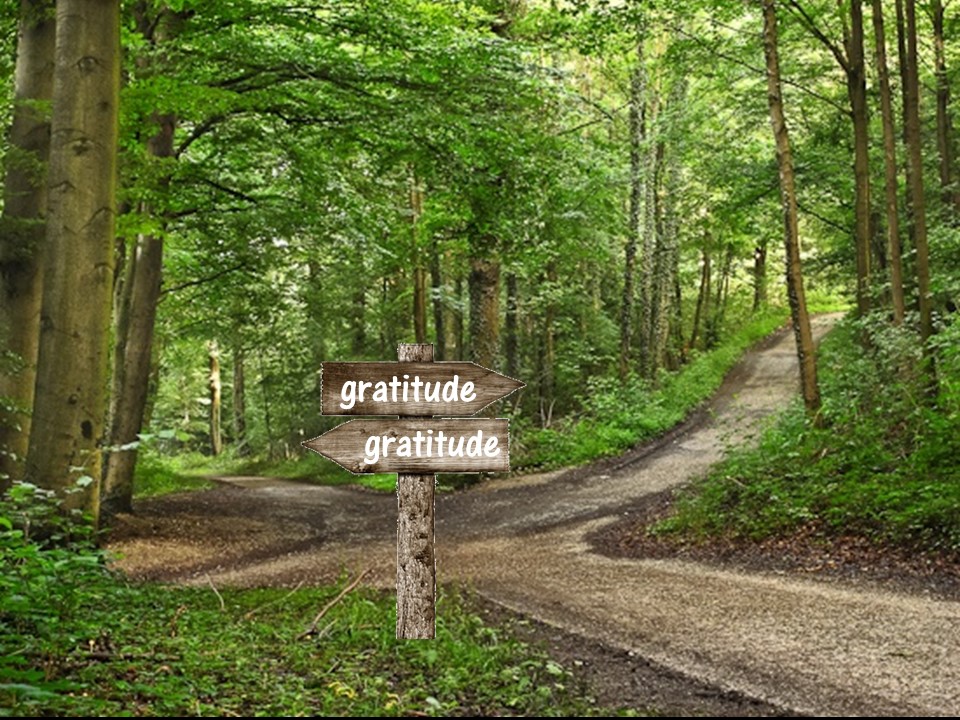
a simple path to joy (part 2): the intersection of gratitude
In my first post in this series, I claimed that true joy is impossible to find when we are living in denial. We begin our journey to joy by facing life's messes head on and choosing to be honest. That's how we enter the gateway on the path to joy.
Next we come to an intersection,
and we have to make our second choice: gratitude. We cannot be
everything we might have been, have everything that can be had, go everywhere
there is to go. We can only be and do and have this. Once we have faced our
disappointments with brutal honesty, we are free to move on with gratitude for
what our life actually holds.
Our world is full of constant
reminders of what we don't have. Ads surround us incessantly, telling us
all day long about the products and services that will make life easier, or
sweeter, or more successful. But joy depends not on what we have but on
our disposition towards what we have. The Greek philosopher Epicurus
warned, "Do not spoil what you have by desiring what you have not."
Put another way, "Happy is the woman who wants what she has." In
fact, sometimes we uncover joy by having less, by simplifying our lives --
clearing out our closets and giving things away. Every item we own gets a piece
of our care and attention until we have no energy left to care for the things
that really matter. It is freeing to declutter, to downsize, to keep only what
we actively use.
But this intersection on the pathway to joy
isn't only about what we have. It's also about where we are and who we've
become. There are more possibilities in life than we have time to try, more
opportunities than we can pursue. When we cultivate the habit of thankfulness,
our hearts are positioned for joy. We cannot take every path, but we did take
this one. To spend our time wondering about all the other paths we could have
taken robs us of joy. I am not an astronaut. I am not a midwife. I am not a
famous singer. I am not a jungle missionary. I am not even one of those amazing
stay-at-home moms who actively volunteers at the elementary school and whose
kids have really creative birthday parties every year. Saying 'yes' to one path
has meant saying 'no' to others.
About a year ago we realized that
I would probably never finish my doctoral degree unless I started to say 'no'
to good opportunities. I resolved not to say 'yes' to anything but family until
I was finished. At first it was painfully difficult. The things I was asked to
do were right up my alley. They were things that would energize me. Ways to
plug into my church and my community for which I was uniquely suited -- lead a
small group, speak in chapel, teach a college class. But after half a dozen
difficult 'no's' my schedule was completely open for the task I dreaded --
revising my dissertation. And I discovered that when I had complete focus, I
did much better work and enjoyed it far more than before! I relished the gift
of concentration. We shoot ourselves in the foot when we try to do it all or
have it all, or spend our energy wondering what would have happened or what
could have been. Those things are not. This is what is. Here is where we are.
So let's embrace it and move forward with gratitude.
This is a sure way to begin to find joy. But what about the uncertainties ahead? In my next post, I'll talk about what to do when we can't see around the bend in the road.
Labels:
devotional,
dissertation,
joy,
thankfulness
Dr. Carmen Imes is the Associate Professor of Old Testament at Biola University in La Mirada, CA, and serves the broader church through teaching, speaking, writing, and creating YouTube videos. She earned a PhD in Biblical Theology (Old Testament) from Wheaton College under Dr. Daniel Block, an MA in Biblical Studies from Gordon-Conwell Theological Seminary (Charlotte), and a BA in Bible and Theology from Multnomah University. She and her husband, Daniel, served as missionaries with SIM 15 years. They have three children: Ana, Emma, and Easton.
Wednesday, May 18, 2016
a simple path to joy (part 1): the gateway to honesty
Last week I had the opportunity to speak at the May Festival at Evangelical Bible Church in Dallas, Oregon. My assigned topic was "Joy in Simplicity." Here's a glimpse of what I shared:
-----
-----
How do we find joy? Joy
is not automatic. A life free from trouble is no guarantee of joy, and a
difficult life does not prevent it.
From 2002 to 2005 we lived in the
Philippines. In spite of widespread government corruption, crippling poverty,
oppressive heat, and high unemployment, we found Filipinos to be some of the
happiest people we've ever met. They can fall asleep anywhere, turn a
1-year-old's birthday into a wedding-sized celebration, and laugh in the face of
trouble. They are among the poorest in Asia, but arguably the happiest.
Clearly, joy does not depend on circumstances. So how do we get there?
If we imagine a pathway to joy,
forward movement depends on three deliberate choices. (There may be others; I'm addressing three here.) The first comes at
a gateway, the second at an intersection, and the third at a bend in the road.
To enter the gateway we need to choose honesty. To navigate the intersection we
must choose gratitude. And to lend perspective for the bends in the path, we
need faith.
We make the first deliberate
choice at the gateway of honesty. We will never arrive at true joy by
pretending to be happy. Denial is the enemy of joy —a closed door to
joy's garden path. We cannot bypass grief and pain, guilt or
unforgiveness and expect to find joy. That thing that robs us of joy must be
faced head on. We must look it in the eye and name it.
In fact, psychologists tell us
that when we avoid honesty, we invite poor health, both emotionally and
physically. In the words of one scholar who has studied this phenomenon (Brent
Strawn, on James Pennebaker's study, in Brueggemann, From Whom No Secrets
Are Hid, xix), "Inhibition is hard work, and that work eventually
takes its toll on the body's defenses." So you want real joy? Step one is
to grieve your losses. Admit your fault. Express your anger. Own your failures.
Voice your disappointment. Forgive those who have let you down.
This is a bit awkward to say in church. Most
churches have lost the art of making space for this kind of honesty. We give
the distinct impression that "putting on your Sunday best" always
includes a bright smile. We rarely confess our sins, name our failures, face
our fears, and grieve our losses in community. And so our unexpressed emotions
become roadblocks to joy. One way to recover these practices is to pray the
Psalms together. The Psalms let it all hang out. Every ugly emotion you can
imagine. It's like reality TV, minus the
TV.
God, I cry out by day, but you do
not answer! By night, but I find no rest! (22:2)
Do not be far from me, for
trouble is near and there is no one to help! (22:11)
Break the arm of the wicked man;
call the evildoer to account for his wickedness (10:15)
All night long I flood my bed
with weeping and drench my couch with tears (6:6)
Heal me, Lord, for my bones are
in agony. My soul is in deep anguish. How long, Lord, how long? (6:2-3)
Against you, you only, have I
sinned and done what is evil in your sight. (51:4)
Troubles without number surround
me; my sins have overtaken me, and I cannot see (40:12)
Let evil recoil on those who
slander me; in your faithfulness destroy them (54:5)
Through prayer, all these raw and
gritty realities are brought into the presence of God and given over for Him to
handle. The Psalms are proof that God invites us to come as we are. To say it
like it is. And by doing so, to find a new way forward. There's no way around
it.
So we begin our journey to joy by
choosing to be honest.
Then we come to an intersection, and we have to make our second choice: gratitude. I'll talk about that intersection in my next post on joy.
Dr. Carmen Imes is the Associate Professor of Old Testament at Biola University in La Mirada, CA, and serves the broader church through teaching, speaking, writing, and creating YouTube videos. She earned a PhD in Biblical Theology (Old Testament) from Wheaton College under Dr. Daniel Block, an MA in Biblical Studies from Gordon-Conwell Theological Seminary (Charlotte), and a BA in Bible and Theology from Multnomah University. She and her husband, Daniel, served as missionaries with SIM 15 years. They have three children: Ana, Emma, and Easton.
Wednesday, April 27, 2016
prostitutes, polygamy, and other gnarly things in the Old Testament
The Old Testament is full of fodder for questions. Gnarly questions about violence and sexual deviancy and deception and war. Every year new books are released that try to wrestle with these questions from a Christian point of view. Here are a few examples from recent years, most of them focused on violence in the Old Testament:
- The God I Don't Understand: Reflections on Tough Questions of Faith by Christopher J. H. Wright (Zondervan, 2008)
- Is God a Moral Monster? Making Sense of the Old Testament God by Paul Copan (Baker, 2011)
- God Behaving Badly: Is the God of the Old Testament Angry, Sexist and Racist? by David T. Lamb (IVP, 2011)
- The Violence of Scripture: Overcoming the Old Testament's Troubling Legacy by Eric A. Seibert (Fortress, 2012)
- The Morality of God in the Old Testament: Christian Answers to Hard Questions by Gregory K. Beale (P&R Publishing, 2013)
- Did God Really Command Genocide? Coming to Terms with the Justic of God by Paul Copan & Matt Flannagan (Baker, 2014)
- The Skeletons in God's Closet: The Mercy of Hell, the Surprise of Judgment, the Hope of Holy War by Joshua Ryan Butler (Thomas Nelson, 2014)
- Tough Questions about God and His Actions in the Old Testament by Walter Kaiser Jr. (Kregel, 2015)
- Wrestling with the Violence of God: Soundings in the Old Testament by J. Blair Wilgus & M. Daniel Carroll R. (Eisenbrauns, 2015)
I hesitated to accept. The book struck me as edgy and irreverently playful on a subject matter that deserves steady and non-sensational reflection. Frankly, I didn't seem to fit the target audience. But the editor had reasons to ask me (my gender, my cross-cultural experience, and my background in Old Testament ethics), so in the end I agreed to write a review. You can read it here. You might find it to be just the thing for the college group at your church, but I hope my review will help guide your group discussions in order to avoid some of the potential pitfalls of Lamb's approach.

While I have your attention, I'll put in a plug for two books I like better. Wright's book, listed first above, is an outstanding yet accessible introduction to tough issues involving suffering and evil, the Canaanites, the cross, and the end of the world. (His more scholarly tome, Old Testament Ethics for the People of God, is also well worth reading, if your attention span can last nearly 500 pages.) Paul Copan's book, listed second above, comes highly recommended as well. I haven't read the whole thing yet, but I find his approach much more satisfying than Lamb's.
If you're wrestling with some of these tough questions, please know that there are answers. From our vantage point we may never be fully satisfied with the ways that the Old Testament narrates the story of Israel's faith. It's too foreign and too far in the distant past to make perfect sense to us. But if we apply ourselves diligently to the text of Scripture and broaden our understanding of its ancient context, we can come a long way toward making sense of the Old Testament. It's a journey worth making!
Labels:
ANE,
apologetics,
Baker,
biblical theology,
books,
C.J.H. Wright,
Copan,
Eisenbrauns,
Ethics,
Fortress,
Israel,
IVP,
kids' questions,
Kregel,
Lamb,
Old Testament,
sexuality,
sticky questions,
worth reading,
Zondervan
Dr. Carmen Imes is the Associate Professor of Old Testament at Biola University in La Mirada, CA, and serves the broader church through teaching, speaking, writing, and creating YouTube videos. She earned a PhD in Biblical Theology (Old Testament) from Wheaton College under Dr. Daniel Block, an MA in Biblical Studies from Gordon-Conwell Theological Seminary (Charlotte), and a BA in Bible and Theology from Multnomah University. She and her husband, Daniel, served as missionaries with SIM 15 years. They have three children: Ana, Emma, and Easton.
Sunday, April 17, 2016
now what? (and other questions): life after dissertation
It's the inevitable question that follows the celebratory congratulations. Since I've been blessed with a wide-ranging support network, it's a question I'm asked just about every day by people who care.
So, yes, it feels amazing to be (almost) done!
Yes, it's a huge load off our shoulders, and the whole family is relieved.
Yes, I have a bit more freedom and flexibility now.
But no, I will not have a lot more free time. Here's why:
A Ph.D. is not the type of degree people earn for personal enrichment. As a matter of stewardship, the huge investment of time, mentoring, and other resources are designed to prepare the student for a lifetime of scholarship. Career-wise, like most of my colleagues, my hope is to be a college professor. I have already begun teaching at two schools, George Fox University in Newberg, Oregon, and Multnomah University in Portland. I love what I do. I'm very grateful for open doors. However, these "jobs" are a bit like being a "temp" worker (minus the agency). They pay very little (last spring my pay worked out to about $5/hour), with no benefits, and no guarantee of employment beyond the current semester. Semester by semester, each school will let me know if they need me to teach for them again. So while I love my work, I do not actually have a job yet.
In order to get a permanent position, I must demonstrate that I will be a contributing member of the campus as well as the scholarly community by staying abreast of current research, participating in campus events, investing in students outside of class, and achieving excellence in teaching (as measured by student evaluations). Diploma aside, without several scholarly publications and stellar teaching evaluations, no school is likely to consider hiring me. In today's educational environment, very few schools are hiring permanent ("tenure-track") faculty. Schools that do post positions are flooded with qualified applicants. To walk away from the library now would spell the end of my career.
Getting a PhD is a bit like becoming an MD. Your medical doctor did not stop studying when she graduated from medical school (thank goodness!). She reads medical journals, attends medical conferences, and even collaborates with other doctors to ensure quality care and accurate diagnoses for patients. Likewise, I cannot stop studying and writing. A professor who ceases to learn, ceases to teach.
And so my days are still full. These days I'm revising my dissertation (almost done!), prepping for class, grading student papers, and preparing for upcoming gigs:
In May I'll be presenting a paper at an academic meeting in Idaho (Northwest Regional Meeting of the Society of Biblical Literature) and serving as a respondent for a colleague's paper.
In June I'll be teaching a one-week intensive course on the Old Testament Prophets at Multnomah University.
In July I'll be filming brief lectures for an online course on the Prophets at Multnomah, to be offered beginning in October.
In late August I'll begin teaching 2 new courses on campus at George Fox (Exodus and Psalms) and another section of Prophets at Multnomah.
On top of this are the opportunities to invest in the church—speaking at a women's event in May in Dallas, Oregon, helping with VBS, and speaking at a women's retreat in September in Wisconsin—as well as finding a publisher for my dissertation and beginning work on my next research project.
All of these great opportunities require long, quiet, focused hours of preparation. Studying the Word, crafting a message or a lecture, preparing visual aids, and coordinating logistics. In fact, with 4 classes this fall (3 on two campuses and one online), I'll be teaching the equivalent of a full-time load. I expect to be just as busy as ever. But I'm not complaining.
That was the whole point of all this schooling.
So, yes, it feels amazing to be (almost) done!
Yes, it's a huge load off our shoulders, and the whole family is relieved.
Yes, I have a bit more freedom and flexibility now.
But no, I will not have a lot more free time. Here's why:
A Ph.D. is not the type of degree people earn for personal enrichment. As a matter of stewardship, the huge investment of time, mentoring, and other resources are designed to prepare the student for a lifetime of scholarship. Career-wise, like most of my colleagues, my hope is to be a college professor. I have already begun teaching at two schools, George Fox University in Newberg, Oregon, and Multnomah University in Portland. I love what I do. I'm very grateful for open doors. However, these "jobs" are a bit like being a "temp" worker (minus the agency). They pay very little (last spring my pay worked out to about $5/hour), with no benefits, and no guarantee of employment beyond the current semester. Semester by semester, each school will let me know if they need me to teach for them again. So while I love my work, I do not actually have a job yet.
In order to get a permanent position, I must demonstrate that I will be a contributing member of the campus as well as the scholarly community by staying abreast of current research, participating in campus events, investing in students outside of class, and achieving excellence in teaching (as measured by student evaluations). Diploma aside, without several scholarly publications and stellar teaching evaluations, no school is likely to consider hiring me. In today's educational environment, very few schools are hiring permanent ("tenure-track") faculty. Schools that do post positions are flooded with qualified applicants. To walk away from the library now would spell the end of my career.
Getting a PhD is a bit like becoming an MD. Your medical doctor did not stop studying when she graduated from medical school (thank goodness!). She reads medical journals, attends medical conferences, and even collaborates with other doctors to ensure quality care and accurate diagnoses for patients. Likewise, I cannot stop studying and writing. A professor who ceases to learn, ceases to teach.
And so my days are still full. These days I'm revising my dissertation (almost done!), prepping for class, grading student papers, and preparing for upcoming gigs:
In May I'll be presenting a paper at an academic meeting in Idaho (Northwest Regional Meeting of the Society of Biblical Literature) and serving as a respondent for a colleague's paper.
In June I'll be teaching a one-week intensive course on the Old Testament Prophets at Multnomah University.
In July I'll be filming brief lectures for an online course on the Prophets at Multnomah, to be offered beginning in October.
In late August I'll begin teaching 2 new courses on campus at George Fox (Exodus and Psalms) and another section of Prophets at Multnomah.
On top of this are the opportunities to invest in the church—speaking at a women's event in May in Dallas, Oregon, helping with VBS, and speaking at a women's retreat in September in Wisconsin—as well as finding a publisher for my dissertation and beginning work on my next research project.
All of these great opportunities require long, quiet, focused hours of preparation. Studying the Word, crafting a message or a lecture, preparing visual aids, and coordinating logistics. In fact, with 4 classes this fall (3 on two campuses and one online), I'll be teaching the equivalent of a full-time load. I expect to be just as busy as ever. But I'm not complaining.
That was the whole point of all this schooling.
From everyone who has been given much, much will be demanded;
and from the one who has been entrusted with much, much more will be asked.
(Luke 12:48 NIV)
Now it is required that those who have been given a trust must prove faithful.
(1 Corinthians 4:2 NIV)At the end of the race, may I be found faithful!
Labels:
1 Corinthians,
academia,
dissertation,
George Fox,
Luke,
Multnomah,
PhD,
service,
stewardship,
teaching
Dr. Carmen Imes is the Associate Professor of Old Testament at Biola University in La Mirada, CA, and serves the broader church through teaching, speaking, writing, and creating YouTube videos. She earned a PhD in Biblical Theology (Old Testament) from Wheaton College under Dr. Daniel Block, an MA in Biblical Studies from Gordon-Conwell Theological Seminary (Charlotte), and a BA in Bible and Theology from Multnomah University. She and her husband, Daniel, served as missionaries with SIM 15 years. They have three children: Ana, Emma, and Easton.
Tuesday, April 12, 2016
lasting impressions and do-overs
Is it possible to retire from retirement? Last week my grandparents moved from their retirement home in the mountains to a retirement facility just one block away from my childhood home. This time it's for real -- downsizing, purging, relinquishing memories and positioning themselves closer to medical care, meals, and household assistance.
This move to Denver brings my grandparents back into the orbit of those who made such a mark on my childhood. Men and women who filled the pews on Sunday morning, and whose names filled the address book we kept by the phone. Our perpetual problem was that address books never allowed enough pages for the letter "V": VanderVeen, Vermeer, Veenstra, Verstraate, VanderHorst, VanHeukelem, Van Stelle, Vander Ploeg, Van Dusseldorp, and on it went. We managed to surround ourselves almost entirely with other Dutch families -- our Christian Reformed Church, the Christian school started by CRC families where my brother and I attended, the businesses run by CRC families, and even Dutch neighbors who, like us, had settled close to all these things.
We lived just 4 doors down from Third CRC. Stepping out the front door in the morning, we could see the brick corner of the church, with windows to the nursery where we began our childhood (and the mural our mom painted of Noah's Ark), the library where we filled our arms with Christian books, Sunday school rooms, and the consistory room where Dad participate in deacon's meetings and where I sat nervously at the big oval council table, being interviewed by a dozen men in suits before my public profession of faith. Now the men and women who used to shake our hands and pat our heads shuffle down hallways one block to the East, in that brick building that was once new, heading to meals, their frames bent and their skin too loose. Among them is our pastor from so long ago. My grandparents are their newest neighbors.
I remember Reverend Kok as tall and broad, with a booming voice. I knocked on his door once, hands trembling and gasping for breath. I had run to the parsonage with an urgent confession. While playing in the church yard mid-week, as we often did, I had broken a basement window. Looking back, I would like to give Reverend Kok a "do-over." What he ought to have said was, "Don't be afraid, Carmen. It can be fixed. It took a lot of courage to come tell me the truth. Thank you for your honesty. Well done. This mistake doesn't define you, your integrity does." What he really said was, "I hope you have plenty of money in your piggy bank." This terrified me. He didn't intend to be mean, but by the time my 10 year old feet had pounded the pavement all the way to my house almost a block away, I was a mess. The tears burst and I blubbered my confession to Dad, who told me not to worry. He could fix it, and I didn't need to pay for it. After that we didn't skateboard on the wheelchair ramp any more.
Two other memories of Reverend Kok cast him in a different light. The first showed his insecurity, perhaps. I don't remember the context of his sermon, but I remember him suggesting that none of us young people would want to become pastors when we grew up. It was almost a rhetorical question, I think. "None of you wants to be like me when you grow up. (Right?)" He meant that we probably didn't want to go into pastoral ministry. Unbidden, and without any hesitation an unspoken response welled up inside me. "Oh, but I do!" I'm not sure that I thought it was actually possible. After all, I was a little girl, not a little boy, so pastoral ministry was not an option. But I couldn't think of anything more wonderful to do with my life. Reverend Kok represented the pinnacle of vocational excellence to me. I'll never forget his angst the Sunday after televangelist Jimmy Swaggart was caught with a prostitute (mostly I remember it because he said the word "butt" from the pulpit, as in, "today we [Christians] are the butt of every joke." I still feel the shock of hearing that, almost 30 years later.).
But my favorite memory begins one Sunday morning when I was distracted during the sermon, studying the maps in the back of the pew Bibles, because they were the only pictures available. It was a New Testament map that grabbed my attention -- a New Testament map that included the city of Jericho. My little brain couldn't quite wrap itself around that one. Didn't the walls fall down? Wasn't it destroyed? At the end of the service all the grown ups filed out of the sanctuary, shaking Rev Kok's hand. I carried the pew Bible along with me, open to the map, and planted myself right beside him. Craning my little neck (I told you he was tall!), I asked if I could ask him a question. His attention divided, he kept shaking hands and nodding at folks while he listened to my question about Jericho. Then he gave me an answer I didn't expect. "I don't know, but I'll try to find out."
The next Sunday I waited impatiently until the end of the sermon. I filed out with everyone else and planted myself beside him again, intensely curious. When there were no more hands to shake he turned to me. "Well, I looked at a book on Jericho this big [here he held out a bent finger and thumb probably 3 inches apart, thoroughly impressing me], and here's what I learned. After Jericho was destroyed, it wasn't supposed to be rebuilt, but somebody did it anyway. He lost both of his sons for disobeying God, but the city has been there ever since." (See 1 Kings 16:34 for the story)
I went away with a full heart and a dawning appreciation for biblical scholarship. Rev. Kok had taken me seriously. My questions mattered. And they had answers. There were books full of them.
I wonder how instrumental that conversation was in setting me on the trajectory that led me to Wheaton. My insatiable fascination with the Bible has only grown with time. What if Rev. Kok had waved me aside and told me my question was silly? Where would I be?
My Dad spoke with Rev. Kok last week, when my grandparents were signing papers on their new apartment. Rev. Kok wanted to know if I was still a good Calvinist. (I've forgiven Dad for lying in response, as he was answering the more important question that Rev. Kok ought to have asked.) I'd like to give Rev. Kok a do-over when I make it to Denver to see my grandparents in their new home. I'd like to hear him ask, "Do you still love Jesus? Are you walking faithfully with him?" For that, my answer is a resounding "YES!"
This move to Denver brings my grandparents back into the orbit of those who made such a mark on my childhood. Men and women who filled the pews on Sunday morning, and whose names filled the address book we kept by the phone. Our perpetual problem was that address books never allowed enough pages for the letter "V": VanderVeen, Vermeer, Veenstra, Verstraate, VanderHorst, VanHeukelem, Van Stelle, Vander Ploeg, Van Dusseldorp, and on it went. We managed to surround ourselves almost entirely with other Dutch families -- our Christian Reformed Church, the Christian school started by CRC families where my brother and I attended, the businesses run by CRC families, and even Dutch neighbors who, like us, had settled close to all these things.
We lived just 4 doors down from Third CRC. Stepping out the front door in the morning, we could see the brick corner of the church, with windows to the nursery where we began our childhood (and the mural our mom painted of Noah's Ark), the library where we filled our arms with Christian books, Sunday school rooms, and the consistory room where Dad participate in deacon's meetings and where I sat nervously at the big oval council table, being interviewed by a dozen men in suits before my public profession of faith. Now the men and women who used to shake our hands and pat our heads shuffle down hallways one block to the East, in that brick building that was once new, heading to meals, their frames bent and their skin too loose. Among them is our pastor from so long ago. My grandparents are their newest neighbors.
I remember Reverend Kok as tall and broad, with a booming voice. I knocked on his door once, hands trembling and gasping for breath. I had run to the parsonage with an urgent confession. While playing in the church yard mid-week, as we often did, I had broken a basement window. Looking back, I would like to give Reverend Kok a "do-over." What he ought to have said was, "Don't be afraid, Carmen. It can be fixed. It took a lot of courage to come tell me the truth. Thank you for your honesty. Well done. This mistake doesn't define you, your integrity does." What he really said was, "I hope you have plenty of money in your piggy bank." This terrified me. He didn't intend to be mean, but by the time my 10 year old feet had pounded the pavement all the way to my house almost a block away, I was a mess. The tears burst and I blubbered my confession to Dad, who told me not to worry. He could fix it, and I didn't need to pay for it. After that we didn't skateboard on the wheelchair ramp any more.
Two other memories of Reverend Kok cast him in a different light. The first showed his insecurity, perhaps. I don't remember the context of his sermon, but I remember him suggesting that none of us young people would want to become pastors when we grew up. It was almost a rhetorical question, I think. "None of you wants to be like me when you grow up. (Right?)" He meant that we probably didn't want to go into pastoral ministry. Unbidden, and without any hesitation an unspoken response welled up inside me. "Oh, but I do!" I'm not sure that I thought it was actually possible. After all, I was a little girl, not a little boy, so pastoral ministry was not an option. But I couldn't think of anything more wonderful to do with my life. Reverend Kok represented the pinnacle of vocational excellence to me. I'll never forget his angst the Sunday after televangelist Jimmy Swaggart was caught with a prostitute (mostly I remember it because he said the word "butt" from the pulpit, as in, "today we [Christians] are the butt of every joke." I still feel the shock of hearing that, almost 30 years later.).
But my favorite memory begins one Sunday morning when I was distracted during the sermon, studying the maps in the back of the pew Bibles, because they were the only pictures available. It was a New Testament map that grabbed my attention -- a New Testament map that included the city of Jericho. My little brain couldn't quite wrap itself around that one. Didn't the walls fall down? Wasn't it destroyed? At the end of the service all the grown ups filed out of the sanctuary, shaking Rev Kok's hand. I carried the pew Bible along with me, open to the map, and planted myself right beside him. Craning my little neck (I told you he was tall!), I asked if I could ask him a question. His attention divided, he kept shaking hands and nodding at folks while he listened to my question about Jericho. Then he gave me an answer I didn't expect. "I don't know, but I'll try to find out."
The next Sunday I waited impatiently until the end of the sermon. I filed out with everyone else and planted myself beside him again, intensely curious. When there were no more hands to shake he turned to me. "Well, I looked at a book on Jericho this big [here he held out a bent finger and thumb probably 3 inches apart, thoroughly impressing me], and here's what I learned. After Jericho was destroyed, it wasn't supposed to be rebuilt, but somebody did it anyway. He lost both of his sons for disobeying God, but the city has been there ever since." (See 1 Kings 16:34 for the story)
I went away with a full heart and a dawning appreciation for biblical scholarship. Rev. Kok had taken me seriously. My questions mattered. And they had answers. There were books full of them.
I wonder how instrumental that conversation was in setting me on the trajectory that led me to Wheaton. My insatiable fascination with the Bible has only grown with time. What if Rev. Kok had waved me aside and told me my question was silly? Where would I be?
My Dad spoke with Rev. Kok last week, when my grandparents were signing papers on their new apartment. Rev. Kok wanted to know if I was still a good Calvinist. (I've forgiven Dad for lying in response, as he was answering the more important question that Rev. Kok ought to have asked.) I'd like to give Rev. Kok a do-over when I make it to Denver to see my grandparents in their new home. I'd like to hear him ask, "Do you still love Jesus? Are you walking faithfully with him?" For that, my answer is a resounding "YES!"
Dr. Carmen Imes is the Associate Professor of Old Testament at Biola University in La Mirada, CA, and serves the broader church through teaching, speaking, writing, and creating YouTube videos. She earned a PhD in Biblical Theology (Old Testament) from Wheaton College under Dr. Daniel Block, an MA in Biblical Studies from Gordon-Conwell Theological Seminary (Charlotte), and a BA in Bible and Theology from Multnomah University. She and her husband, Daniel, served as missionaries with SIM 15 years. They have three children: Ana, Emma, and Easton.
Subscribe to:
Posts (Atom)