Showing posts with label Baker. Show all posts

Monday, January 1, 2024

2023 in Books


I set a goal to read 40 books in 2023. I only completed 37 (though I started a dozen more . . . some of them abandoned, some still in progress). Here is the breakdown by category of those I finished, with all the details on GoodReads:

  • 9 memoir 
  • 1 poetry
  • 5 fiction
  • 12 Biblical studies
  • 7 practical theology / ministry
  • 2 academic theology
  • 1 self-help

If you decide to order a copy of any of these books, may I recommend my favorite bookstores? Hearts and Minds Books takes orders and ships anywhere in the US. Three Hills Books in Alberta and Regent College Bookstore in B.C. are great sources for books in Canada. I'm not making commission on the sales of any of these books, but I believe in small, well-curated bookstores!


The surprising blessing for me this year was memoir. I loved reading about people's diverse experiences of the world: from the deep South to the South Side of Chicago, and from the rust belt to the White House, and from Down Under to Ethiopia. All ten of these were worthwhile (or I wouldn't have finished them), but two that were especially excellent were Beth Moore's and Esau McCaulley's. 

  • Beth Moore, All My Knotted-Up Life
  • Esau McCaulley, How Far to the Promised Land: One Black Family's Story of Hope and Survival in the American South
  • J. D. Vance, Hillbilly Elegy: A Memoir of a Family and Culture in Crisis
  • Michelle Obama, Becoming
  • David Bennett, A War of Loves: The Unexpected Story of a Gay Activist Discovering Jesus
  • Wendy Widder, Every Road Goes Somewhere: A Memoir about Calling
  • Tripp Johnston, Soul Brothers: Two Men, Two Worlds, One Purpose (an encouraging story about true partnership and friendship in cross-cultural missions)
  • Joan Didion, A Year of Magical Thinking (about grief)
  • Octavio J. Esqueda and Benjamin D. Espinoza, eds., The Hispanic Faculty Experience (about Latino/a faculty experiences in Christian higher ed)

The single book of poetry I read was breathtaking. I highly recommend Amanda Gorman, Call Us What We Carry. Gorman is a wizard with words, wise beyond her years. Highly recommended.

Most of the biblical studies books I read this year related to gender issues because of a paper I was writing. Each one of these was helpful, with a special shout out to Carolyn Custis James' Malestrom, which constructively answers one of today's most pressing questions: What does it look like to embrace manhood without perpetuating the toxic versions that have left so much hurt in their wake? Karen González's book on immigration was also very accessible and insightful. Every one of these was worth my time:
In the category of practical theology I read books on prayer, discernment, purity culture, and social commentary. My favorite was Dennis Edwards' new book on humility, which offers crisp insights on why the pursuit of humility pairs well with the pursuit of justice. I blogged about it here.
The best academic book I read in theology was without a doubt Christa McKirland's God's Provision, Humanity's Need: The Gift of Our Dependence. In this adaptation of her doctoral dissertation, Christa makes a strong case that to experience flourishing, humans must enter into a relationship with God. That is, we need God. We are dependent on the God who made us. In the Western-European world, which values independence, self-sufficiency, and autonomy, Christa brings us back to the truth about ourselves and the beauty of dependency.

I also released two books myself this year. Being God's Image is a prequel to Bearing God's Name (IVP 2019). They can be read in either order. One highlight this year was recording the audiobook myself! The Illustrated Psalms in Hebrew has been four years in the making and is my first book coauthored with one of my students. 

  • Being God's Image: Why Creation Still Matters (IVP) is a book that explores what it means to be human. In a nutshell, I claim that every human being is the image of God, and that our status as God's image was not lost or diminished at the Fall. Our vocation as stewards of creation opens up a whole host of creative and collaborative possibilities that extend into the new creation. A few highlights in its first 6 months in the world: Being God's Image was a finalist for the IVP Reader's Choice awards. The Englewood Review of Books recognized it as one of the Best Books of 2023. The Holy Post Podcast chose it for their book club, and it made the bestselling new releases list in September for the Evangelical Christian Publishing Association. I blogged about it here.
  • Illustrated Psalms in Hebrew (GlossaHouse) is a co-authored project with R. Mark Reasoner that pairs the entire Hebrew book of Psalms with beautiful illustrations and my own English translation. If you're learning Hebrew and want to incorporate daily language practice in your devotional life, this book is for you. I blogged about it here.
I also wrote a book this year. It will be a while before it hits the shelves, but Oscar Baldelomar and I co-authored the first draft of a book on Scripture and Multicultural Identities. It's aimed at youth pastors, high school teachers, and parents of minority and multicultural families to help adolescents navigate their ethnic identities in light of Scripture. I'm excited about this project!

In the new year, I plan to read more books about Exodus as well as books about the church--especially recent works that explain trends in church attendance and participation. I'll be continuing to work on my commentary on Exodus for Baker Academic as well as a book for IVP on why the church still matters. 

Since I enjoyed memoir so much this year, do you have any others to recommend? 

I'd also love to read another book of poetry. Do you have a favorite that's a must read? Let me know in the comments below.

Here's to another great year of reading and writing!

Thursday, December 29, 2022

Best Books of 2022

Many books that cross my desk are aimed at students or laypeople, rather than biblical scholars. I read and enjoy many of them in order to be able to recommend them to students and others interested in biblical studies. I leave at least a brief review of all the books I read on GoodReads. Of the 40 books I read this year, I'm limiting my "best books" list to those that were game-changers for me personally. 

Each of the following six books is not only beautifully written and impeccably researched, but opened up new vistas in how I think about God, Scripture, and the life of faith. I'm so grateful for the hard work that went into writing each one and to all those who were involved in releasing these to the world.

Women and the Gender of God, by Amy Beverage Peeler

This is a daring book. Amy Peeler tackles a controversial issue: the gender of God and its implications for women. For some, to raise these questions at all is objectionable. For others, Peeler's high view of Scripture will suggest that she herself is captive to patriarchy. However, readers who take the time to engage her argument will find that neither critique has merit.

Like it or not, many people today reject the Christian faith because of their perception that the Bible portrays God as masculine/male. Is the Bible even good for women? Peeler patiently shows why these questions are worth asking and how the Bible itself offers a robust response that both affirms women and glorifies God, without making God male. Part of her answer is to help Protestants recover the biblical portrait of Mary.

Peeler's grasp of the secondary literature is impressive. Her arguments are sophisticated and theologically astute. She is attentive to nuance in Scripture, and her faithful reading yields an illuminating vision of a good God who invites women to be full participants in God's work in the world. I'm so grateful for her work. I expect it will be an essential resource for years to come.
 

Cursing with God: The Imprecatory Psalms and the Ethics of Christian Prayer, by Trevor Laurence

A remarkable work--lyrically inspiring and imaginatively compelling. For many, it will represent a paradigm shift. Laurence not only rehabilitates the imprecatory psalms for use by the church, but he demonstrates their compatibility with Jesus' call to love our enemies. This is more than a treatise on imprecation; Laurence offers a profound work of biblical theology in service of the church. He draws our attention to imprecation hiding in plain sight in the New Testament, and he charts a path for churches who are ready to recover this neglected aspect of the whole counsel of God. In a world plagued by injustice, this book is a gift we urgently need.

One of my favorite things about this book is the sample liturgy in the appendix. Although this is the published version of Laurence's dissertation, he offers such practical help for church leaders who want to shepherd their congregations in praying the imprecatory psalms.

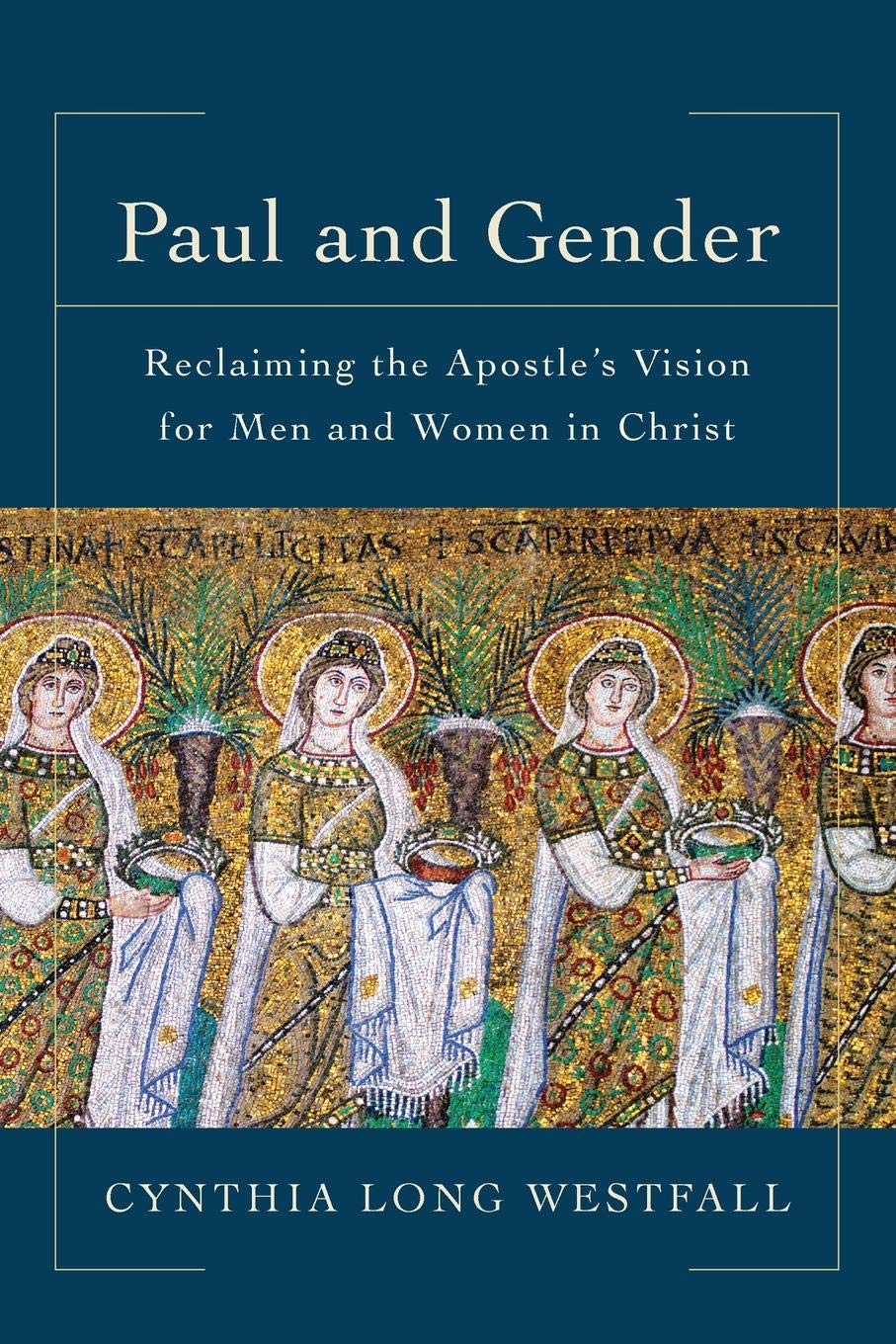
Paul and Gender: Reclaiming the Apostle's Vision for Men and Women in Christ, by Cindy Westfall

In the stuffy room marked "Paul's Views on Women," where a weary debate has been at an impasse for centuries, Westfall raises the blinds and throws open the windows, letting in light and fresh air.
With my three degrees in theology and four-and-a-half decades in the church, I thought I had heard it all. But just ask my husband (at home) if he's ever seen me gasp so many times while reading in bed, and if I've ever interrupted him so many times to read him a sentence or a paragraph.

Westfall's conclusions are carefully researched and well argued. She has a way of turning things inside out to help readers see what was right there in the Bible all along. Her book simultaneously delighted and depressed me. If she's right -- and I think she is -- then some corners of the church have unnecessarily missed out on hearing the Spirit-empowered voices of women for a very long time.

Church leaders, I beg you to read this book. You can't afford not to.

Abuelita Faith: What Women on the Margins Teach Us about Wisdom, Persistence, and Strength, by Kat Armas 

Magnificent!

Kat's exegesis is impeccable and her stories are captivating. She weaves personal and international stories with stories of women in the Bible. The result is a compelling invitation to reconsider what counts as theology and to (re)discover the voices of those hiding in plain sight. An absolute must read. I devoured it in one day!


Disability and the Way of Jesus: Holistic Healing in the Gospels and in the Church
, by Bethany McKinney Fox

Fox's book is such a gift to the church. The opening chapter was worth the price of the book! It shifted the way I think about disability. Each chapter addressed Jesus' healing ministry from a different angle--first century context, medical perspective, disabled persons' perspective, and pastors' perspective--followed by chapters on the seven marks of healing in the way of Jesus and the seven ways this can be lived out in the church. 

Although the first six chapters focus primarily on physical disabilities, the final chapter offers many ideas on how to include people with intellectual disabilities in the church. One of Fox's big ideas is that inclusion of people with disabilities is not simply an act of compassion modeled after Jesus, but that people with disabilities have so much to offer the church. She advocates for full inclusion of people with disabilities in the decision-making and ministries of the church and challenges us to re-think our services so that they are less reliant on verbal proclamation and more holistic and multi-sensory. I'm grateful for her careful thinking and clear vision. It's usefulness goes beyond the church -- this book has given me much to think about with regard to college classroom instruction and campus life. It was well worth the read!


Jesus and the Forces of Death: The Gospels' Portrayal of Ritual Impurity within First-Century Judaism, by Matthew Thiessen

An excellent reexamination of Jesus' healing narratives, demonstrating that Jesus did not disregard Jewish law. Several of his healings focused on those suffering from ritual impurity caused by lepra (a skin disease sometimes erroneously translated "leprosy"), genital discharges, and death. Rather than set aside the ritual purity system, Jesus removed the sources of ritual impurity, showing that his power was even greater than the temple.

Theissen includes a chapter on exorcisms and on Jesus' Sabbath "violations" as well as an appendix on dietary laws. These contribute to the overall picture that Jesus upheld Jewish law.
 

So much of what Thiessen points out is evident to those reading closely, but somehow with all my years reading and studying the Bible I had missed it. An illuminating book!

----

What's the best book you read this year? I'd love to hear about it in the comments below!


Sunday, September 4, 2022

Review of Cynthia Long Westfall, 'Paul and Gender'

Photo of Cynthia Long Westfall's book, Paul and Gender
Photo: C Imes
Cynthia Long Westfall's Paul and Gender: Reclaiming the Apostle's Vision for Men and Women in Christ is a tour de force. 

It's not a new book (c. 2016), but I finally took the time to read it, and I'm so glad I did.

Dr. Westfall is a graduate of Biola (where I teach), and currently serves as Associate Professor of New Testament at McMaster Divinity College in Hamilton, Ontario, Canada.

In the stuffy room marked "Paul's Views on Women," where a weary debate has been at an impasse for centuries, Westfall raises the blinds and throws open the windows, letting in light and fresh air. With my three degrees in theology and four-and-a-half decades in the church, I thought I had heard it all. But just ask my husband (at home) if he's ever seen me gasp so many times while reading, and if I've ever interrupted him so many times to read him a sentence or a paragraph.

Here are a few nuggets:

  • "Pauline theology of ministry was based on metaphors of slavery and service so that any believer (gentile, slave, or female) could assume any function in the house church without violating the hierarchy of the Greco-Roman culture" (6; cf. 266). Later she explains that words like "pastor" and "deacon" were not technical terms until long after the New Testament. We associate them with prestige and authority, but they would not have had that connotation to Paul's recipients.
  • Westfall problematizes the simplistic views of Greco-Roman authority, showing the many men were under women's authority (as children, slaves, or clients to wealthy women) and that most women had some measure of authority in the domestic sphere (e.g., pages 23, 267).
  • She notes in that context a woman's "unveiled head signified sexual availability, so that a woman slave or a freedwoman was prohibited from veiling" (29). Therefore, "Paul's support of all women veiling equalized the social relationships in the community . . . [and] he secured respect, honor, and sexual purity for women in the church who were denied that status in the culture" (33-34).
  • Paul regularly used male metaphors for all believers and female metaphors for those in church leadership. "Paul's use of maternal imagery for pastoral care illustrates a compatibility of pastoral care with feminine commitment and the female role of nurture" (53).
  • Westfall argues cogently that "head" in Paul is a metaphor that relates to source rather than to authority. While she is not the first to contend for this reading, I found her explanation particularly insightful. "Christ is the source of man's life because he is the creator who formed man in Genesis 2:4-9. Man is the source of woman's life because she was created out of man in Genesis 2:18-23" (86).
  • She demonstrates from Paul's own letters that Paul does not believe women are more prone to deception than men. "Women as well as men in the Christian community are in danger of deception, but the same remedies are available: biblical correction and teaching" (116).
  • Westfall explains the historical background that likely prompted Paul's strange statement about women being "saved through childbearing" (1 Tim 2:15). "Artemis was the patron goddess of the city of Ephesus, and she was literally the savior to whom the women went for safety and protection in childbirth" (136). It is very likely that in 1 Timothy 2, Paul is addressing false teaching in Ephesus and urging women to trust God to watch over them during their vulnerable experience of childbirth.
  • On eschatology, she writes, "According to Paul, there is no differentiation in humanity's destiny on the basis of gender, race, or status. Women, as well as gentiles and slaves, have a shared destiny of authority and rule... Women cannot have a final destiny that was not their intended purpose of function at creation. Rather, it is a transcendent norm for men and women to share dominion" (147).
  • Paul is counter-cultural. "Christianity undercut essential patriarchal rights by requiring men to be faithful in the same way that the culture had required women to be faithful" (203).
  • She explains that in Greek, "Masculine is the default gender, and it cannot be assumed that women are excluded as referents form masculine nouns, pronouns, and so forth, particularly in catchphrases, unless they are excluded by the context" (270).
  • Westfall notes that Paul's letter to Timothy was personal, addressing specific problems in the congregation in Ephesus. "A document like Paul's Epistle to the Romans would have been a more logical place to make a clear prohibition on women teaching and in ministry" (297).

I cannot do justice to this rigorous book with a list of bullet points, but I wanted to give you a taste of the sorts of claims she is making. Westfall's conclusions are carefully researched and well argued. She has a way of turning things inside out to help readers see what has been hiding in plain sight. Her book simultaneously delighted and depressed me. If she's right -- and I think she is -- then this book offers good news for women who have long felt called to ministry in the church. But at the same time, Paul and Gender saddens me. I feel the weight of the fact that some corners of the church have unnecessarily missed out on hearing the Spirit-empowered voices of women for a very long time.

Church leaders, I beg you to read this book. You can't afford not to.


Wednesday, December 29, 2021

Best Books of 2021

As usual, I've compiled a list of the most important books I read this year. The only criteria are that I read them in full and found them well written, helpful, and worth sharing. I read 42 books this year, ranging from youth fiction to published dissertations. Many of them were very good! These are the ten books I recommend most highly across several genres. (You can find brief reviews of all the books I read on GoodReads).

Children's Picture Book

The Story of God with Us is luminous and profound, grounded yet winsome. This is a children's book for a new generation of discerning parents and grandparents. Today more than ever, our world craves a unifying narrative and yet expects excellence. Aedan Peterson's illustrations bring delight to the biblical narrative so thoughtfully retold by Kenneth Padgett and Shay Gregorie. The Story of God with Us is a gift to behold! Best of all, this book is the first of many from a brand new publisher, Wolfbane Books. I love their Bible Project-esque vision of teaching biblical theology to kids in a captivating way.


Young Adult Fiction

Everything Sad is Untrue (A True Story) is the well-told true story of a 12-year-old Iranian refugee in Oklahoma. It's a gift to see the world through his eyes. You'll discover the beauty of Persian culture and become more aware of aspects of your own culture that you take for granted. Reading this book will help you develop empathy for the plight of those who are forced to leave their homes because of religious persecution. We listened to the audio book narrated by the author on a long drive. The book has won multiple awards, and it's no wonder why!

Adult Fiction

All the Light We Cannot See is a Pulitzer Prize winning work of historical fiction set in France during WWII. I listened to the audio book on our move from Canada to Southern California, and it made the hours fly by. Such an intricate plot and compelling characters!


Books in Biblical Studies

Abraham's Silence is the most important book I read this year in biblical studies, and I was so honored to have been able to endorse it. Richard Middleton revisits a familiar Old Testament story -- the binding of Isaac in Genesis 22 -- and turns it on its head. What if Abraham is not the hero of this story? What if this story demonstrates his failure rather than his faith? Middleton pairs a close reading of Genesis 22 with the book of Job and the lament psalms, suggesting that Abraham fell short of truly knowing Yahweh and what he desires. God invites prayers of protest, not silent and unquestioning obedience. I will never read this story the same way again!

Who Shall Ascend the Mountain of the Lord? was a rich read from one of my favorite Old Testament scholars. Michael Morales unlocks the book of Leviticus, showing its literary design and tracing its themes. I'm so grateful for his careful work.

Books on Christian History

Kristin Kobes Du Mez' Jesus and John Wayne ought to come with a gift certificate for therapy. As a child, I had a book by Ann Jonas called Round Trip. It is a picture book that you read from start to finish, then flip over and read upside down back to the beginning. All the images in the book work right-side up as well as upside down. Jesus and John Wayne turned my childhood narrative upside down. Du Mez resituated household names like James Dobson and Ronald Reagan -- even Billy Graham -- in a wider field of view to show me the shadows they cast. Christian retail, "family values," "law and order," homeschool networks, and men's retreats all changed shape, too, under Du Mez' careful scrutiny. For those (like me) who thought that Evangelical support for Donald Trump was a puzzling anomaly, Du Mez demonstrates that it fits squarely in the Evangelical narrative as it has developed over the past 50 years. She guides readers through decades of religious and political leadership to highlight the emergence of a militant, masculine version of Christianity that has captured the imagination of white Evangelicals. I'm thankful for Du Mez' careful work to expose the abuses and imbalances of white Evangelicalism. Her voice contributes to a collective day of reckoning. I pray it's not too late.

Robert Chao Romero's Brown Church approached the history of Christianity from a different angle, outlining centuries of Latina/o Christian social engagement and theological reflection. For Latinos who feel there is little room for them in the brand of evangelicalism described by Du Mez in Jesus and John Wayne and for others who long for authentic Christianity, Romero recovers a rich heritage. For those of us who have thought only of Latin America as a mission field rather than a model and source of inspiration, this book offers an invitation to flip the script and begin learning.

Books for Academics

The Flourishing Teacher was my companion through a year of teaching. I've written about it before, but it bears repeating. Christina Bieber Lake has an uncanny knack for knowing just how I'm going to feel at any given point in the academic year. She offers sage advice for professors with lots of grace. In this book, I gained a mentor and friend.

Another treasure this year was a book Lake recommends, The Courage To Teach by Parker Palmer. Palmer goes beyond technique to nourish the soul of educators. I read through it with a group of colleagues and found it inspiring and practically helpful.

BONUS: New Reference Tool

I must admit that I have not read all 1000+ pages of Gary Schnittjer's new exegetical resource, but I expect to keep turning back to it for years to come. The first of its kind, The Old Testament Use of Old Testament catalogues and discusses exegetical allusions, that is, places where the Old Testament unpacks or develops other passages from the Old Testament. Schnittjer has carefully assessed the strength of each potential passage and highlighted key issues for busy professors, pastors, and students.  

I have a tall stack of books I'm hoping to read in 2022. What's on your list to read?


Monday, December 6, 2021

Best Books on Historical and Cultural Backgrounds of the Bible

Although I had already been through four years of Bible College, in seminary a whole new world opened up to me. As an undergrad I developed a deep committment to reading the Bible as literature and on its own terms, without the potential distortion of outside sources. This was a wonderful season of training for me as I became sensitive to the literary contours of biblical stories.

In seminary, under the guidance of different professors, I discovered the value of studying the historical and cultural backgrounds of the Bible. Here's why: the Bible did not drop from the sky, leather bound, with our names embossed on the cover. Reading the Bible is a cross-cultural experience. We are guests in an ancient context, where people speak other languages, where people's hopes and dreams are profoundly shaped by their own contexts, and where society as a whole operates under different values and assumptions. 

In order to be competent readers of Scripture, we must attend to the contexts in which is was written. Every passage has a literary context, a historical context, and a theological context. Neglect of any of these dimensions results in a "flat" reading. In particular, if we ignore the historical context of a passage we run the risk of distorting it. Without interrogating our own cultural lenses, we are likely to impose modern values and assumptions on the text. I see this happen all the time in class, as students encounter stories that strike them as strange.

This is why I'm particularly passionate about training students to attend to both the literary and historical dimensions of the text. We practice developing skills in narrative and poetry analysis and we also consider the historical and cultural contexts of the Bible. We live in a wonderful era in which resources are more readily available than ever before! 

Here are five resources that I find myself repeatedly recommending:

The Cultural Backgrounds Study Bible - Available in the NIV, NRSV, and NKJV translations, this full-color study Bible includes a wealth of information at your fingertips, right where you need it when reading the Bible. It is not designed as a devotionally inspiring study Bible, but a reference tool to help readers understand the cultural context of Scripture. I require it for my Bible classes so that students have a solid resource for a lifetime of study.

The Zondervan Illustrated Bible Backgrounds Commentary - This is a more extensive (and of course, more expensive) resource than the study Bible above, with full-color photographs, charts, and insightful notes on every book of the Bible. Every church library should have this resource on hand for Bible studies and sermon prep.

The Dictionary of Daily Life - This gem is a more recent addition to my library that I've already used many times. It contains an alphabetized collection of articles on aspects of daily life in ancient Israel (and the Greco-Roman world). For example, if you're studying Exodus 2, you could read articles on Bathing, Midwifery, Infanticide, and Adoption. The articles are well researched and written.

The Dictionary of Biblical Imagery - This tool is more on the literary side of things (rather than historical/cultural), but it helps with precisely those images that are unfamiliar to modern readers. For example, if you're reading along in Daniel and want to know the significance of the beasts with horns, you could read the article on "horns" in the Bible. Each article traces the use and development of a particular image across the biblical canon, with sensitivity to cultural context.

Ancient Near Eastern Thought and the Old Testament - I read this book in graduate school while taking a class on ancient Near Eastern Backgrounds with John Walton. It was immensely helpful in reshaping my imagination so that I could see what ancient people cared about. It's written for graduate students read, but even if you're not in school, if you're serious about understanding Bible backgrounds, it is well-worth your time.

If this list is two long for you, then I'd recommend this dynamic duo which should prove helpful no matter what part of the Bible you are studying: The Dictionary of Daily Life and The Cultural Backgrounds Study Bible. Both are well worth the sticker price, and both are currently on sale.


Saturday, December 26, 2020

Best Books of 2020

As is my custom, I'm writing to tell you about the most important books I read this year. The only criteria are that I read them in full and found them well written, helpful, and worth sharing. I read 45 books this year, ranging from youth fiction to published dissertations. Many of them were very good! These are the books I hope you will read, too.

Best Books Every Christian Should Read:

These first two are tied for best overall book I read in 2020. Both issue a timely and illuminating message for the church, and both are written in such a way that non-academics will be able to read and appreciate them. I blogged about both of them earlier this year, so I won't repeat myself here, except to say that both of them show us what's in plain sight in the biblical text that the church has often missed.

Stewards of Eden by Sandra Richter weaves solid biblical exposition with current case studies in environmental stewardship. It's a challenging and illuminating book.

Reading While Black by Esau McCaulley demonstrates the tremendous value of reading the Bible with and for the Black church. His book cuts to the heart of issues facing society today and calls us to a faithful, faith-filled response. Reading While Black is the Christianity Today best book of the year 2021 for Beautiful Orthodoxy.


Best Academic Books:

The Liberating Image 
by J. Richard Middleton is a consistently careful and thought-provoking explication of Scripture. Middleton never feels cliché or shallow, and even where you disagree, you'll find him thought-provoking. I'm grateful for his insight.

Exclusion and Embrace by Miroslav Volf came highly recommended by several friends. It is a dense read that took me a few months to finish, but his penetrating analysis was worth the effort. Volf issues a powerful call to self-giving love and charts a path for reconciliation and restoration of relationships.


Best Books for those who Write and Teach:

Adorning the Dark
by Andrew Peterson is a beautiful book about the creative process. Peterson is a songwriter whose music I discovered during quarantine, and fantasy novelist whose stories carried us through this dark year (see below). Although I don't write songs or novels, Adorning the Dark expressed powerfully the challenges and joys of any type of creative work shared with the public (including visual art and writing books of any kind). I loved it.

From Research to Teaching by Michael Kibbe releases in 2021, but I jumped at the chance to read it early and couldn't put it down. It would make the perfect gift for a recent PhD graduate -- seasoned with wisdom and practical help for navigating the transition to teaching. 


Best Books for those who Preach:

A second edition of The Art of Preaching Old Testament Narrative by Steve Mathewson is releasing in April 2021. Steve is a good writer, but more importantly an able interpreter of biblical narrative who offers practical suggestions for engaging your audience. I expect I'll turn to this again and again, not just for preaching advice, but for illuminating exegesis.

Simplify the Message, Multiply the Impact by Talbot Davis distills his many years of preaching experience into a focused model for sermon preparation. Talbot is an expert at connecting with people where they are. He preaches engaging and clear messages without notes, and he will show you how to do the same. Whether you're preaching to a full house or to a camera lens, Talbot will help you get your audience and get the message across.


Best Fiction:


The Wingfeather Saga 
by Andrew Peterson was a gift in this brutal year. My 12-year-old and I spent long evenings at home listening to Peterson read his stories on YouTube. His brilliant writing is matched by his incredible skill in voicing each character. The stories are full of high adventure but offer deep insight into human character. 

Killing a Messiah by Adam Winn is an engaging work of historical fiction about Jesus' last weeks. He weaves a plot that ushers readers into the political intrigue of first century Palestine. The storyline is complex and believable. A great read to save for Holy Week.


Wednesday, November 27, 2019

Best Books on Women in Ministry

People often ask me for book recommendations on the topic of women in ministry. Here are some of the books that I loan out most often, organized roughly from the most accessible to the most academic.

Image result for kristen padilla now that i'm calledKristen Padilla, Now That I'm Called: A Guide for Women Discerning a Call to Ministry (Zondervan, 2018)

Kristen writes for women who sense a call to ministry but are not sure how to carry it out in their context. Her book is sensitive to long-standing gender roles and dynamics in complementarian congregations and does not presume that readers are egalitarian. She warmly affirms the giftedness of women and encourages them in their quest to be faithful to God's call.

Alan F. Johnson, ed., How I Changed My Mind about Women in Leadership: Compelling Stories from Prominent Evangelicals (Zondervan, 2010)

Image result for half the church carolyn custis jamesThis book is a treasure of stories about men and women who have shifted toward a more egalitarian outlook. A collection of testimonies rather than a systematic argument, this book shows the struggles of Christian leaders to be faithful to Scripture, their "aha!" moments, and the humility it took to admit that they had been wrong.

Carolyn Custis James, Half the Church: Recapturing God's Global Vision for Women (Zondervan)

Carolyn's book urges women to step up and participate in kingdom work. We can't sit back and expect the men to do everything! God created us to work as a team, side-by-side ruling over creation. Carolyn addresses some of the most common arguments for male-only leadership that are rooted in the creation story and in the letters of Paul, showing the problems with those interpretations and inviting readers to consider the urgency of God's design for partnership. This book is one that the entire church, not just women, need to read.

Image result for alice mathews gender roles
Alice Mathews, Gender Roles and the People of God: Rethinking What We Were Taught about Men and Women in the Church (Zondervan, 2017)
This is an accessible introduction to the key biblical text that so often figure in the debates over women in ministry. Dr. Mathews has been teaching a course at Gordon-Conwell Theological Seminary on this topic for many years, and this book is the best of her classroom content, now available to everyone.

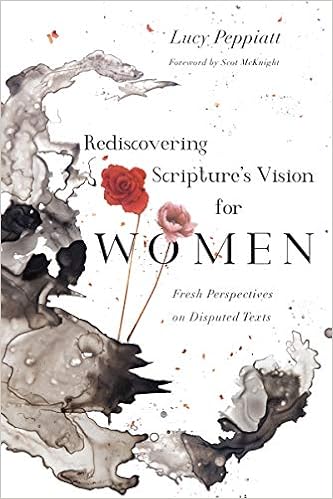
Related imageLucy Peppiatt, Rediscovering Scripture's Vision for Women: Fresh Perspectives on Disputed Texts (IVP, 2019)

Lucy's book is a brand new release from InterVarsity Press. As she reexamines the relevant biblical texts, Peppiat "finds a story of God releasing women alongside men into all forms of ministry, leadership, work, and service on the basis of character and gifting, rather than biological sex. Those who see the overturning of male-dominated hierarchy in the Scriptures, she argues, are truly rediscovering an ancient message―a message distorted by those who assumed that a patriarchal world, which they sometimes saw reflected in the Bible, was the one God had ordained." (from publisher's book description)

Craig S. Keener, Paul, Women, and Wives: Marriage and Women's Ministry in the Letters of Paul (Baker, 1992)

Dr. Keener's book landed on my desk on an interesting day. An invitation to preach had just been retracted on account of my gender (the pastor got complaints when people found out I was coming). Dr. Keener examines the cultural and historical context that motivated Paul's statements, offering a new perspective on how to read them responsibly.

Image result for cindy westfall paul and genderCynthia Long Westfall, Paul and Gender: Reclaiming the Apostle's Vision for Men and Women in Christ (Baker, 2016)

Dr. Westfall explores the broader question of gender according to Paul, revisiting the most controversial texts to offer a fresh perspective. She is historically grounded and moves the debate forward in helpful ways based on the latest research.

You'll notice that the subtitles of several of these books share a similar tone: recapturing, rediscovering, rethinking, reclaiming. These authors all agree that something is missing in Evangelical churches today. In our efforts to obey the Bible, our churches have implemented practices that inadvertently prevent gospel ministry and silence the Spirit's work. These authors -- all of them Evangelicals -- call us back to the Scriptures to take another look. Things are not as simple as many have assumed ("women, be silent"), and our faithful reading and practice of Scripture depends upon a careful reassessment. If Scripture is to remain our authority for faith and practice, we cannot afford to get this wrong.

Sunday, November 10, 2019

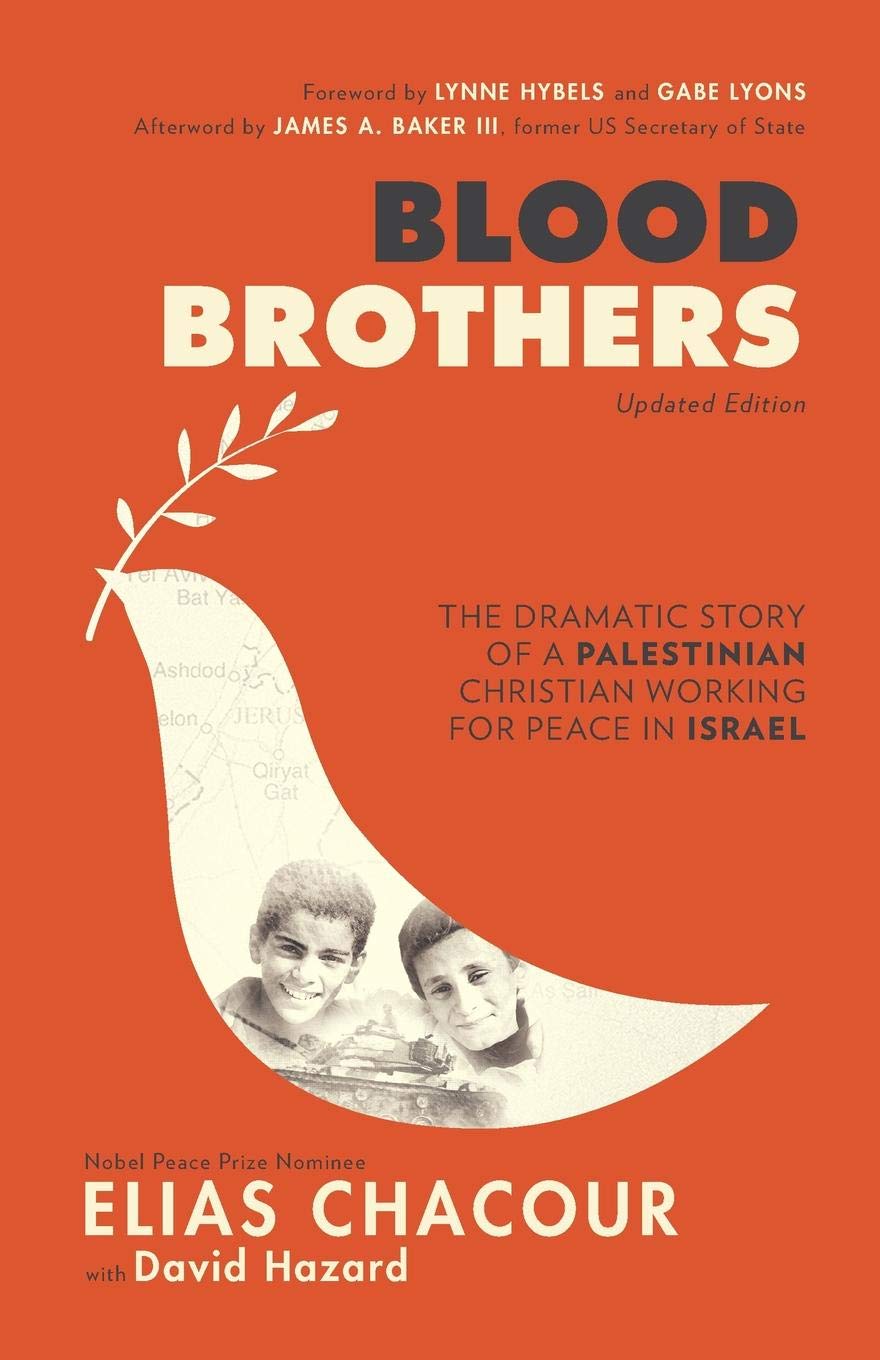
Book Review: Elias Chacour's 'Blood Brothers'


Image result for elias chacour blood brothers

I'm leading a trip to Israel with Prairie College in 2020, so as part of my preparation I'm trying to get a handle on the history of the Israeli-Palestinian conflict. The first book on my list was Elias Chacour's Blood Brothers, which has been recommended to me several times. It was a fascinating read!

Chacour is a Palestinian Christian leader who came of age in the midst of great turmoil in the Middle East. He tells of his peaceful childhood in a Christian village in Galilee where his family had owned and tended the land for generations. They understood themselves to have been grafted in to the "olive tree" of Abraham through faith in Jesus. Chacour's father regularly did business with Jewish villages nearby, treating them as brothers. Like the rest of the watching world, his family sympathized with the plight of European Jews. Chacour's village was ready to welcome new Jewish settlers fleeing Europe to live among them and farm the land. But they were never given this chance.

The peace of their community was shattered when Zionist soldiers arrived after WWII, kicking Palestinian residents off of their own land and confiscating their property. The violence of the war seems to have infected the "peacekeeping" troops, who were funded by a variety of nations with special interest groups. Unlike their Jewish neighbors, these troops were violent and their aim was conquest. It was the beginning of a decades-long conflict that is still unresolved today.

Chacour has devoted his life to working for peace between Arabs and Jews. A Nobel Peace Prize nominee, he has watched communities transformed by hope and brotherhood. So although this story is a brutal one, the undercurrent is hope -- hope for a peace made possible by restoring the dignity of every human being.

Given the almost unqualified support for the state of Israel extended by many American Christians, this story is vitally important for us to hear. Chacour does not call upon Westerners to reverse history and force Jews out of Palestine, but rather to withhold judgment on who is terrorizing whom when we lack the proximity to make such judgments. He laments, "How terribly sad that men could ignore God's plan for peace between divided brothers, even supporting one group as it wielded its might to force out the other" (142). We must learn to listen and heed the teaching of the prophet Isaiah, "Practice justice and righteousness, and then you will have peace" (227). If we want to walk in the way of peace, Chacour will be an able guide.

Sunday, July 28, 2019

Book Review: Richard Mouw's "Restless Faith"

Do you wrestle with your evangelical identity? Do you ever wonder whether it's time to throw in the towel and walk away?

If so, this book is for you.

As president of Fuller Seminary and former professor at Calvin College, Richard J. Mouw has spent many decades as an evangelical. All of them, he says, were restless years. This book is his explanation of why he's choosing to stay.

These are trying times for evangelicals. Cultural pressures from the outside and deep disagreements on the inside make evangelicalism an uncomfortable place for many Christians. The most recent national election in the US, to cite just one example, threatened to split families right down the middle.

Mouw takes us behind the scenes in the institutions where he has served to demonstrate that evangelicalism has always been this way. He reminds us of the core tenets that hold such a diverse group together, suggesting that these central values -- belief in the need for conversion, the authority of the Bible, the centrality of the cross, and an emphasis on daily discipleship -- cannot be found in this combination anywhere else.

He talks about Billy Graham, Christianity Today, Ann Voskamp, World Vision, and the National Association for Evangelicals on the one hand, as well as Norman Vincent Peale, Robert Schuller, Rob Bell, and the National Council of Churches on the other. We learn about his efforts to promote Mormon-Evangelical and other types of inter-faith dialogue without watering down his own Evangelical commitments. We read of his lonely engagement in the civil rights movement and politics during the 1960s when many Evangelicals' only concern was to "save souls." He wrestles with the individual and communal aspects of salvation and considers the value of both hymns and contemporary worship songs. In the end, he advocates "holding on while staying restless" as an Evangelical.

Speaking as an academic, I did not find the book to be heavy reading, but rather patchwork autobiography in accessible prose. Yet one does not have to know Richard Mouw to appreciate his reflections -- his wisdom shines through on every page and offers hope for Evangelicals who are feeling squirmy in today's politicized climate. He concludes,
"For me, the only way to be a properly functioning evangelical is to keep arguing about what it means to be an evangelical. Restlessness in claiming that label has long been the way I have kept moving. I hope that many of us can stay restless as we hold on while exploring together whether the best way to remain faithful to the legacy is to let go of the label. . . . For the present, I am inclined to go with the second option -- working for evangelical renewal, rather than simply allowing the movement's label to be co-opted by leaders who have departed from the best of the legacy." (174)
If you share his restlessness, this book may be just the thing you need to refresh your perspective and refuel your evangelical commitment. Mouw does not suggest that we hold doggedly to the label "evangelical," but he offers good reasons to keep it for the time being.

Wednesday, May 1, 2019

Projects in the Works . . .

My blog has been quiet lately, but not because I haven't been writing. Some longer-term projects took priority over the past few months. Here are some of the highlights:

Bearing God's Name: Why Sinai Still Matters (InterVarsity Academic)
This book is slated to release December 10, 2019, just in time for Christmas! It distills the key insights from my doctoral studies in non-academic language. If you've ever wanted to sit in on some of my classes, this book is for you. Together we'll journey to Sinai so that I can show you why Christians can't afford to ignore what happened there. From Sinai we traverse the rest of the Old Testament and into the New, seeing how Jesus and the early church found their identity and vocation at the mountain where they met God.
I can't reveal his name yet, but just wait until you see who has agreed to write the foreward! If you'll be in San Diego in November for ETS, IBR, or SBL, you can pick up copies there for all your friends. I'll carry a pen on me in case you'd like your copy signed.

Essay on the high priestly garments for Dress and Clothing in the Hebrew Bible (T&T Clark)
This book is the culmination of four years of research and collaboration with other scholars in the Pacific Northwest Region of the Society of Biblical Literature. My essay explores the theological and symbolic significance of Aaron's high priestly garments.
Our second cycle of research is already underway, with eight papers slated for presentation this weekend at our regional meeting. My contribution this time around is on clothing metaphors in the imprecatory psalms.  
Illustrated Psalms in Hebrew (GlossaHouse), co-authored with Matt Ayars
Like my Illustrated Exodus in Hebrew, this volume will pair the unedited Hebrew text with beautiful illustrations by Keith Neely and a fresh English translation for easy reference. It will be a great way to practice Hebrew while experiencing the theological riches of the Psalms. Watch for it in November.
Reading the Psalms with Augustine and friends (Sacred Roots Christian Classics Series)
Funded by the Lily Foundation, this new book series helps under-resourced pastors to access classic works in biblical studies, theology, spirituality, and mission. I'm editing the inaugural volume on the Psalms. The book will include devotional comments on each psalm from early Christian writers in updated language, with a special focus on Augustine.
Exodus (Baker Commentary on the Old Testament: Pentateuch series)
I've just agreed to take on this major 5-year project, a 700-page commentary on the book of Exodus for pastors, students, and scholars. Bill Arnold will serve as editor.
Watch for the Genesis volume in this series by John Goldingay. My contribution will be out by the time our youngest is in college.

As you can see, these span the range from accessible writing for the church to technical writing for the scholarly community, with resources for pastors and students in between. I love having a foot planted in both worlds and bridging the gap between them. It truly is the #bestjobintheworld!

Monday, October 24, 2016

Time Travel, New Testament-Style

The world of the New Testament is foreign to us -- languages, customs, religions, geography, and politics are so different from our own -- and crossing that gap can be challenging. Thankfully, two esteemed New Testament professors have made it a little bit easier for the rest of us to experience that world. Bruce Longenecker (Baylor University) and Gary Burge (Wheaton College) have each written an imaginative work of historical fiction to illuminate the New Testament.

Burge's book, A Week in the Life of a Roman Centurion (IVP, 2015) follows an officer of the imperial army, Appius, and his trusted servant, Tullus, as they are assigned to various locations around Syria and Palestine. At the end of the book, they are assigned to Capernaum and their paths cross that of a simple prophet from Galilee, an encounter that changes everything. Burge's novel is easy to read and hard to put down. The story pulled me in. Informative text boxes are placed strategically throughout the book, offering background information on 1st century practices.

Longenecker's book, The Lost Letters of Pergamum (Baker, 2003/2016), is set a few decades after Jesus' resurrection, in the Asian city of Pergamum. His main character is a Roman nobleman named Antipas whose life revolves around the acquisition of both wealth and honor and the avoidance of shame. The story itself is the collected correspondence of Antipas and Luke, who had been a traveling companion of the apostle Paul and the author of a 2-part Gospel (known to us as Luke and Acts). Luke and Antipas share a love of history and a familiarity with the Roman way of life. However, when Antipas begins reading a copy of Luke's Gospel and associating with Christians, his world begins to unravel. A surprise ending brings the book to a satisfying finish. The genius of Longenecker's book is that we encounter Jesus and his teachings through the eyes of someone at home in the Roman empire. His sophisticated tale takes a bit more effort than Burge's to engage, given the appropriately stilted style of letter-writing, but it is well worth the energy.

The two novels are exactly the same length (187 and 189 pages, respectively). Both are rooted in extensive research on New Testament backgrounds, and involve real figures such as the Emperor Domitian and Herod Antipas. Burge takes his point of departure from the New Testament stories recorded in Matthew 8:5-13 and Luke 7:1-10. Longenecker's inspiration is Revelation 2:13, and he clarifies in an appendix which points of the narrative are fictional and which are not.

Sensitive readers should be forewarned that both books are rather bloody, giving detailed descriptions of gladiatorial games, and (in the case of Burge) battle scenes. Burge also incorporates aspects of the sexual lives of his characters (with concubines and prostitutes in particular), illuminating age-old problems. I read both of these within the past week, hoping to decide which to assign for my students to read in "Gospels, Acts, and Revelation" next semester. Unfortunately, it didn't make my decision any easier! I loved them both. Which one will you read first?