Showing posts with label Middleton. Show all posts

Friday, February 11, 2022

Becoming Human: My Visit to an SBC Seminary

It was an unlikely invitation. 

Would I travel to Wake Forest, NC to speak on personhood at Southeastern Baptist Theological Seminary? 

I, who am neither a member of the SBC nor the daughter of a member of the SBC. 

I, a woman who teaches Bible and even preaches on occasion.

It was not my first SBC connection. First, my book appeared in the book store at The Southern Baptist Theological Seminary in Louisville, where Al Mohler is president back in early 2020. (Unexpected!) Then, the same book was a finalist for an award from Midwestern Baptist Theological Seminary in Kansas City. (Who knew?!) The next thing I knew, Lifeway Publishing asked me to contribute to a women's study Bible. (Huh.) And then Southern invited me to present my research to their PhD students and faculty over Zoom in 2021. (!!)

And then this. A plenary address at an SBC seminary. What did I have to lose? Plenty, actually.

As I said, I'm not a member of the SBC. But I am SBC-adjacent. I'm close enough to the movement to know that all is not well. I watched Beth Moore walk away (gulp!). I watched Russell Moore make his exit (wow.). I saw the troubling statement released by the six white SBC seminary presidents on Critical Race Theory -- a statement crafted without the input of any people of color or anyone who had even studied CRT (um...). I watched talented African American leaders cut ties with the denomination. I waited on pins and needles while the delegates voted for a new president at last year's convention, and while they decided how to handle allegations of sexual abuse and how to care for survivors. I groaned a few months later when the Executive Committee waffled over whether to submit to outside investigation.

I care very much where things go in the SBC because the denomination wields enormous influence. People's faith and health are at stake. And so is the witness of the church at large.

Here was my conundrum: attending the conference would allow me to learn from the other presenters and work on issues related to my current book project and get feedback. But would taking the stage at an SBC seminary somehow align me with the denomination and its problems? Would it make me complicit? (If you think I'm overreacting, consider that the invitation was issued from a building named after Paige and Dorothy Patterson, the seminary's notorious former president and his wife.)

I concluded that I could not participate without addressing the problems as I see them. I refuse to pretend that all is well. It would be irresponsible to talk about the biblical doctrine of the image of God without pointing to the myriads of ways that evangelicals as a whole and the SBC in particular have failed to live these truths. That would compromise my integrity.

So I took a deep breath, said yes, and submitted this title:

The Rise and Fall of the Imago Dei?: Assessing Evangelical Theology and Practice

My title intentionally evoked the long-form journalistic podcast produced by Christianity Today that investigated a particularly egregious form of "evangelical" ministry with a narcissistic leader. I took my cues from Mike Cosper, who demonstrated the value of evangelical self-critique. Here is my abstract:

Evangelicals all agree that human identity and vocation are rooted in the creation accounts of Genesis, but the particulars are often a matter of debate. We’ll consider the recent work of several evangelical scholars on the imago Dei—Ryan Peterson, John Kilner, Catherine McDowell, and Richard Middleton—each of whom has clarified Old Testament teaching in profound ways. Building on their work, we will reassess the priorities of the contemporary evangelical church and suggest ways of embodying practices that align with Scripture’s clear teaching on the imago Dei.

Carmen Imes speaking at the Exploring
Personhood Conference sponsored by
the Bush Center for Faith and Culture
(Photo: Chip Hardy)
The first half of my presentation drew out insights from the four scholars named above, with a bit of extra nuance from me in the area of gender. But then came the scary part -- I addressed head on the ways that evangelicals have failed in three broad areas: sanctity of human life (ahem, after birth), partnership of men and women, and creation care.

My talk will be posted soon on the Bush Center for Faith and Culture's website, so there's no need for me to repeat the litany here. It's enough to say that I pointed to examples of racism, ableism, sexism, LGBTQ-related issues, inhospitality to singles, failure to protect and advocate for victims of abuse, and neglect of creation care. I hit all these hot topics, issued a clear call for change, and cast a vision for a different way of living out what we say we believe. With my integrity intact, the question became 'would I lose my voice?' Would this be the first and last opportunity to speak on this campus?

I've been mulling over all of this for months, reading widely, and imagining how this might go. I asked people to pray and I prayed about it myself. I sought advice and wondered if this was career suicide. In the end, I said what I felt I must be said with as much love and empathy as I could muster. One thing is true -- of all the possible reactions I imagined, a standing ovation was not one of them. Everyone clapped, and more than half a dozen stood in solidarity.

Conference Panel Discussion
(Photo: Bush Center for Faith and Culture) 
This message struck a chord with so many, who thanked me with tears in their eyes. Faculty, students, and guests alike shook my hand and new friendships were born. To be clear, the warm reception is not a sign that all is well, of course. It's a sign that the problems I listed truly are problems. On that we agree.

And this is what gives me hope.

Because agreeing on the problem is the first essential step toward finding solutions.

So now the real work begins. Now we must invest our energies into the work of listening to new voices, reexamining how we do things, building new alliances, and prayerfully finding new ways forward. Change takes time, but the road is not so lonely as it seemed.

This conference taught me something about human personhood that was not on the stated agenda: Caricatures are difficult to maintain in person. I'm under no illusion that 48 hours on campus gave me an accurate picture of the SBC as a whole, or even SEBTS in particular. But it reminded me of the value of embodied community and courageous conversations. It showed me that the loudest voices on Twitter do not always (or even usually?) represent the majority. I found far more allies than I dared to hope. I'm relieved that a bridge has been built, rather than burned.

As we learned from Dr. Justin Barrett, compared to animals, humans are immensely social creatures capable of shared attention, mental space, expertise, and cooperation across a remarkably large group of unrelated humans. I saw this in action at Southeastern. 

Father John Behr and Dr. Jeff Schloss both talked about the telos of love, helping us think about the uniquely human capability of self-sacrifice for another. According to Behr, it is in laying down our lives for another that we truly become human. I felt this in the way people thanked me for saying hard things, and in the way Dr. John Hammett offered loving pushback to each of us.

If Behr is right, then all of us who participated in this exchange became a bit more human this week.

For that I am profoundly grateful.

Wednesday, December 29, 2021

Best Books of 2021

As usual, I've compiled a list of the most important books I read this year. The only criteria are that I read them in full and found them well written, helpful, and worth sharing. I read 42 books this year, ranging from youth fiction to published dissertations. Many of them were very good! These are the ten books I recommend most highly across several genres. (You can find brief reviews of all the books I read on GoodReads).

Children's Picture Book

The Story of God with Us is luminous and profound, grounded yet winsome. This is a children's book for a new generation of discerning parents and grandparents. Today more than ever, our world craves a unifying narrative and yet expects excellence. Aedan Peterson's illustrations bring delight to the biblical narrative so thoughtfully retold by Kenneth Padgett and Shay Gregorie. The Story of God with Us is a gift to behold! Best of all, this book is the first of many from a brand new publisher, Wolfbane Books. I love their Bible Project-esque vision of teaching biblical theology to kids in a captivating way.


Young Adult Fiction

Everything Sad is Untrue (A True Story) is the well-told true story of a 12-year-old Iranian refugee in Oklahoma. It's a gift to see the world through his eyes. You'll discover the beauty of Persian culture and become more aware of aspects of your own culture that you take for granted. Reading this book will help you develop empathy for the plight of those who are forced to leave their homes because of religious persecution. We listened to the audio book narrated by the author on a long drive. The book has won multiple awards, and it's no wonder why!

Adult Fiction

All the Light We Cannot See is a Pulitzer Prize winning work of historical fiction set in France during WWII. I listened to the audio book on our move from Canada to Southern California, and it made the hours fly by. Such an intricate plot and compelling characters!


Books in Biblical Studies

Abraham's Silence is the most important book I read this year in biblical studies, and I was so honored to have been able to endorse it. Richard Middleton revisits a familiar Old Testament story -- the binding of Isaac in Genesis 22 -- and turns it on its head. What if Abraham is not the hero of this story? What if this story demonstrates his failure rather than his faith? Middleton pairs a close reading of Genesis 22 with the book of Job and the lament psalms, suggesting that Abraham fell short of truly knowing Yahweh and what he desires. God invites prayers of protest, not silent and unquestioning obedience. I will never read this story the same way again!

Who Shall Ascend the Mountain of the Lord? was a rich read from one of my favorite Old Testament scholars. Michael Morales unlocks the book of Leviticus, showing its literary design and tracing its themes. I'm so grateful for his careful work.

Books on Christian History

Kristin Kobes Du Mez' Jesus and John Wayne ought to come with a gift certificate for therapy. As a child, I had a book by Ann Jonas called Round Trip. It is a picture book that you read from start to finish, then flip over and read upside down back to the beginning. All the images in the book work right-side up as well as upside down. Jesus and John Wayne turned my childhood narrative upside down. Du Mez resituated household names like James Dobson and Ronald Reagan -- even Billy Graham -- in a wider field of view to show me the shadows they cast. Christian retail, "family values," "law and order," homeschool networks, and men's retreats all changed shape, too, under Du Mez' careful scrutiny. For those (like me) who thought that Evangelical support for Donald Trump was a puzzling anomaly, Du Mez demonstrates that it fits squarely in the Evangelical narrative as it has developed over the past 50 years. She guides readers through decades of religious and political leadership to highlight the emergence of a militant, masculine version of Christianity that has captured the imagination of white Evangelicals. I'm thankful for Du Mez' careful work to expose the abuses and imbalances of white Evangelicalism. Her voice contributes to a collective day of reckoning. I pray it's not too late.

Robert Chao Romero's Brown Church approached the history of Christianity from a different angle, outlining centuries of Latina/o Christian social engagement and theological reflection. For Latinos who feel there is little room for them in the brand of evangelicalism described by Du Mez in Jesus and John Wayne and for others who long for authentic Christianity, Romero recovers a rich heritage. For those of us who have thought only of Latin America as a mission field rather than a model and source of inspiration, this book offers an invitation to flip the script and begin learning.

Books for Academics

The Flourishing Teacher was my companion through a year of teaching. I've written about it before, but it bears repeating. Christina Bieber Lake has an uncanny knack for knowing just how I'm going to feel at any given point in the academic year. She offers sage advice for professors with lots of grace. In this book, I gained a mentor and friend.

Another treasure this year was a book Lake recommends, The Courage To Teach by Parker Palmer. Palmer goes beyond technique to nourish the soul of educators. I read through it with a group of colleagues and found it inspiring and practically helpful.

BONUS: New Reference Tool

I must admit that I have not read all 1000+ pages of Gary Schnittjer's new exegetical resource, but I expect to keep turning back to it for years to come. The first of its kind, The Old Testament Use of Old Testament catalogues and discusses exegetical allusions, that is, places where the Old Testament unpacks or develops other passages from the Old Testament. Schnittjer has carefully assessed the strength of each potential passage and highlighted key issues for busy professors, pastors, and students.  

I have a tall stack of books I'm hoping to read in 2022. What's on your list to read?


Saturday, December 26, 2020

Best Books of 2020

As is my custom, I'm writing to tell you about the most important books I read this year. The only criteria are that I read them in full and found them well written, helpful, and worth sharing. I read 45 books this year, ranging from youth fiction to published dissertations. Many of them were very good! These are the books I hope you will read, too.

Best Books Every Christian Should Read:

These first two are tied for best overall book I read in 2020. Both issue a timely and illuminating message for the church, and both are written in such a way that non-academics will be able to read and appreciate them. I blogged about both of them earlier this year, so I won't repeat myself here, except to say that both of them show us what's in plain sight in the biblical text that the church has often missed.

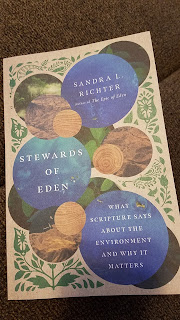
Stewards of Eden by Sandra Richter weaves solid biblical exposition with current case studies in environmental stewardship. It's a challenging and illuminating book.

Reading While Black by Esau McCaulley demonstrates the tremendous value of reading the Bible with and for the Black church. His book cuts to the heart of issues facing society today and calls us to a faithful, faith-filled response. Reading While Black is the Christianity Today best book of the year 2021 for Beautiful Orthodoxy.


Best Academic Books:

The Liberating Image 
by J. Richard Middleton is a consistently careful and thought-provoking explication of Scripture. Middleton never feels cliché or shallow, and even where you disagree, you'll find him thought-provoking. I'm grateful for his insight.

Exclusion and Embrace by Miroslav Volf came highly recommended by several friends. It is a dense read that took me a few months to finish, but his penetrating analysis was worth the effort. Volf issues a powerful call to self-giving love and charts a path for reconciliation and restoration of relationships.


Best Books for those who Write and Teach:

Adorning the Dark
by Andrew Peterson is a beautiful book about the creative process. Peterson is a songwriter whose music I discovered during quarantine, and fantasy novelist whose stories carried us through this dark year (see below). Although I don't write songs or novels, Adorning the Dark expressed powerfully the challenges and joys of any type of creative work shared with the public (including visual art and writing books of any kind). I loved it.

From Research to Teaching by Michael Kibbe releases in 2021, but I jumped at the chance to read it early and couldn't put it down. It would make the perfect gift for a recent PhD graduate -- seasoned with wisdom and practical help for navigating the transition to teaching. 


Best Books for those who Preach:

A second edition of The Art of Preaching Old Testament Narrative by Steve Mathewson is releasing in April 2021. Steve is a good writer, but more importantly an able interpreter of biblical narrative who offers practical suggestions for engaging your audience. I expect I'll turn to this again and again, not just for preaching advice, but for illuminating exegesis.

Simplify the Message, Multiply the Impact by Talbot Davis distills his many years of preaching experience into a focused model for sermon preparation. Talbot is an expert at connecting with people where they are. He preaches engaging and clear messages without notes, and he will show you how to do the same. Whether you're preaching to a full house or to a camera lens, Talbot will help you get your audience and get the message across.


Best Fiction:


The Wingfeather Saga 
by Andrew Peterson was a gift in this brutal year. My 12-year-old and I spent long evenings at home listening to Peterson read his stories on YouTube. His brilliant writing is matched by his incredible skill in voicing each character. The stories are full of high adventure but offer deep insight into human character. 

Killing a Messiah by Adam Winn is an engaging work of historical fiction about Jesus' last weeks. He weaves a plot that ushers readers into the political intrigue of first century Palestine. The storyline is complex and believable. A great read to save for Holy Week.


Wednesday, June 19, 2019

Book Award "Interview"

Richard Middleton presenting me
with the R. B. Y. Scott Award
(Photo: Shannon Stange)
Last week I was interviewed by Dan Callaway for Prairie Radio. You're welcome to listen in on the interview as we talk about my background, how I ended up at Prairie, and what I'm working on this summer. The interview was so much fun that I decided to continue it right here on my blog...

In this post, I interview Dr. Carmen Imes on the R. B. Y. Scott Award she received from the Canadian Society of Biblical Studies for an outstanding book in Hebrew Bible. (Wait, isn't that you? Yep. So you're interviewing yourself? Um, also yes.)

Carmen, how did you feel when you learned you were receiving this award?
Genuinely shocked. If you read the list of past recipients, you'll see that I'm joining an all-star list of Canadian biblical scholars. 
Why was that so surprising?
When you go through the entire process of producing a book like this, you've seen so many drafts dripping with red ink that it can be hard to imagine that what you have to say is said well enough for others to appreciate. Don't get me wrong. I like the book. I'm convinced by my argument. But each time someone in the wider world finds it helpful I am surprised and delighted all over again.
What was the occasion, and who presented you with the award?
The award was announced at the reception of the Canadian Society of Biblical Studies annual meeting. This year's meeting was held at the University of British Colombia. The incoming president of the society, J. Richard Middleton, presented the award.
Why was your book chosen?
I'll let the anonymous judges answer that question.In the words of one reviewer, It is a persuasive, careful, and enlightening book, with implications far beyond its apparently limited subject.” 
Another reviewer said the book “shows remarkable engagement of the question, displaying a breadth of scholarship and very fine command of several methodological approaches (lexical, historical, literary, and metaphorical). The thesis is argued with logic, clarity of expression, and judicious treatment of opposing views. A long-overdue reassessment of a crux interpretum. It is deft, compelling, and convincing in the presentation of its conclusions. . . . .  its expression is clear: meticulous and well argued, with creativity of expression (even some drawings!) and the amassing of supportive ANE and biblical texts and parallel metaphors. The work of a new scholar, it shows maturity of thought and expression.” 
Did you get a plaque or something you can put on your wall?
No, but I did get a check for $500, which is far more useful.
If someone wanted to buy your book, where could they do so?
Bearing YHWH's Name at Sinai is available on Amazon or directly from the publisher. Right now Eisenbrauns is offering a celebratory 30% off because of the award. Use the discount code NR18 to take advantage of the sale! 
Are you busy writing another book?
Four, actually. I'm especially excited about my next book, which is coming out in December with InterVarsity Press. It's called Bearing God's Name: Why Sinai Still Matters, and it's already available for pre-order. I've reworked all the key ideas in my (award-winning!) published dissertation so that normal people can read it. Dissertations are technical for good reason, but my goal was to make my research more accessible for a wider audience. You can read about my other projects here. I currently have two book projects in the works on the Psalms and I'll soon start another one on Exodus.
What inspires you to keep writing?
I have always enjoyed writing, even as a child. As a professor, I see writing as a way for transformational ideas to spread beyond the classroom to a much wider audience. Books have changed my thinking in so many areas and fueled my passion for biblical studies. I hope that my books do the same for others. 

Thursday, December 17, 2015

on polishing brass and rearranging deck chairs

I wrote this piece in April 2012 as a follow up to this parable, but decided not to post it because it was too controversial. But it's time. These are things that need to be said and need to be heard. So let's plunge right in . . .

---------------------------------------------

Titanic Sinking

The 100th anniversary of the sinking of the Titanic got me thinking about some of the "pithy grabbers" about ships.

That's like rearranging deck chairs on the Titanic.

Why polish the brass on a sinking ship?


Both sayings are getting at the same idea. We shouldn't waste our energy on something that is doomed anyway.

Unfortunately, both of these have been applied by well-meaning Christians to the very planet on which we live. For them, this world is a sinking ship. The idea of heaven so captivates their imaginations that they see no real value in developing sustainable agriculture or environmentally-friendly standards of living. They see public education, politics, and even scientific research as a waste of time. The only thing that matters to these missions-minded and rapture-ready evangelicals is "getting souls saved."

Now, before you throw rotten tomatoes at your screen, let me explain. I consider myself a missions-minded evangelical. My most recent post should make that obvious. But I do not agree with the subset of evangelicals who see this world as a sinking ship from which we are being rescued. I do believe in heaven, but my impression from the Bible is that heaven is a temporary place. ("What?!" you ask.) Heaven is not our final destination. It's more of an interim hangout for all those who have been reconciled to God but have died. [2015: After reading Middleton, I'm less sure it's even that.] The final destination, the real goal of the story God is writing, is the new creation. At the end of John's book of Revelation, where he is granted a vision of spiritual realities, he sees the new creation (a cubic arboreal city) coming down out of heaven. According to John's vision, it will be the place where all the redeemed live and worship the true king. The new creation will be much like this one, with streets and rivers and trees, only it will last forever. If you want to call that new creation "heaven" I won't argue with you, as long as you realize that it's on terra firma, not up in the clouds somewhere.


So what does this have to do with a sinking ship?


The mandate given to Adam and Eve to cultivate and care for the garden (Genesis 2:15) is still in effect. God's intention was that they would continue to extend the boundaries of that garden until it filled the whole earth. Our care for the planet is part of the role God has given to us until that time when he renews it all for eternity. Rather than expecting to be caught up to another dimension of reality, we can anticipate God's transformation of this world. And until then, it's our job to take care of it. Environmental concern is not for its own sake, but is part of extending his just rule in every place.

The idea that "this world is not my home, I'm just a passin' through" can be dangerous. God is glorified when we give our best efforts to reducing pollution, cleaning our waterways, protecting endangered species, and anything else that ensures that our great-grandchildren will be able to enjoy God's beautiful and bountiful creation. In other words, keep on polishing that brass. This ship's gonna be around for a while!

If I've piqued your interest, here are a few resources you can check out for more on this subject:

I've said some controversial things here, and no doubt some of you disagree. My hope is to get us all thinking about how our theology affects the way we care for the earth as well as how we share the good news about what Christ has done for us. Getting saved is not so much a ticket out of here as it is permission to stay for a really long time . . . uh . . . like forever!

Monday, December 14, 2015

rethinking heaven

What if most of what you've ever believed about heaven wasn't true? What then?

Three and a half years ago I wrote a blog post in which I suggested that this was the case. You've never seen that post, because I got cold feet, deciding it was too controversial and not worth the risk.

Since then, a growing chorus of evangelical scholars has been calling us back to a more biblical view of the afterlife (for example, Old Testament scholar C. J. H. Wright and New Testament Scholar N. T. Wright -- and how can you argue with someone who is always "Wright"?). And none has articulated it more clearly and thoroughly than biblical theologian J. Richard Middleton. In fact, his book won the Word Guild Award for the Best Book in Biblical Studies in 2014, and was selected as the Baker gift book of the year for the Institute for Biblical Research annual lecture.

Middleton says we're not going to heaven for eternity. The Bible doesn't teach that. He is not even sure that we go to heaven in the meantime, while we're waiting for Christ's return. His careful reading of passages demonstrates why.

The future that awaits us is not a disembodied existence, with mainly harps and clouds. It includes food and drink, culture and government, creativity and fulfillment. It is in fact much like Spirit-filled life today, minus the sorrow. When Jesus returns we'll walk with him right here on this earth, transformed as part of the (re)new(ed) creation. Jesus' resurrected body is the "firstfruits" of this new creation, affirming the inherent value of the created earth and giving us hope that it can be re-made to overcome the effects of sin and death.

An idea like "heaven" isn't going to die overnight, especially given its well-entrenched history stretching all the way back to Plato. We can hardly talk about salvation without talking about heaven. Middleton's book aims to change that.

Middleton boldly says,
"Not only is the term 'heaven' never used in Scripture for the eternal destiny of the redeemed, but also continued use of 'heaven' to name the Christian eschatological hope may well divert our attention from the legitimate expectation for the present transformation of our earthly life to conform to God's purposes. Indeed, to focus our expectation on an otherworldly salvation has the potential to dissipate our resistance to societal evil and the dedication needed to work for the redemptive transformation of this world. Therefore, for reasons exegetical, theological, and ethical, I have come to repent of using the term 'heaven' to describe the future God has in store for the faithful. It is my hope that readers of this book would, after thoughtful consideration, join me in this repentance." (237, emphasis mine)
Now that's worth pondering. For a long time.

Middleton also says,
"In the present, as the church lives between the times, those being renewed in the imago Dei are called to instantiate an embodied culture or social reality alternative to the violent and deathly formations and practices that dominate the world. By this conformity to Christ—the paradigm image of God—the church manifests God's rule and participates in God's mission to flood the world with the divine presence. In its concrete communal life the church as the body of Christ is called to witness to the promised future of a new heaven and a new earth, in which righteousness dwells (2 Peter 3:13)." (175, emphasis mine)
It is striking how often this same point is now being made by respected evangelical scholars. It is a truth whose time has come, and which requires us to re-think carefully how we articulate the gospel. If Jesus didn't die for us "so that we can go to heaven when we die," then why did he die?

Watch out, church. If our generation can truly grasp this, the transforming power of the gospel will be released in profound ways, right here in our midst.