Showing posts with label Richter. Show all posts

Saturday, December 26, 2020

Best Books of 2020

As is my custom, I'm writing to tell you about the most important books I read this year. The only criteria are that I read them in full and found them well written, helpful, and worth sharing. I read 45 books this year, ranging from youth fiction to published dissertations. Many of them were very good! These are the books I hope you will read, too.

Best Books Every Christian Should Read:
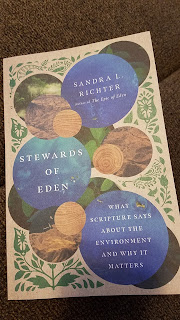
These first two are tied for best overall book I read in 2020. Both issue a timely and illuminating message for the church, and both are written in such a way that non-academics will be able to read and appreciate them. I blogged about both of them earlier this year, so I won't repeat myself here, except to say that both of them show us what's in plain sight in the biblical text that the church has often missed.

Stewards of Eden by Sandra Richter weaves solid biblical exposition with current case studies in environmental stewardship. It's a challenging and illuminating book.

Reading While Black by Esau McCaulley demonstrates the tremendous value of reading the Bible with and for the Black church. His book cuts to the heart of issues facing society today and calls us to a faithful, faith-filled response. Reading While Black is the Christianity Today best book of the year 2021 for Beautiful Orthodoxy.


Best Academic Books:

The Liberating Image 
by J. Richard Middleton is a consistently careful and thought-provoking explication of Scripture. Middleton never feels cliché or shallow, and even where you disagree, you'll find him thought-provoking. I'm grateful for his insight.

Exclusion and Embrace by Miroslav Volf came highly recommended by several friends. It is a dense read that took me a few months to finish, but his penetrating analysis was worth the effort. Volf issues a powerful call to self-giving love and charts a path for reconciliation and restoration of relationships.


Best Books for those who Write and Teach:

Adorning the Dark
by Andrew Peterson is a beautiful book about the creative process. Peterson is a songwriter whose music I discovered during quarantine, and fantasy novelist whose stories carried us through this dark year (see below). Although I don't write songs or novels, Adorning the Dark expressed powerfully the challenges and joys of any type of creative work shared with the public (including visual art and writing books of any kind). I loved it.

From Research to Teaching by Michael Kibbe releases in 2021, but I jumped at the chance to read it early and couldn't put it down. It would make the perfect gift for a recent PhD graduate -- seasoned with wisdom and practical help for navigating the transition to teaching. 


Best Books for those who Preach:

A second edition of The Art of Preaching Old Testament Narrative by Steve Mathewson is releasing in April 2021. Steve is a good writer, but more importantly an able interpreter of biblical narrative who offers practical suggestions for engaging your audience. I expect I'll turn to this again and again, not just for preaching advice, but for illuminating exegesis.

Simplify the Message, Multiply the Impact by Talbot Davis distills his many years of preaching experience into a focused model for sermon preparation. Talbot is an expert at connecting with people where they are. He preaches engaging and clear messages without notes, and he will show you how to do the same. Whether you're preaching to a full house or to a camera lens, Talbot will help you get your audience and get the message across.


Best Fiction:


The Wingfeather Saga 
by Andrew Peterson was a gift in this brutal year. My 12-year-old and I spent long evenings at home listening to Peterson read his stories on YouTube. His brilliant writing is matched by his incredible skill in voicing each character. The stories are full of high adventure but offer deep insight into human character. 

Killing a Messiah by Adam Winn is an engaging work of historical fiction about Jesus' last weeks. He weaves a plot that ushers readers into the political intrigue of first century Palestine. The storyline is complex and believable. A great read to save for Holy Week.


Wednesday, June 24, 2020

Author Interview: Sandra Richter

In this post I'm taking you behind the pages of Stewards of Eden to meet the author, Sandra Richter. Sandy, thanks for taking the time to tell us about your work!

So great to get to interact on this important topic, Carmen. Thank you for the invitation!

When did you first know that you wanted to write this book?

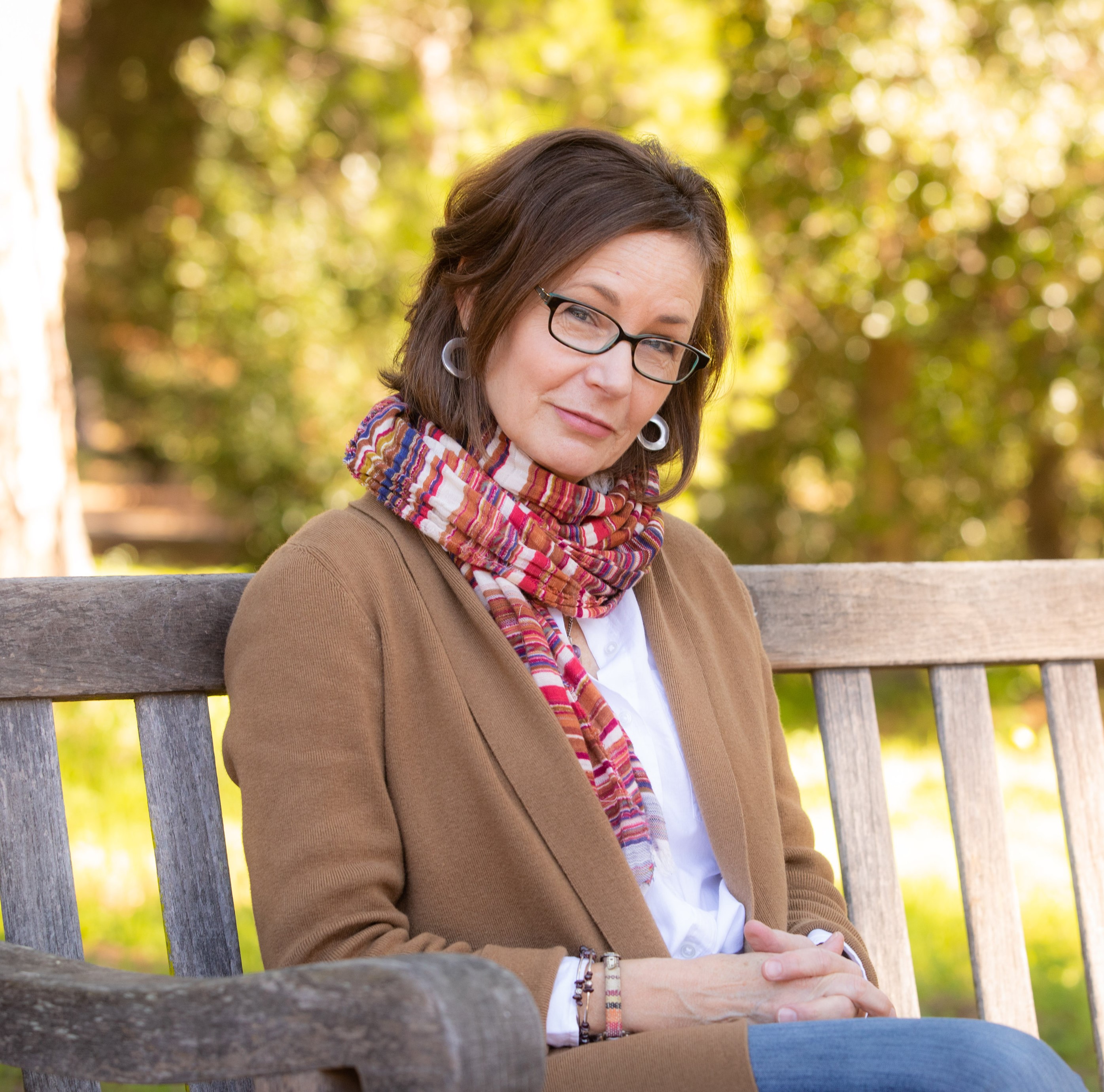
Sandra Richter, author of Stewards of Eden
Hmmm … that is a good question, and one I haven’t answered before. Although my love for God’s creation goes back to before I was even a Christian, the whole business of writing and speaking on this topic in Christian circles just sort of “happened.” As I narrate in the book, the first time I had the privilege of sharing a message of environmental stewardship from a pulpit was 2005 at Asbury Theological Seminary. The response was everything I could have hoped for. And to my surprise, I was asked to publish that message in the Asbury Journal. At the time of publication, I was serving on the Institute of Biblical Research planning committee, and we were casting about for a topic for the following year. I suggested that we do a plenary session on creation care. They said “yes,” if I would be one of the speakers. I was thrilled, but it also meant I had to seriously up my ante—now I needed a message appropriate for an academic conference. Man did I work hard on the research for that presentation. And in the fall of 2008 at the annual meeting … once again the response was everything I could have asked for. Rick Hess, editor of BBR was at the gathering and asked me to publish that presentation. Then there were a slew of speaking engagements—some more enthusiastically received than others. (There was a certain week-long “Holiness Conference” at a not-to-be-named Christian College where I think 17 people total showed up; then there was that walk-out at another not-to-be-named college; and, oh, the conference where I presented on humane animal husbandry in the heart of cattle country in Tulsa--that was a bit awkward!). In each of these my material evolved and developed. Usually the response was beautiful. (I’m thinking of Darryl Williamson’s "Arise City Conference" in Tampa, FL, and the older sister who stood to her feet at the end of my talk, called everybody out, and ran what could be called an altar call for me!) But I think the first time I knew I wanted to publish this book was during my tenure at Wheaton College. I realized (as I narrate in the book), that the Christian community needed a short, accessible, biblical treatment of this topic. A book that didn’t get lost on side issues. A book students could read (quickly), hand off to their parents, and they to the grandparents. I wanted to offer the Church their own book on this topic: “What Scripture says about the environment and why it matters.”  

Did you grow up in a home that valued conservation? If so, how did your parents practice conservation? If not, when did you become passionate about creation care?

No, I can’t say that I did. Like yours, my family was frugal. And like yours we camped a lot (there were a lot of us and we were military—cheap vacations!). I do think the camping and some of the adventurous places we lived as an oft-relocated Navy family awakened my deep empathy for the trials of creation. But I wasn’t raised with any sort of tutelage in environmentalism. Honestly, I think my passion for creation is part of my journey to faith. I believe that it was the image of God in me (prevenient grace for the Wesleyans out there!), and the Spirit of God calling me, that caused the majestic and fragile beauty of creation to resonate so deeply with me. As I say in the book: “When I stand at the ocean’s edge and feel the spray of its raging force on my face, when the wind silences me, when I am privileged to hold a wild creature in my hands” … my response is worship. This has always been true of me—even before I knew the Creator’s name.

What are the biggest hang-ups for evangelicals when it comes to creation care? Do you have a theory about why this is?

Having lectured and written on this topic for more than a decade at this point, I am pretty convinced that the “hang-ups” can be distilled to three issues. (1) The fact that in American politics environmentalism has been pigeon-holed into a “liberal” political agenda and has become guilty by association. Essentially, the accusation is that if you care about stewarding the planet you must also be a “liberal.” (2) The fact that we as Americans don’t typically see the impact of environmental degradation. We export most of our mess and never see the widow and the orphan picking through the trash piles we create. (3) The very unfortunate theological agenda that teaches that this earth will be annihilated at the end of the age. I deal with this misunderstanding of the New Covenant in chapter seven of the book.

You're a busy professor married to a professor with two growing daughters. What inspired you to raise chickens in your backyard? Surely not boredom?

Hah! The infamous chickens! Well Greta, Maggs, and Lucy will be thrilled to know they made the blog! Buttercup, may she rest in peace, will be grieved to have missed out. And we’ll be sure to send a note over to their sisters Sadie and Penelope who are keeping our friends Jack and Maggie in eggs these days! So, yes, I am “wicked busy,” but you make time for what you love don’t you? The chickens were a project for my youngest daughter and me. We both really wanted to do it, and Santa Barbara is a perfect place to raise chickens. California is a very libertarian state, so you can have chickens (not roosters) in pretty much any suburb. Better, you don’t have to heat your chicken coop to keep any of your hen’s feet from freezing off! More seriously, it is important to me that I practice what I preach. So in our house we recycle everything, we compost, we hang out our wash, we read labels, we eat very little meat, we have a vegetable garden, I drive a used Prius, we have rain barrels, and we’ve dropped all sorts of $$$ to landscape with native plants (which in SoCal means less water). Like any homeowner, I’m still learning (like what about solar panels?), but as I believe that environmental stewardship is a part of my responsibility as a Christian … I’m doing my best.  

Climate change is one of the most controversial aspects of the current debate about environmental concerns. Why did you choose not to talk about it in your book?


Great question. Several reasons. The first and most obvious is that the Bible has nothing to say about climate change. So any biblical theology of climate change is going to have to be an extrapolation—something I did not want to be doing in a book I promised was “just the Bible for those justly concerned.” Second and closely related, the steps any believer should be taking to curtail their own over-use of this planet and its resources will help to reverse climate change. So in many ways, climate change is a moot point. If we’d been doing our job as good stewards, we wouldn’t be having this problem. So what changes are needed? As Gus Speth, Chairman of the council on Environmental Quality under President Jimmy Carter has stated:

"I used to think that the top environmental problems were biodiversity loss, ecosystem collapse and climate change. I thought that thirty years of good science could address these problems. I was wrong. The top environmental problems are selfishness, greed and apathy."

I say it this way in the book: “The earth is the Lord’s and all it contains. He has given it to us to use in our need, but not to abuse in our greed.” When we get serious about our careless consumption of fossil fuel; when we start thinking about the supply chain for that fuel, our manufactured goods, our food; when we take stock of reckless land development … climate change will begin to unchange. So, yes, climate change is a huge issue that our carelessness has brought to the tipping point, but it is one that regular old responsible stewardship would have/still can resolve.

One of our first purchases when we moved to our current house was a 3-part trash bin for the kitchen, so that we could sort trash from plastic and paper recyclables. Our town has no recycling pick-up program, but we do have a local recycle center where we can bring our own recyclables. We've been pretty diligent about sorting trash making trips there. However, we heard a year or two ago that all the plastic recycling ends up in a landfill anyway because China will no longer accept plastics for recycling, and North America lacks the facilities to handle the volume of plastic waste. Have you explored this issue? Why should we keep sorting recyclables if it all ends up in the landfill anyway?

Yes, in 2018, China said, “We don’t want your trash anymore.” This, of course, sent major reverberations through many US businesses. If China wasn’t going to take our trash anymore, and we are now packaging everything from blueberries to underwear to new tools for our work bench in plastic, what are we going to do? The first question we should ask, of course, is why were we sending our trash overseas in the first place? Where is our sense of national responsibility? And what about the widow and the orphan in China?

The next question is, “Uh oh, if China has been recycling our plastic, do we have the infrastructure in the US to take care of our recycling ourselves?” And the answer right now is, no.  At this point we have more than 20 types of plastic packaging—and every time I go to the grocery store I see that COSTCO and Kroger have figured out a new way to use plastic for stuff that used to come loose or in cardboard. As a result, “virgin plastic” accounts for most of the plastic you and I see, which is produced by petro-chemical companies. These guys make billions producing their plastic (and will make billions more as current plans are to double the industry in the next five years). As the name implies, petro-chemical companies are using fossil fuels to make their stuff. And right now, virgin plastic costs less than 10% of the cost of recycled plastic. So what is a capitalist economy to do? The first thing we need to do is to be disturbed. Statistics such as those below should be a huge wake-up call:

  • More than 1 million seabirds and 100,000 marine animals die from plastic pollution every year; 100% of baby sea turtles have plastic in their stomachs. 
  • Every day around 8 million pieces of plastic make their way into our oceans.
  •  The Great Pacific Garbage Patch (made up primarily of plastic) is bigger than Texas. 
Then we need to do something. What to do? Vote with your pocket book. Buy plastic packaging as little as possible. Choose the “avoid plastic packaging and extra packaging” option with Amazon. When you have to buy plastic, look for “recycled” on the label. Tell your grocery store manager you don’t want your food in “clam shell” packaging. Tell COSTCO that apples don’t occur naturally in plastic bubbles. Basically, let us make it as socially inappropriate to buy and sell in plastic as it is to smoke cigarettes in the work place!

Your book goes beyond recycling to talk about mining and food production. Those case studies were incredibly eye-opening for me, especially in light of the biblical teaching on agriculture and animal husbandry that you so powerfully explain. What can one person do to make a difference in a culture marked by greed and consumerism?

Thanks for this question, Carmen. The last section of Stewards of Eden is entitled “Resources for the Responsive Christian.” This appendix gives very practical, hands-on, “I can do this,” suggestions for the average human. Things like getting informed (subscribe to an environmental magazine in order to educate yourself); voting your informed conscience (Sierra Club offers a voting guide every year); voting with your purchase power are a great way to start. Links and addresses are all in there. As above, one powerful thing all Americans and Canadians can do is vote with their purchase power. We are capitalists, oh, yes we are. And if it doesn’t sell, the industry makes changes! So when you go to the grocery store, the hardware store, the car dealership, be willing to spend a bit more to invest in the industries you want to thrive. As with all things in our fallen world, we are not actually going to be able to fix this. The Rider on the White Horse is going to have to do that. Just as I will never succeed in emptying all the brothels in Thailand, finding a home for every abused child abandoned to the foster care system, or feed every orphan in Sub Sahara Africa—I am not going to fix this either. But as a Christian, it is my sworn duty to stand in the gap. It is our calling as salt and light to demonstrate to our bruised and broken world what a citizen of heaven looks like, “to live our lives as Adam and Eve should have, as Jesus Christ has.” Environmental degradation is a global and a local issue, our neighbors are impacted by this, our neighbors care about this. Where is our witness in the mix?  In sum, what I attempt to demonstrate in the book is that God cares about this, and we must too.
It's hard to imagine a more compelling book on this topic for Christians who care about what the Bible teaches about creation. Thanks for your excellent work to help us think well about environmental stewardship! 


Wednesday, June 17, 2020

Book Review: Sandra Richter's 'Stewards of Eden'

I grew up in a white, American, conservative Evangelical context, where "environmentalist" was a derogatory term. To us, environmental concerns were a liberal agenda. We certainly didn't want to be guilty of getting all wrapped up in saving the planet when the thing that mattered was people and their eternal destiny. 

At the same time, being of Dutch descent, it came naturally to avoid waste. We washed and reused ziplock bags, kept scraps of paper to use for craft projects, wore hand-me-down clothes, shopped at thrift stores, hung our laundry out to dry (at least for a while), and planted a garden. We were delighted to find free stuff on the side of the road on trash day or go dumpster diving behind the local craft store to rescue stuff from the landfill. Once, when my brother and I were young, we picked up cans on the side of the highway for miles with my parents to help pay for a new Red Flyer wagon. It's probably fair to say that we did all this to save money, not to save the planet. But we also enjoyed nature as a family, camping as often as we could. 

These days I'm puzzled over the apparent disconnect between our thrifty way of life and the aversion we had to environmental concerns. The more I study Scripture, the more I see how the mandate to care for creation is actually a central part of what it means to be human! Genesis 1:26-28 outlines God's vision for human vocation, and it's directly tied to our involvement with the animals and our shared habitat: 
Then God said, "Let us make mankind in our image, in our likeness, so that they may rule over the fish in the sea and the birds in the sky, over the livestock and all the wild animals, and over all the creatures that move along the ground." So God created mankind in his own image, in the image of God he created them; male and female he created them. God blessed them and said to them, "Be fruitful and increase in number; fill the earth and subdue it. Rule over the fish in the sea and the birds in the sky and over every living creature that moves on the ground." 
Stewards of Eden, by Sandra Richter

One book that is helping me rethink my relationship with this planet is Sandy Richter's brief introduction to creation care entitled Stewards of Eden: What Scripture Says about the Environment and Why It MattersSandy is a master at making rigorous biblical exegesis accessible to laypeople. 


She knows her stuff. Her Harvard dissertation was published by de Gruyter under the title The Deuteronomistic History and the Name Theology: lešakkēn šemô šām in the Bible and the AncientNear East, which sounds intimidating before you even open the cover,
but her Epic of Eden: A Christian Entry into the Old Testament is one of the most down to earth and accessible books you'll find on the Old Testament. I've come to expect illuminating insights expressed in powerful prose. But Sandy is more than a respected author to me. She was a member of my dissertation committee and has slaved over my writing to help me improve. Were it not for her approval, I would not be Dr. Imes. We attended the same church in Wheaton for 2 years and I am honored to call her my friend. Stewards of Eden is just like Sandy -- short, but powerful, insightful and challenging.

One of the really compelling parts of Sandy's book is the chapter on Widows and Orphans. In it, she shows how our failure to practice sustainable stewardship disproportionately affects those who are economically and socially disadvantaged. In other words, the way we treat the planet affects people, especially the poorBecause most of our food and consumer products are produced and disposed of far from us, we are shielded from the sometimes devastating effects of their production and disposal. We "export" our environmental waste by manufacturing products in countries (or counties!) with looser restrictions. The implications of these business decisions will be felt for decades to come as the rich keep getting richer and the poor keep getting poorer -- their lands crippled by toxic waste. In my mind this may be one of the most persuasive sections for Evangelicals who value people over the natural world. 

The CoronaVirus pandemic is providing us with a current case in point. Sandy and I can easily work from home as professors, and while our institutions are dealing with new financial challenges, we still have homes, food, and access to health care. "Shelter in place" is more likely to feel like a "staycation" for us than a death sentence. Meanwhile, blue collar workers are in large part unable to work from home and may have very little 'cushion' with which to weather the loss of income. Lower income neighborhoods have limited access to testing and less reliable health care coverage. The Navajo Nation is a sobering example. Limited access to water (right here in North America!) and limited access to healthcare and a lower overall level of community health are contributing factors to their higher-than-average COVID19 infection and death rates. The crisis of this pandemic exposes the inequities of our society and chastens our complacency.

Sandra Richter, author of Stewards of Eden
One thing I deeply appreciate about Sandy's book is that she consistently demonstrates that Sinai still matters. Sandy takes us through God's instructions for ancient Israel to show how creation care -- including trees, fields, and animals -- is an integral part of God's expectations for the covenant community. These instructions help us see what matters to God and to human flourishing. Under Sandy's tutelage, your eyes will be opened to what these laws would have meant for the ancient landowner, an invitation to a radically generous way of life dependent on God's provision. While she does not suggest that we try to implement Old Testament law wholesale, she shows how the laws should continue to inform our ethics and practice. We, too, are invited to practice radical generosity. Sandy leaves readers with a whole list of practical ways to begin right now to reverse these trends and make a positive difference.

In my next post, I interview Sandy about Stewards of Eden -- what motivated her to write it and how we can begin to respond. You won't want to miss it!

Tuesday, November 19, 2019

N. T. Wright and a Book for Both Bedside Tables

What books are sitting on your bedside table?

About 10 years ago I had an opportunity to meet New Testament scholar and Anglican bishop the Right Rev. Dr. N. T. Wright. We shook hands. Although it was spontaneous, I knew instantly what I wanted to say to him. It went something like this:

N.T. Wright is an especially gifted communicator
who writes for the academy and the church
(Photo: C Imes)

"It's an honor to meet you, Dr. Wright. My husband and I would like to thank you. You are nearly the only writer who has the distinction of appearing on both of our bedside tables."

I was in seminary at the time. I spent my days reading books like his Jesus and the Victory of God. My husband, on the other hand, did not gravitate towards non-fiction, and certainly not academic books. But he picked up a copy of Wright's Simply Christian and loved it. What a gift to have found a respected scholar who also had the ability to connect with wider audiences, beyond the academy! Wright gave us things to talk about as a couple that connected our worlds. That was just what we needed.

I can think of two other biblical scholars whose books my husband and I have both read and enjoyed: Sandra L. Richter and Christopher J. H. Wright. Scholars like Wright, Wright, and Richter are my models. They know their stuff academically, but they also take the time to communicate in an accessible way for the church at large.

That's what makes me so excited about my new book release. I've done the scholarly research, defended the dissertation, and published it as well as other articles on related subjects. But this new book is totally down-to-earth. Our 17-year-old daughter read the entire manuscript of Bearing God's Name before we sent it off to the publisher so that we could get rid of all the words she didn't know.

This one's for the church. It's for men and women and teens and grandparents who struggle to know what to do with the Old Testament. It's for people who want to obey Scripture but aren't sure where to start. It's for new
Academic and Accessible books by C.J.H. Wright
and Sandra Richter (Photo: C Imes)


Christians as well as Christians who've been around the block a few times and still feel like they're missing something. It's for Earl, who hasn't read a book since high school other than a welding manual. It's for Marilyn, who kindly tried to read my dissertation and just got frustrated. It's for my parents, who have cheered me on for decades and now can finally benefit from all the hard work. It's for my former students, who can re-experience Torah class and share it with their families.

My published dissertation along with my new 
book, Bearing God's Name, which is an
accessible book that presents what I learned
(Photo: C Imes)

Bearing God's Name doesn't officially release until December 10th, but I'm already getting messages from readers almost every day who say that it's making a difference in their lives.


Not sure which book to choose for your bedside table? Here's a comparison:

If you're married and anything like my husband and me, you might need to pick up one of each.


Monday, June 11, 2018

#readwomen: Taking the Challenge

Last month, InterVarsity Press launched a new campaign that piqued my interest: #readwomen.

IVP (and its parent organization, InterVarsity Christian Fellowship) has long been a champion of women authors. So why did this campaign grab my attention?

Two reasons:

(1) Because I was about to submit a book proposal to IVP. Here was a publisher that not only seemed interested in my work, but was making a concerted effort to market books by women authors.

(2) Because I know from experience that books by women in the areas of Bible and Theology are few and far between. Don't believe me?

My Personal Biblical Studies Library. Books with their spines showing
were written (all or in part) by women. (Photo: C Imes)
Here is a photo of my personal library in Biblical Studies and Theology. After I heard about #readwomen I wanted a visual illustration of how few women publish books on the Bible and Christian Theology. I turned backwards every book written by men so that only the spines of those written by women are showing.

During my doctoral studies at Wheaton College, we were required to read and write reviews on 35 key books in the field of Old Testament. None of these were written by women. We were also to become familiar with the contents of another 193 books in preparation for our comprehensive exam. Only 9 were written, co-written, or edited by women. I did the math for you. That's under 4%.

My dissertation is published by Eisenbrauns in the Bulletin for Biblical Research Supplement Series. Though it is the 19th volume in the series, mine is the first written by a woman. That's 5%.

My (mostly) New Testament shelves
with books by women showing.
(Photo: C Imes)
After a tour of my office, a colleague asked why I think so few books in Bible and Theology have been written by women. The answer is undoubtedly complex, but I suspect that the primary reason is the decades-long prohibition in many denominations of the ordination of women. Ministry roles open to women have not typically required seminary education, so women have often not been encouraged to pursue learning. This has resulted in very few female role models for women who feel drawn to biblical and theological studies. Without the training to write academic works, these women have invested their many talents elsewhere. 

It should be clear from this photo that I owe most of what I know about the Bible to men. I am immensely grateful for all the men who have trained me through their writings. I do not for a moment wish that these men would stop writing. Keep on, brothers!

Nor do I wish for any of these books by men to disappear. Now that I've taken photos for you, all the books by men are turned back in their rightful direction, where I can continue to refer to them often. Still, I'm thankful for the #readwomen campaign because if we only read books by men, we're not getting the full picture of what there is to know. If we only read books by white authors, or by North Americans, our view of things is still partial.

According to PhD research by IVP senior editor Al Hsu, "women read fairly evenly between male and female authors (54% / 46%), but . . . men read 90% male authors and only 10% female authors. That’s why the #ReadWomen campaign is needed, to highlight how we all benefit from reading women’s voices and hearing perspectives from the whole body of Christ."

Men and women are different. God made us different. And for that reason, we need to listen to one another. We bring unique perspectives and life experiences to the table.

Two summers ago I wrote about my compulsion to write (it's okay to laugh at the redundancy). Every one of us has something we must do. Something without which we feel out of sorts. Writing is one of those things for me. Seeing my bookshelves with so few spines showing was a powerful motivation to get busy. I've had a sign on my office door since school got out: 

Summer Schedule
WRITING LOCKDOWN
UNTIL NOON
Please email with anything urgent.

It's working.
Every day, writing comes first.

And I have good news -- 

InterVarsity Press has just offered me a contract for my new book!

This one will unpack the research from my MA thesis and PhD dissertation for a wider audience. I discovered so many things that every Christian should know, but at the moment all that learning is hiding behind a lot of academic jargon and other languages. Most people would find it a frustrating read. In the words of my grandma, who kindly bought a copy of my published dissertation and attempted to read it, "It's not just the Hebrew that's a problem. I can't even understand the English." In contrast, my new book is written like a series of blog posts in plain English so anyone can read it.

Meanwhile, what's on your summer reading list?
Here are a few of my absolute favorite books by women:

Ruth Haley Barton, Strengthening the Soul of Your Leadership
and Sacred Rhythms: Arranging Our Lives for Spiritual Transformation
Sandra Richter, The Epic of Eden: A Christian Entry into the Old Testament
Karen H. Jobes, Letters to the Church: A Survey of Hebrews and the Catholic Epistles
Carolyn Custis James, Half the Church: Recovering God's Global Vision for Women
Lynn Cohick (co-author), The New Testament in Antiquity
And if you haven't read the Sensible Shoes series yet by Sharon Garlough Brown, don't waste another minute. Brown blends fiction and Christian formation in a captivating way!

Will you take the challenge? Which one will you read?

Or maybe, like me, you'll take up the challenge to write a book this summer. 
What have you learned that others could benefit from hearing?

Saturday, April 2, 2016

in retrospect—what else is a dissertation defense?

It is an honor.

My dissertation committee (L-R): Richard Averbeck,
Daniel Block, Karen Jobes, Carmen Imes, Sandra Richter,
Marc Cortez (Photo: Michelle Knight)
Brilliant scholars take time out of their already overloaded schedules to read what you've written and to think about what it means and how it matters. They give up an afternoon to sit with you and ask you what you think and give you good advice. They push you (which means they think you can handle it) and they offer their best critique (proving that they stayed awake while reading your work) and they listen and even concede (when you've changed their minds). Dozens of students drop their own work to come and watch. Wow.

It is surreal.

My dissertation defense. (Photo: Daniel Lanz)
As a student observing the defenses of others, I assumed that it would be a nerve-wracking experience. Years worth of effort are channeled into one afternoon. Everything is on the line. But yesterday I felt entirely calm. I knew it was time. I had given my best effort with the time I had. I also knew that even a difficult defense would not mean the end of my career. It would simply mean a longer list of revisions before the diploma arrives by mail. I even expected this. Here's what I did not expect:

It is fun (sometimes).

My doctoral advisor, Daniel Block, and me (Photo: M Knight)
Ten years in seminary and graduate school have prepared me for scholarly discourse. I'm not afraid of disagreements. I'm aware of my own limited perspective and need for others' critique. I also know that I've studied this topic more than just about anyone in the world, and that I have good reasons for laying things out the way I did. I came in hoping to learn from my readers and was delighted to discover that my readers actually liked my work and learned from me. Our time together was collaborative, encouraging, and productive. We laughed together and left as friends.

I found that a dissertation defense on April Fool's Day was strangely appropriate. It reminded me of Paul's words:
"Brothers and sisters, think of what you were when you were called. Not many of you were wise by human standards; not many were influential; not many were of noble birth. But God chose the foolish things of the world to shame the wise; God chose the weak things of the world to shame the strong. God chose the lowly things of this world and the despised things—and the things that are not—to nullify the things that are, so that no one may boast before him. It is because of him that you are in Christ Jesus, who has become for us wisdom from God — that is, our righteousness, holiness and redemption. Therefore, as it is written: 'Let the one who boasts boast in the Lord.'" (1 Corinthians 1:26–31)
I began this journey as a stay-at-home mom with very few connections in the scholarly world. I had spent my time networking among Muslim street vendors in the Philippines while my books were boxed in storage. I learned Hebrew (for the second time) while breastfeeding and read book reviews in the preschool pick-up line. With a great deal of effort, I finished my 2-year masters degree in 5 years. By the world's standards, I was not the ideal candidate for an advanced degree. But God does not choose us because we already have what it takes. He chooses empty and willing vessels who are ready to be filled. He called me, and I simply said 'yes.'

The dissertation defense was the culmination of this chapter of of my journey, but it is only the beginning of my 'yes' to God.

For Christ and His Kingdom!