Showing posts with label IVP. Show all posts

Wednesday, August 20, 2025

Turning Over a New Leaf

I've been blogging here since 2009. That makes this year 17! For the past five years, my posts have tapered off, largely because I've had opportunities to write regularly for other outlets, such as Christianity Today, The Well, The Politics of Scripture blog, and The Good Book Blog. Why write for my own blog when I could write for much larger audience elsewhere, and in some cases, even get paid for it?

Over the past year, it's become clear to me and to my husband that it's time to re-tool and to re-position myself online so that (1) my content is easier to find, (2) I am easier to contact for speaking engagements, (3) my platforms are more updated, and (4) I can cultivate better conversations with all of you. Because I'm blogging so irregularly, this site always looks out of date. And although you can poke around and find my books and other resources, it's not as intuitive as a regular website.

To that end, this summer Daniel and I have spent dozens of hours designing a website and launching a Substack newsletter to accomplish these goals. So from now on, if you're looking for me, that's where you can find me! I'm still releasing weekly videos over on YouTube, and I'm still on Facebook, X, and (more recently) Instagram, but my most robust and consistent written content will be on Substack at "The Open Book."

The homepage for my new website. Check it out!

THANKS to those of you who have subscribed and faithfully read my posts over these many years. They'll stay right here if you want to come back to any of them. But going forward, I'd love for you to subscribe to my free newsletter on Substack. My posts there will land right in your inbox for you to read at your convenience. I've got some exciting things to roll out in the next couple of months, including a new book and a new course for Admirato!

My Newsletter on Substack: The Open Book

I want to continue to gather with others around an open Bible, seeking to understand it better and to respond faithfully. I hope you'll join us!

Sunday, March 9, 2025

Foreword by Esau McCaulley

 I've been keeping a fun secret for several months, and I finally get to tell you!

My good friend Esau McCaulley agreed to write the foreword to my new book for IVP Academic. Both of us love the church with all of our hearts. To love something is not to pretend that it's perfect, but to help it become what it was always meant to be. I respect Esau as a biblical scholar and author, but also as someone who has been willing to call attention to abuse in the church while investing deeply and personally in its flourishing.
Esau is the Jonathan Blanchard Associate Professor of New Testament and Public Theology at Wheaton College, but we knew each other before either of us had a PhD. He has published his dissertation, a stirring memoir, an insightful book on reading Scripture as an African American, a book on Lent, and several children's books--a wide breadth of writing! He was the lead editor on the recent book, New Testament in Color and edits the 'Fullness of Time' series for IVP on the church calendar. He's working on two New Testament commentaries. He writes for the New York Times and travels to speak regularly. He has his own podcast and has been on many others. I'm grateful for the way he is serving the church with the gifts God gave him. And I'm thankful that he took the time to read and recommend my book to you!
Check out Esau's books here.
My new book, Becoming God's Family: Why the Church Still Matters, is a biblical theology of the presence of God in the community of faith. It's a trek through Scripture to see the sometimes surprising ways that God works among (and despite) his people. The book is peppered with personal stories and other illustrations to help you understand and apply what you're reading.

Esau says this about it: "Readers will find that Dr. Imes has the rare gift of being a biblical scholar that can speak to the academy, clergy, and people in the pews at the same time. In this book she demonstrated the ability to translate a lifetime of learning into accessible writing without being simplistic or assuming that her audience cannot handle complex ideas."

This book is for four types of people:

1. Those on the verge of leaving the church. Maybe you're the one saying, "Give me one good reason to stay."
2. Those who've already left the church and wonder what they're missing or if they made the right decision.
3. Ministers who want a more robust ecclesiology based on the narrative of Scripture.
4. People who loved Bearing God's Name and Being God's Image and want more biblical theology that's accessible.

Which one are you?
If you enjoyed Bearing God's Name and Being God's Image, this book completes the trilogy. Please consider preordering it! Amazon has a price guarantee for preorders, so if the price drops between now and the book release, you'll be charged the lower amount. Preorders are a significant factor in whether bookstores decide to stock a book and whether Amazon promotes it, so it's a helpful way to support the project. If you aren't able to buy it now, you can add it to your wish list on Amazon. That helps, too.
Preorder here or wherever you buy books.
Thanks, friends, for your enthusiastic support!

Thursday, January 23, 2025

Cover Reveal for Becoming God's Family!

I'm thrilled to share the cover of my forthcoming book! Becoming God's Family: Why the Church Still Matters releases October 28, 2025 from IVP Academic. 

Church isn't obvious anymore. Perhaps you're among the 40 million Americans who have lost the habit of attending weekly services. Or maybe you're on the fence about whether its worth your time or energy to stay connected. After all, you can listen to a sermon online, crank up your favorite worship artist, and skip the hassle of showing up. Right?

But what if there's more to church than a sermon and a few songs? What if something powerful but invisible is happening when we gather that can't fully happen any other way? Do we get any glimpses of this on the pages of Scripture? Do I have any stories that show you what I mean?

Yes and yes!

Like the other two books I've written for IVP, Becoming God's Family traces a theme through the entire Bible. This time the theme is the presence of God in the community of God's people. We'll explore how God shows up in our midst as we make time with others to wait for God. Along the way, I share the stories of how I and others have experienced God knitting together an intergenerational, multiethnic family of believers.

I can't wait to share this book with you. It was a joy to write and it comes straight from my gut. The book went live online TODAY, so it's available for preorder wherever books are sold. I hope you will order a copy for yourself. Who else do you know who's wrestling with disillusionment or questioning whether to bother with church? Could you pre-order a copy for them as well and plan to read it together? October will be here before we know it!

In a few weeks, I'll be able to share with you who's writing the foreword to the book. So delighted to have his name on the cover! Hint: It's a fellow academic who LOVES the church as much as I do and is pouring himself into it week after week.

Monday, January 1, 2024

2023 in Books


I set a goal to read 40 books in 2023. I only completed 37 (though I started a dozen more . . . some of them abandoned, some still in progress). Here is the breakdown by category of those I finished, with all the details on GoodReads:

  • 9 memoir 
  • 1 poetry
  • 5 fiction
  • 12 Biblical studies
  • 7 practical theology / ministry
  • 2 academic theology
  • 1 self-help

If you decide to order a copy of any of these books, may I recommend my favorite bookstores? Hearts and Minds Books takes orders and ships anywhere in the US. Three Hills Books in Alberta and Regent College Bookstore in B.C. are great sources for books in Canada. I'm not making commission on the sales of any of these books, but I believe in small, well-curated bookstores!


The surprising blessing for me this year was memoir. I loved reading about people's diverse experiences of the world: from the deep South to the South Side of Chicago, and from the rust belt to the White House, and from Down Under to Ethiopia. All ten of these were worthwhile (or I wouldn't have finished them), but two that were especially excellent were Beth Moore's and Esau McCaulley's. 

  • Beth Moore, All My Knotted-Up Life
  • Esau McCaulley, How Far to the Promised Land: One Black Family's Story of Hope and Survival in the American South
  • J. D. Vance, Hillbilly Elegy: A Memoir of a Family and Culture in Crisis
  • Michelle Obama, Becoming
  • David Bennett, A War of Loves: The Unexpected Story of a Gay Activist Discovering Jesus
  • Wendy Widder, Every Road Goes Somewhere: A Memoir about Calling
  • Tripp Johnston, Soul Brothers: Two Men, Two Worlds, One Purpose (an encouraging story about true partnership and friendship in cross-cultural missions)
  • Joan Didion, A Year of Magical Thinking (about grief)
  • Octavio J. Esqueda and Benjamin D. Espinoza, eds., The Hispanic Faculty Experience (about Latino/a faculty experiences in Christian higher ed)

The single book of poetry I read was breathtaking. I highly recommend Amanda Gorman, Call Us What We Carry. Gorman is a wizard with words, wise beyond her years. Highly recommended.

Most of the biblical studies books I read this year related to gender issues because of a paper I was writing. Each one of these was helpful, with a special shout out to Carolyn Custis James' Malestrom, which constructively answers one of today's most pressing questions: What does it look like to embrace manhood without perpetuating the toxic versions that have left so much hurt in their wake? Karen González's book on immigration was also very accessible and insightful. Every one of these was worth my time:
In the category of practical theology I read books on prayer, discernment, purity culture, and social commentary. My favorite was Dennis Edwards' new book on humility, which offers crisp insights on why the pursuit of humility pairs well with the pursuit of justice. I blogged about it here.
The best academic book I read in theology was without a doubt Christa McKirland's God's Provision, Humanity's Need: The Gift of Our Dependence. In this adaptation of her doctoral dissertation, Christa makes a strong case that to experience flourishing, humans must enter into a relationship with God. That is, we need God. We are dependent on the God who made us. In the Western-European world, which values independence, self-sufficiency, and autonomy, Christa brings us back to the truth about ourselves and the beauty of dependency.

I also released two books myself this year. Being God's Image is a prequel to Bearing God's Name (IVP 2019). They can be read in either order. One highlight this year was recording the audiobook myself! The Illustrated Psalms in Hebrew has been four years in the making and is my first book coauthored with one of my students. 

  • Being God's Image: Why Creation Still Matters (IVP) is a book that explores what it means to be human. In a nutshell, I claim that every human being is the image of God, and that our status as God's image was not lost or diminished at the Fall. Our vocation as stewards of creation opens up a whole host of creative and collaborative possibilities that extend into the new creation. A few highlights in its first 6 months in the world: Being God's Image was a finalist for the IVP Reader's Choice awards. The Englewood Review of Books recognized it as one of the Best Books of 2023. The Holy Post Podcast chose it for their book club, and it made the bestselling new releases list in September for the Evangelical Christian Publishing Association. I blogged about it here.
  • Illustrated Psalms in Hebrew (GlossaHouse) is a co-authored project with R. Mark Reasoner that pairs the entire Hebrew book of Psalms with beautiful illustrations and my own English translation. If you're learning Hebrew and want to incorporate daily language practice in your devotional life, this book is for you. I blogged about it here.
I also wrote a book this year. It will be a while before it hits the shelves, but Oscar Baldelomar and I co-authored the first draft of a book on Scripture and Multicultural Identities. It's aimed at youth pastors, high school teachers, and parents of minority and multicultural families to help adolescents navigate their ethnic identities in light of Scripture. I'm excited about this project!

In the new year, I plan to read more books about Exodus as well as books about the church--especially recent works that explain trends in church attendance and participation. I'll be continuing to work on my commentary on Exodus for Baker Academic as well as a book for IVP on why the church still matters. 

Since I enjoyed memoir so much this year, do you have any others to recommend? 

I'd also love to read another book of poetry. Do you have a favorite that's a must read? Let me know in the comments below.

Here's to another great year of reading and writing!

Sunday, November 12, 2023

Review of Edwards, Humility Illuminated


Humility Illuminated: The Biblical Path Back to Christian CharacterHumility Illuminated: The Biblical Path Back to Christian Character by Dennis R. Edwards

I wouldn't trust just anyone to write a book on humility. As a woman, I've heard too many powerful leaders advocate for submission or humility or silence--for others--without embodying those qualities themselves. Dr. Edwards is different. He had already earned my respect as a peaceable and humble leader who lifts up those around him. During his years of experience in both pastoral ministry and academic service he has cultivated hard-earned wisdom.

One of his most unique contributions to this topic is that Dr. Edwards is sensitive to power dynamics that affect women and minorities and he's careful to help us see that humility does not mean passivity in the face of injustice. I'm grateful for his work!

Here are some of my favorite lines in the book:

"Without humility there is no justice" (7).

"Humility fosters collaboration, which can energize us to find solutions to problems" (17).

"Humility does not mean a lack of assertiveness or a rejection of firm truth-telling" (67).

"True humility...does not ignore or accept oppression, but instead seeks human flourishing by eliminating injustice through self-sacrificial love" (156).

"Humble people are justifiably angry toward evil because they are attuned to injustice, and they also understand that dismantling unjust systems does not contradict but is a consequence of humility. Because humility is yielding to God and committing to peacemaking, it cannot equate to passivity. Marginalized people embody humility by focusing on the pain and alienation of others--not just their own -- and joining in solidarity with the disinherited for the purpose of justice" (161).

View all my reviews

Wednesday, August 9, 2023

Companion Videos for 'Being God's Image'!

Two weeks from today, my new video course on Being God's Image: Why Creation Still Matters is launching with Seminary Now. We've filmed a video to go with each chapter of the book. Some of the content overlaps with the book, but in each video I extend that content to include new illustrations or applications.

10 chapters -- 10 videos -- about 10 minutes each

Audiobook available here
It's the kind of resource that makes it easy to lead a group through the book. The videos work with or without the book. If you've already read Being God's Image, these videos will reinforce what you've read and offer new things to think about. If you're not a reader, the videos will give you some of the most important content. (But also, you non-readers, did you know that I narrated the audiobook?)

Being God's Image explores what the Bible says about what it means to be human. Laying a foundation from the early chapters of Genesis, I explore implications for a host of topics:

What's wrong with the way many Christians read Genesis 1?

What relevance does Genesis 1-2 have for debates about gender roles?

Can the image of God help us with questions about abortion or assisted suicide? 

Where is hope hiding in Genesis 3? 

What can we learn from Jesus' ministry about being human?

How does pornography inhibit human flourishing?

How is death a blessing? 

Should we be worried about artificial intelligence?

How has the church failed people with disabilities?

What does skateboarding have to do with the church? 

Why does creation still matter? Isn't the whole world gonna burn?

All this and more is included in my course on the image of God.

Watch the trailer for my new course on Being God's Image here.

Seminary Now is a subscription-based platform with streaming content from some of my favorite and most trusted colleagues in the areas of Old Testament, New Testament, Church Ministry, and more. If you sign up, you'll have immediate access to ALL of the courses, including videos by Esau McCaulley, John Walton, Ruth Haley Barton, Sandra Richter, David deSilva, Brenda Salter McNeil, Craig Keener, Richard Middleton, Ruth Padilla DeBorst, Derwin Gray, Lynn Cohick, Tish Harrison Warren, Scot McKnight, and MORE! You'll also have access to my course on Bearing God's Name (2020). 

Best of all, if you register at Seminary Now, you can view the first three lessons of my new course FREE!

If you're a Seminary Now subscriber, comment below with your favorite courses. My favorites are Sandra Richter's Stewards of Eden and Ruth Haley Barton's Strengthening the Soul of Your Leadership.

Saturday, April 1, 2023

New Book Announcement: Being God's Image: Why Creation Still Matters


Carmen Imes holding copies of both of her books -- Bearing God's Name and Being God's Image.
Being God's Image: Why Creation Still Matters
(IVP) official releases on June 6.
Bearing God's Name: Why Sinai Still Matters has a prequel! Being God's Image: Why Creation Still Matters is my attempt to demonstrate what the Bible teaches about being human in God's world. 

Like the first book, this one is accessible and easy to read. It's a work of biblical theology that traces a theme through the entire Bible. Like the first book, this one is neatly divided into 10 chapters of roughly equal length making it ideal for a small group study or classroom use. Like the first book, this one includes discussion questions and QR codes that link to relevant videos from the Bible Project for each chapter. 

Unlike the first book, this one is not based on my dissertation research. Instead, I'm introducing you to the work of other brilliant scholars who have taught me so much.

Here are some of the key ideas in Being God's Image:

  • Every human is the image of God.
  • Our identity as God's image cannot be lost or destroyed.
  • The imago Dei is the basis for human dignity.
  • Our status as God's image comes with responsibility to benevolently rule creation.
  • This responsibility is shared by both men and women, who are equally God's image.
  • Our embodiment is the key marker of our human identity.
  • The fact that Christ became an embodied human reaffirms the goodness of creation.
  • Christ's bodily resurrection signals that in the new creation, our bodies will still matter.
  • We await resurrection, too, and eternal life in the new creation.
Throughout the book, I consider the implications of these doctrinal claims for a host of issues: creation care, sexuality, pornography, gender roles, race, ability/disability, work, prayer, suffering, healing, human emotion, the quest for meaning, and more. Because these are controversial issues, readers may find themselves disagreeing with my conclusions now and then. This book is not meant to be the final word on anything, but I hope it furthers the conversation on issues that matter if we're serious about living in alignment with Scripture.

The book will also be available on June 6 in Kindle format, for Logos Bible software, and as an audiobook, read by yours truly!

Until June 5, you can pre-order physical copies directly from InterVarsity Press for 30% off and FREE shipping using the discount code IMES30. The books have already arrived in the warehouse, so you should get yours right away!


Thursday, December 29, 2022

Best Books of 2022

Many books that cross my desk are aimed at students or laypeople, rather than biblical scholars. I read and enjoy many of them in order to be able to recommend them to students and others interested in biblical studies. I leave at least a brief review of all the books I read on GoodReads. Of the 40 books I read this year, I'm limiting my "best books" list to those that were game-changers for me personally. 

Each of the following six books is not only beautifully written and impeccably researched, but opened up new vistas in how I think about God, Scripture, and the life of faith. I'm so grateful for the hard work that went into writing each one and to all those who were involved in releasing these to the world.

Women and the Gender of God, by Amy Beverage Peeler

This is a daring book. Amy Peeler tackles a controversial issue: the gender of God and its implications for women. For some, to raise these questions at all is objectionable. For others, Peeler's high view of Scripture will suggest that she herself is captive to patriarchy. However, readers who take the time to engage her argument will find that neither critique has merit.

Like it or not, many people today reject the Christian faith because of their perception that the Bible portrays God as masculine/male. Is the Bible even good for women? Peeler patiently shows why these questions are worth asking and how the Bible itself offers a robust response that both affirms women and glorifies God, without making God male. Part of her answer is to help Protestants recover the biblical portrait of Mary.

Peeler's grasp of the secondary literature is impressive. Her arguments are sophisticated and theologically astute. She is attentive to nuance in Scripture, and her faithful reading yields an illuminating vision of a good God who invites women to be full participants in God's work in the world. I'm so grateful for her work. I expect it will be an essential resource for years to come.
 

Cursing with God: The Imprecatory Psalms and the Ethics of Christian Prayer, by Trevor Laurence

A remarkable work--lyrically inspiring and imaginatively compelling. For many, it will represent a paradigm shift. Laurence not only rehabilitates the imprecatory psalms for use by the church, but he demonstrates their compatibility with Jesus' call to love our enemies. This is more than a treatise on imprecation; Laurence offers a profound work of biblical theology in service of the church. He draws our attention to imprecation hiding in plain sight in the New Testament, and he charts a path for churches who are ready to recover this neglected aspect of the whole counsel of God. In a world plagued by injustice, this book is a gift we urgently need.

One of my favorite things about this book is the sample liturgy in the appendix. Although this is the published version of Laurence's dissertation, he offers such practical help for church leaders who want to shepherd their congregations in praying the imprecatory psalms.

Paul and Gender: Reclaiming the Apostle's Vision for Men and Women in Christ, by Cindy Westfall

In the stuffy room marked "Paul's Views on Women," where a weary debate has been at an impasse for centuries, Westfall raises the blinds and throws open the windows, letting in light and fresh air.
With my three degrees in theology and four-and-a-half decades in the church, I thought I had heard it all. But just ask my husband (at home) if he's ever seen me gasp so many times while reading in bed, and if I've ever interrupted him so many times to read him a sentence or a paragraph.

Westfall's conclusions are carefully researched and well argued. She has a way of turning things inside out to help readers see what was right there in the Bible all along. Her book simultaneously delighted and depressed me. If she's right -- and I think she is -- then some corners of the church have unnecessarily missed out on hearing the Spirit-empowered voices of women for a very long time.

Church leaders, I beg you to read this book. You can't afford not to.

Abuelita Faith: What Women on the Margins Teach Us about Wisdom, Persistence, and Strength, by Kat Armas 

Magnificent!

Kat's exegesis is impeccable and her stories are captivating. She weaves personal and international stories with stories of women in the Bible. The result is a compelling invitation to reconsider what counts as theology and to (re)discover the voices of those hiding in plain sight. An absolute must read. I devoured it in one day!


Disability and the Way of Jesus: Holistic Healing in the Gospels and in the Church
, by Bethany McKinney Fox

Fox's book is such a gift to the church. The opening chapter was worth the price of the book! It shifted the way I think about disability. Each chapter addressed Jesus' healing ministry from a different angle--first century context, medical perspective, disabled persons' perspective, and pastors' perspective--followed by chapters on the seven marks of healing in the way of Jesus and the seven ways this can be lived out in the church. 

Although the first six chapters focus primarily on physical disabilities, the final chapter offers many ideas on how to include people with intellectual disabilities in the church. One of Fox's big ideas is that inclusion of people with disabilities is not simply an act of compassion modeled after Jesus, but that people with disabilities have so much to offer the church. She advocates for full inclusion of people with disabilities in the decision-making and ministries of the church and challenges us to re-think our services so that they are less reliant on verbal proclamation and more holistic and multi-sensory. I'm grateful for her careful thinking and clear vision. It's usefulness goes beyond the church -- this book has given me much to think about with regard to college classroom instruction and campus life. It was well worth the read!


Jesus and the Forces of Death: The Gospels' Portrayal of Ritual Impurity within First-Century Judaism, by Matthew Thiessen

An excellent reexamination of Jesus' healing narratives, demonstrating that Jesus did not disregard Jewish law. Several of his healings focused on those suffering from ritual impurity caused by lepra (a skin disease sometimes erroneously translated "leprosy"), genital discharges, and death. Rather than set aside the ritual purity system, Jesus removed the sources of ritual impurity, showing that his power was even greater than the temple.

Theissen includes a chapter on exorcisms and on Jesus' Sabbath "violations" as well as an appendix on dietary laws. These contribute to the overall picture that Jesus upheld Jewish law.
 

So much of what Thiessen points out is evident to those reading closely, but somehow with all my years reading and studying the Bible I had missed it. An illuminating book!

----

What's the best book you read this year? I'd love to hear about it in the comments below!


Monday, December 19, 2022

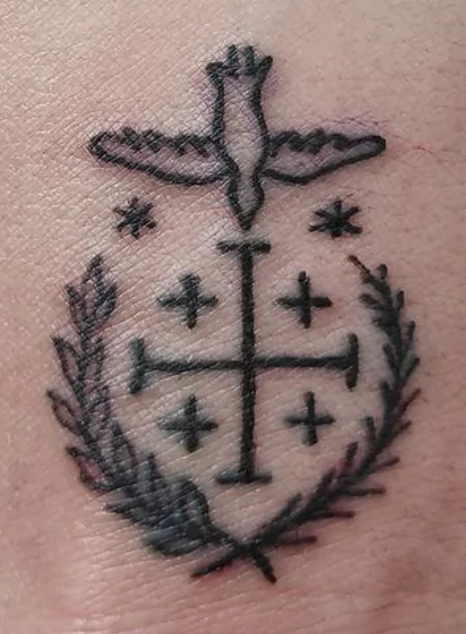
Are Tattoos OK for Christians? (Part 1)

Jerusalem Cross - Razzouk Tattoo

The world's oldest tattoo shop is situated in the Christian Quarter of the Old City in Jerusalem. That in itself may come as a surprise to those who -- like me -- grew up in Christian communities that frowned on tattoos.  It's not your average tattoo parlour. For 28 generations (since 1300AD!), the Razzouk family has been tattooing Christian pilgrims, first in Egypt, and now in Israel. The shop is filled with Christian symbols -- the Jerusalem cross, the crucifix, Mary, St. George and the Dragon, the crown of Christ's victory, the dove of the Holy Spirit, and many others. 

Growing up, I don't remember seeing tattoos on any of the Christians in my community. My grandparents and parents were so firmly against the idea that the topic never even came up in our home. It was simply obvious that Christians shouldn't get tattoos because it directly contradicted Scripture. The Old Testament book of Leviticus clearly says, "Do not cut your bodies for the dead or put tattoo marks on yourselves. I am the LORD." (Lev. 19:28 NIV) For many Christians, that ends the discussion. 

But since childhood I've met many Christian friends with tattoos that did not predate their conversion. Were my grandparents wrong about this? Are tattoos actually ok for Christians? Or are these Christians disobeying Scripture?

This is a complex question that requires us to carefully think through several related issues.

To answer that question, we must consider a few things: (1) the role of Old Testament law for followers of Jesus the Messiah, (2) the purpose of this particular law in Leviticus, and (3) what a modern-day tattoo communicates. I'll talk about each of these in a separate blog post.

The Role of Old Testament Law for Christians

Christians take a variety of positions on this issue. On one end of the spectrum are those who say that all the laws have been set aside in Christ. We'll call this view the anti-law group. On the other extreme are those who say that Christians need to obey all of them. We'll call this the pro-law group. Most Christians fall somewhere in the middle, seeing ongoing validity to some laws, but not all of them. Deciding which ones still apply--and how--is the tricky part.

In Matthew 5:17-20, Jesus insists that his purpose was not to do away with the Torah or the Prophets, but to bring them to their fulfillment. He says "until heaven and earth disappear, not the smallest letter, not the least stroke of a pen, will by any means disappear from the Torah until everything is accomplished" (v. 18; modified NIV). It's obvious why those in the pro-law group would gravitate toward this passage. In fact, Jesus insists that "anyone who sets aside one of the least of these commands and teaches others accordingly will be called least in the kingdom of heaven!" (v. 19)

This is one reason I wrote a book with the subtitle Why Sinai Still Matters. I don't think that Christians can ignore the commands of the Old Testament. However, it's not as simple as following all of them. Many of the commands can no longer be kept because the temple was destroyed in 70AD. Laws pertaining to ritual purity and the sacrificial system are no longer relevant in the same way they used to be. Not only was the temple destroyed, but Jesus claimed to replace the temple with himself (John 2:19-22; Matthew 12:6). The apostles spoke of believers in Jesus as being built into a new temple (e.g. 1 Peter 2:4-8; 2 Cor. 6:16). That tells me that we no longer need to observe the laws pertaining to temple purity in the same ways that Israel did. However, we can see that Paul still felt they were instructive for believers. He tells the Corinthians that their role as the temple of the Spirit necessitated their separation from worldliness (2 Cor. 6:17). These laws still teach us about holiness and help us understand Jesus' relationship with purity, and they instruct us by analogy to ways of honoring God.

The purpose of some of the other laws (e.g., kosher diet and circumcision) was to separate between Jews as God's covenant people, and non-Jews. What we eat marks us as a community and either prevents or allows our fellowship with other people. I'm writing this post from the JFK airport in New York, where I've just come from a week in Israel. I saw firsthand how carefully Jewish communities still keep kosher food laws. Jewish passengers on my flight had different meals and scrutinized even the fruit juices to see if they were ok to drink. 

In Acts 15, leaders of the early church met together to determine how to handle Gentiles who wanted to follow Jesus, the Jewish Messiah. They prayerfully decided that Gentiles could follow Jesus as Gentiles. They did not have to first convert to Judaism by undergoing male circumcision and keeping Kosher food laws. The basis for their decision was James' exposition of Amos 9:11-12, which explicitly refers to "all the nations that bear my name." To bear Yahweh's name was to be a covenant member. The idea that Gentiles could be covenant members seemed revolutionary, but it was right there in the Prophets! 

Peter added to James' insight by noting that as he preached to Gentiles, the Spirit came upon them. Since the Spirit is a sign of covenant renewal, Peter's experience testified that God had already chosen Gentiles to belong to him. Early Jewish followers of Jesus needed to adjust their expectations of what constitutes covenant membership. 

First Peter 2:9-10 confirms this idea that Gentile followers of Jesus are covenant members. Peter is writing to a mixed audience of Jewish and Gentile followers of Jesus, but he applies to them the covenant titles conferred at Sinai: royal priesthood, holy nation, treasured possession. 

Acts 15 and 1 Peter 2:9-10 are the reason why I believe that Christians are members of Yahweh's covenant with Israel, and why I conclude that Sinai still matters for us. In Paul's words, we have been grafted into the covenant (Romans 9-11). That means the law is still relevant, even if aspects of it change on the other side of the cross. We cannot easily dismiss the rest of the laws of Leviticus. That brings us to our second question: what was the purpose of the law against tattoos? 

As I've already noted, not all the laws apply today in the same way as in Old Testament times. That doesn't mean that we can go through the Torah with a black Sharpie, crossing out the laws that no longer apply. Every law remains useful for "teaching, rebuking, correcting, and training in righteousness," as Paul tells Timothy (2 Tim 3:16). For an extended discussion of the ongoing relevance of the law with examples, see Richard Averbeck's new book The Old Testament Law for the Life of the Church. Averbeck has spent a lifetime studying and teaching Old Testament law from a Christian perspective and his approach to the subject is very helpful.

I'll address the answer to the question of the purpose of this particular law in Part 2 of this series. 


Wednesday, October 26, 2022

Rethinking Disability in the Church

It was 1991 or thereabouts. My Dad's cousin had come for a visit, and we had the glorious opportunity of bringing Jane to church with us. We had recently made a major church transition -- from Christian Reformed to (wildly) charismatic. Our new church had lively worship, dancing in the aisles, prophetic words, and (cue dramatic music) healing prayer. The latter was of particular interest to us because Jane had been in a car accident as a teenager and become a quadriplegic. 

Everyone loved Jane. She was the glue that held the extended family together. Her penmanship was stellar, even without the use of her hands. She carefully held her pens in her mouth to write letters that were pages long. She drew incredible art with her mouth -- beautiful enough to print and sell as greeting cards. Jane was keeper of memories, planner of reunions, and our family's favorite destination in Southern California (ok, Disney was fun, too, and if Aunt Jane came along, you could get to the front of every line!). 

Traveling with a wheelchair was not easy, so her visit to Colorado to see our family was highly anticipated. Her parents drove out with their wheelchair-accessible van for a visit. My grandfather built a ramp so that she could easily access the house. Jane's parents and my grandparents were not interested in visiting our church. (They were convinced we had fallen off the deep end!) But my Dad was allowed to borrow the van to bring Jane with us to church.

Although it was 30 years ago, I can still vividly remember our drive to church. My anticipation soared. I had seen a person in a wheelchair go forward for prayer, and I had watched them get up and walk. I was utterly convinced that Jane would leave church walking on her own two feet. All the way to church my brother and I gushed about what the Holy Spirit would do. We couldn't wait to witness a miracle!

Photo by Hans Moerman on Unsplash
I was only 14 or so at the time. Chalk it up to immaturity, but I never once considered how our effusive faith might have felt to Jane. It never occurred to me that our excitement might have been painful or awkward to her. We never asked whether she wanted healing prayer. We just assumed. I never wondered what would happen to her faith or to ours if she didn't walk out of that service on her own two feet.

I don't clearly remember the service or the drive home, but we were sober. Quiet. Disappointed. I wonder how Jane felt. A few days later we went on an outing to a park. A group of Christians approached and surrounded her wheelchair and asked if they could pray for healing. That was the first time I realized how awkward it must be to have so much attention from well-meaning people--even strangers--who wanted to "fix" her broken body.

During those years in a charismatic context, I mainly thought about disability as a physical problem that needed medical or miraculous healing. While I still believe that Jesus can and does heal, I 've begun thinking differently about disability. Perhaps the places where healing is most urgently needed are our attitudes and our communities.

Twenty years after that "unsuccessful" healing service, I was in seminary. Gordon-Conwell offered seminars each semester on special topics. One was on disability in the church. Our focus was on accessibility and inclusion. One assignment was to interview someone with a disability to find out what barriers prevented their full participation in the life of the church. It was eye-opening to think for the first time about how much body strain a wheelchair user may experience when their wheelchair is parked on a slope or when conversation partners are standing. I learned that churches rarely have accessible platforms and that sometimes the fellowship hall or classrooms are impossible to reach. I learned that I should always ask first before pushing someone's wheelchair.

When someone using a wheelchair or walker enters our community, if we're paying attention, we quickly discover ways we have failed to make our institutions accessible to all. Thankfully, building codes ensure accessibility for new construction projects, but churches and schools often have older buildings. We were so blessed to have a student in a wheelchair a few years ago at Prairie College. She had a can-do attitude about participating in the community, so I didn't hear her complain that the only bathroom she could access was on a different floor of the dorm than her bedroom, or that a couple of guys had to carry her upstairs in her wheelchair to reach the campus social events, or that the wheelchair ramps weren't always shoveled after snowstorms. Most classrooms could not be reached by elevator, so the registrar had to schedule hers in the the rooms she could access. Her presence gave us eyes to see where we needed to prioritize renovations. 

Bethany McKinney Fox does not consider herself disabled, but she has offered a similar gift to the church by opening our eyes to the ways we cause unintentional hurt or fail to remove barriers to inclusion. Her book, Disability and the Way of Jesus: Holistic Healing in the Gospels and the Church investigates Jesus' healing stories from the perspective of disability. By sharing her experiences as a friend of those with disabilities, Fox has helped me to see areas where I need to grow. 

For one, I had never considered how the healing stories in the Gospels might be painful or awkward for people with disabilities. Even more, the way we teach these stories can cause harm. Fox walks readers through biblical stories from various points of view -- medical practitioners, people with disabilities, pastors and church leaders -- showing how what we see depends on who we are. She demonstrates how Jesus' healing ministry involves far more than bodily restoration. Jesus's healing addresses the whole person and their community. It says as much or more about who he is than about the disabled person.

Her last chapter casts a vision for church communities that include a wide range of people from able to disabled, participating fully. She challenges churches to think not only about providing access but also reshaping corporate worship to better meet the needs of the entire congregation. In a recent article for Christianity Today magazine, Fox and Rosalba Rios consider how the pandemic has expanded our vision of what is possible. They suggest, "Now that we are in an extended season of adaptation, churches that have been less flexible or unwilling to change their structures may be called to a new sense of imagination."

Improving accessibility for people with obvious disabilities yields benefits for so many others whose disabilities are less obvious. This is true in schools as well as the church. For example, at Biola University, when we post a scanned book chapter for students, it must be an accessible pdf (one page at a time, rather than a 2-page spread, with extra space trimmed away and optical character recognition so that e-readers can successfully read them). This obviously benefits blind students, but it also benefits the significant percentage of students we serve with dyslexia, whose reading comprehension is much higher when they can hear the text. 

Fox's congregation includes people with physical and intellectual disabilities on staff. They've reshaped their services around shared meals and community. Multisensory experiences and interpersonal interaction are essential to effective teaching in her context. Fox's vision presents new possibilities for the full participation of all its members. The result is messy, but beautiful.

Fox describes able-bodied people as "temporarily abled." We're all dependent as babies, and we'll be dependent again at the end of life. Any of us could be just moments away from some debilitating injury or disease. Rather than thinking of the able-bodied as normative, we could think along a spectrum of abilities. Many people who appear able-bodied carry hidden disabilities such as chronic pain, learning disabilities, or social anxiety.

Some people with disabilities long for healing. Others embrace their embodied limitations as part of their identity -- whether blind or Downs syndrome or wheelchair bound. Yes, Jesus could heal their bodies, but he hasn't chosen to do so. Perhaps Jesus' greater hope is to heal the community from our inattention to the ways we have made it difficult for others to fully participate. One treasure in Fox's book is the stories she includes, told in first-person by disabled friends about their experiences in the church. This is one reason I've shared Jane's story.

Being God's Image:
Why Creation Still Matters
Coming May 2023 from IVP
In 2018, Jane went home to be with Jesus after 45 years after her accident. At the time she was the longest surviving quadriplegic in California history. Maybe that was the miracle? She, her parents, and her other caregivers figured out the right routines to keep her hydrated and nourished and to ensure that she didn't get bed sores. The community of care gathered around her was rich in love. She often told us that she didn't feel like she belonged in her broken body, like she was trapped. Maybe today she's walking streets of gold. But maybe, just maybe, Jesus is pushing Jane's wheelchair and feeding her manna and Jane finally feels fully at home in her own skin. I don't know exactly how these things work in the new creation, but I'm open to a wider range of possibilities than before.

I explore this and many other aspects of what it means to be human in my forthcoming book, Being God's Image: Why Creation Still Matters (IVP, May 2023). I learned so much while researching and writing this book. I hope it helps others the way it helped me!

Friday, February 11, 2022

Becoming Human: My Visit to an SBC Seminary

It was an unlikely invitation. 

Would I travel to Wake Forest, NC to speak on personhood at Southeastern Baptist Theological Seminary? 

I, who am neither a member of the SBC nor the daughter of a member of the SBC. 

I, a woman who teaches Bible and even preaches on occasion.

It was not my first SBC connection. First, my book appeared in the book store at The Southern Baptist Theological Seminary in Louisville, where Al Mohler is president back in early 2020. (Unexpected!) Then, the same book was a finalist for an award from Midwestern Baptist Theological Seminary in Kansas City. (Who knew?!) The next thing I knew, Lifeway Publishing asked me to contribute to a women's study Bible. (Huh.) And then Southern invited me to present my research to their PhD students and faculty over Zoom in 2021. (!!)

And then this. A plenary address at an SBC seminary. What did I have to lose? Plenty, actually.

As I said, I'm not a member of the SBC. But I am SBC-adjacent. I'm close enough to the movement to know that all is not well. I watched Beth Moore walk away (gulp!). I watched Russell Moore make his exit (wow.). I saw the troubling statement released by the six white SBC seminary presidents on Critical Race Theory -- a statement crafted without the input of any people of color or anyone who had even studied CRT (um...). I watched talented African American leaders cut ties with the denomination. I waited on pins and needles while the delegates voted for a new president at last year's convention, and while they decided how to handle allegations of sexual abuse and how to care for survivors. I groaned a few months later when the Executive Committee waffled over whether to submit to outside investigation.

I care very much where things go in the SBC because the denomination wields enormous influence. People's faith and health are at stake. And so is the witness of the church at large.

Here was my conundrum: attending the conference would allow me to learn from the other presenters and work on issues related to my current book project and get feedback. But would taking the stage at an SBC seminary somehow align me with the denomination and its problems? Would it make me complicit? (If you think I'm overreacting, consider that the invitation was issued from a building named after Paige and Dorothy Patterson, the seminary's notorious former president and his wife.)

I concluded that I could not participate without addressing the problems as I see them. I refuse to pretend that all is well. It would be irresponsible to talk about the biblical doctrine of the image of God without pointing to the myriads of ways that evangelicals as a whole and the SBC in particular have failed to live these truths. That would compromise my integrity.

So I took a deep breath, said yes, and submitted this title:

The Rise and Fall of the Imago Dei?: Assessing Evangelical Theology and Practice

My title intentionally evoked the long-form journalistic podcast produced by Christianity Today that investigated a particularly egregious form of "evangelical" ministry with a narcissistic leader. I took my cues from Mike Cosper, who demonstrated the value of evangelical self-critique. Here is my abstract:

Evangelicals all agree that human identity and vocation are rooted in the creation accounts of Genesis, but the particulars are often a matter of debate. We’ll consider the recent work of several evangelical scholars on the imago Dei—Ryan Peterson, John Kilner, Catherine McDowell, and Richard Middleton—each of whom has clarified Old Testament teaching in profound ways. Building on their work, we will reassess the priorities of the contemporary evangelical church and suggest ways of embodying practices that align with Scripture’s clear teaching on the imago Dei.

Carmen Imes speaking at the Exploring
Personhood Conference sponsored by
the Bush Center for Faith and Culture
(Photo: Chip Hardy)
The first half of my presentation drew out insights from the four scholars named above, with a bit of extra nuance from me in the area of gender. But then came the scary part -- I addressed head on the ways that evangelicals have failed in three broad areas: sanctity of human life (ahem, after birth), partnership of men and women, and creation care.

My talk will be posted soon on the Bush Center for Faith and Culture's website, so there's no need for me to repeat the litany here. It's enough to say that I pointed to examples of racism, ableism, sexism, LGBTQ-related issues, inhospitality to singles, failure to protect and advocate for victims of abuse, and neglect of creation care. I hit all these hot topics, issued a clear call for change, and cast a vision for a different way of living out what we say we believe. With my integrity intact, the question became 'would I lose my voice?' Would this be the first and last opportunity to speak on this campus?

I've been mulling over all of this for months, reading widely, and imagining how this might go. I asked people to pray and I prayed about it myself. I sought advice and wondered if this was career suicide. In the end, I said what I felt I must be said with as much love and empathy as I could muster. One thing is true -- of all the possible reactions I imagined, a standing ovation was not one of them. Everyone clapped, and more than half a dozen stood in solidarity.

Conference Panel Discussion
(Photo: Bush Center for Faith and Culture) 
This message struck a chord with so many, who thanked me with tears in their eyes. Faculty, students, and guests alike shook my hand and new friendships were born. To be clear, the warm reception is not a sign that all is well, of course. It's a sign that the problems I listed truly are problems. On that we agree.

And this is what gives me hope.

Because agreeing on the problem is the first essential step toward finding solutions.

So now the real work begins. Now we must invest our energies into the work of listening to new voices, reexamining how we do things, building new alliances, and prayerfully finding new ways forward. Change takes time, but the road is not so lonely as it seemed.

This conference taught me something about human personhood that was not on the stated agenda: Caricatures are difficult to maintain in person. I'm under no illusion that 48 hours on campus gave me an accurate picture of the SBC as a whole, or even SEBTS in particular. But it reminded me of the value of embodied community and courageous conversations. It showed me that the loudest voices on Twitter do not always (or even usually?) represent the majority. I found far more allies than I dared to hope. I'm relieved that a bridge has been built, rather than burned.

As we learned from Dr. Justin Barrett, compared to animals, humans are immensely social creatures capable of shared attention, mental space, expertise, and cooperation across a remarkably large group of unrelated humans. I saw this in action at Southeastern. 

Father John Behr and Dr. Jeff Schloss both talked about the telos of love, helping us think about the uniquely human capability of self-sacrifice for another. According to Behr, it is in laying down our lives for another that we truly become human. I felt this in the way people thanked me for saying hard things, and in the way Dr. John Hammett offered loving pushback to each of us.

If Behr is right, then all of us who participated in this exchange became a bit more human this week.

For that I am profoundly grateful.