Showing posts with label worth listening. Show all posts

Monday, January 1, 2024

2023 in Books


I set a goal to read 40 books in 2023. I only completed 37 (though I started a dozen more . . . some of them abandoned, some still in progress). Here is the breakdown by category of those I finished, with all the details on GoodReads:

  • 9 memoir 
  • 1 poetry
  • 5 fiction
  • 12 Biblical studies
  • 7 practical theology / ministry
  • 2 academic theology
  • 1 self-help

If you decide to order a copy of any of these books, may I recommend my favorite bookstores? Hearts and Minds Books takes orders and ships anywhere in the US. Three Hills Books in Alberta and Regent College Bookstore in B.C. are great sources for books in Canada. I'm not making commission on the sales of any of these books, but I believe in small, well-curated bookstores!


The surprising blessing for me this year was memoir. I loved reading about people's diverse experiences of the world: from the deep South to the South Side of Chicago, and from the rust belt to the White House, and from Down Under to Ethiopia. All ten of these were worthwhile (or I wouldn't have finished them), but two that were especially excellent were Beth Moore's and Esau McCaulley's. 

  • Beth Moore, All My Knotted-Up Life
  • Esau McCaulley, How Far to the Promised Land: One Black Family's Story of Hope and Survival in the American South
  • J. D. Vance, Hillbilly Elegy: A Memoir of a Family and Culture in Crisis
  • Michelle Obama, Becoming
  • David Bennett, A War of Loves: The Unexpected Story of a Gay Activist Discovering Jesus
  • Wendy Widder, Every Road Goes Somewhere: A Memoir about Calling
  • Tripp Johnston, Soul Brothers: Two Men, Two Worlds, One Purpose (an encouraging story about true partnership and friendship in cross-cultural missions)
  • Joan Didion, A Year of Magical Thinking (about grief)
  • Octavio J. Esqueda and Benjamin D. Espinoza, eds., The Hispanic Faculty Experience (about Latino/a faculty experiences in Christian higher ed)

The single book of poetry I read was breathtaking. I highly recommend Amanda Gorman, Call Us What We Carry. Gorman is a wizard with words, wise beyond her years. Highly recommended.

Most of the biblical studies books I read this year related to gender issues because of a paper I was writing. Each one of these was helpful, with a special shout out to Carolyn Custis James' Malestrom, which constructively answers one of today's most pressing questions: What does it look like to embrace manhood without perpetuating the toxic versions that have left so much hurt in their wake? Karen González's book on immigration was also very accessible and insightful. Every one of these was worth my time:
In the category of practical theology I read books on prayer, discernment, purity culture, and social commentary. My favorite was Dennis Edwards' new book on humility, which offers crisp insights on why the pursuit of humility pairs well with the pursuit of justice. I blogged about it here.
The best academic book I read in theology was without a doubt Christa McKirland's God's Provision, Humanity's Need: The Gift of Our Dependence. In this adaptation of her doctoral dissertation, Christa makes a strong case that to experience flourishing, humans must enter into a relationship with God. That is, we need God. We are dependent on the God who made us. In the Western-European world, which values independence, self-sufficiency, and autonomy, Christa brings us back to the truth about ourselves and the beauty of dependency.

I also released two books myself this year. Being God's Image is a prequel to Bearing God's Name (IVP 2019). They can be read in either order. One highlight this year was recording the audiobook myself! The Illustrated Psalms in Hebrew has been four years in the making and is my first book coauthored with one of my students. 

  • Being God's Image: Why Creation Still Matters (IVP) is a book that explores what it means to be human. In a nutshell, I claim that every human being is the image of God, and that our status as God's image was not lost or diminished at the Fall. Our vocation as stewards of creation opens up a whole host of creative and collaborative possibilities that extend into the new creation. A few highlights in its first 6 months in the world: Being God's Image was a finalist for the IVP Reader's Choice awards. The Englewood Review of Books recognized it as one of the Best Books of 2023. The Holy Post Podcast chose it for their book club, and it made the bestselling new releases list in September for the Evangelical Christian Publishing Association. I blogged about it here.
  • Illustrated Psalms in Hebrew (GlossaHouse) is a co-authored project with R. Mark Reasoner that pairs the entire Hebrew book of Psalms with beautiful illustrations and my own English translation. If you're learning Hebrew and want to incorporate daily language practice in your devotional life, this book is for you. I blogged about it here.
I also wrote a book this year. It will be a while before it hits the shelves, but Oscar Baldelomar and I co-authored the first draft of a book on Scripture and Multicultural Identities. It's aimed at youth pastors, high school teachers, and parents of minority and multicultural families to help adolescents navigate their ethnic identities in light of Scripture. I'm excited about this project!

In the new year, I plan to read more books about Exodus as well as books about the church--especially recent works that explain trends in church attendance and participation. I'll be continuing to work on my commentary on Exodus for Baker Academic as well as a book for IVP on why the church still matters. 

Since I enjoyed memoir so much this year, do you have any others to recommend? 

I'd also love to read another book of poetry. Do you have a favorite that's a must read? Let me know in the comments below.

Here's to another great year of reading and writing!

Wednesday, August 9, 2023

Companion Videos for 'Being God's Image'!

Two weeks from today, my new video course on Being God's Image: Why Creation Still Matters is launching with Seminary Now. We've filmed a video to go with each chapter of the book. Some of the content overlaps with the book, but in each video I extend that content to include new illustrations or applications.

10 chapters -- 10 videos -- about 10 minutes each

Audiobook available here
It's the kind of resource that makes it easy to lead a group through the book. The videos work with or without the book. If you've already read Being God's Image, these videos will reinforce what you've read and offer new things to think about. If you're not a reader, the videos will give you some of the most important content. (But also, you non-readers, did you know that I narrated the audiobook?)

Being God's Image explores what the Bible says about what it means to be human. Laying a foundation from the early chapters of Genesis, I explore implications for a host of topics:

What's wrong with the way many Christians read Genesis 1?

What relevance does Genesis 1-2 have for debates about gender roles?

Can the image of God help us with questions about abortion or assisted suicide? 

Where is hope hiding in Genesis 3? 

What can we learn from Jesus' ministry about being human?

How does pornography inhibit human flourishing?

How is death a blessing? 

Should we be worried about artificial intelligence?

How has the church failed people with disabilities?

What does skateboarding have to do with the church? 

Why does creation still matter? Isn't the whole world gonna burn?

All this and more is included in my course on the image of God.

Watch the trailer for my new course on Being God's Image here.

Seminary Now is a subscription-based platform with streaming content from some of my favorite and most trusted colleagues in the areas of Old Testament, New Testament, Church Ministry, and more. If you sign up, you'll have immediate access to ALL of the courses, including videos by Esau McCaulley, John Walton, Ruth Haley Barton, Sandra Richter, David deSilva, Brenda Salter McNeil, Craig Keener, Richard Middleton, Ruth Padilla DeBorst, Derwin Gray, Lynn Cohick, Tish Harrison Warren, Scot McKnight, and MORE! You'll also have access to my course on Bearing God's Name (2020). 

Best of all, if you register at Seminary Now, you can view the first three lessons of my new course FREE!

If you're a Seminary Now subscriber, comment below with your favorite courses. My favorites are Sandra Richter's Stewards of Eden and Ruth Haley Barton's Strengthening the Soul of Your Leadership.

Saturday, April 1, 2023

New Book Announcement: Being God's Image: Why Creation Still Matters


Carmen Imes holding copies of both of her books -- Bearing God's Name and Being God's Image.
Being God's Image: Why Creation Still Matters
(IVP) official releases on June 6.
Bearing God's Name: Why Sinai Still Matters has a prequel! Being God's Image: Why Creation Still Matters is my attempt to demonstrate what the Bible teaches about being human in God's world. 

Like the first book, this one is accessible and easy to read. It's a work of biblical theology that traces a theme through the entire Bible. Like the first book, this one is neatly divided into 10 chapters of roughly equal length making it ideal for a small group study or classroom use. Like the first book, this one includes discussion questions and QR codes that link to relevant videos from the Bible Project for each chapter. 

Unlike the first book, this one is not based on my dissertation research. Instead, I'm introducing you to the work of other brilliant scholars who have taught me so much.

Here are some of the key ideas in Being God's Image:

  • Every human is the image of God.
  • Our identity as God's image cannot be lost or destroyed.
  • The imago Dei is the basis for human dignity.
  • Our status as God's image comes with responsibility to benevolently rule creation.
  • This responsibility is shared by both men and women, who are equally God's image.
  • Our embodiment is the key marker of our human identity.
  • The fact that Christ became an embodied human reaffirms the goodness of creation.
  • Christ's bodily resurrection signals that in the new creation, our bodies will still matter.
  • We await resurrection, too, and eternal life in the new creation.
Throughout the book, I consider the implications of these doctrinal claims for a host of issues: creation care, sexuality, pornography, gender roles, race, ability/disability, work, prayer, suffering, healing, human emotion, the quest for meaning, and more. Because these are controversial issues, readers may find themselves disagreeing with my conclusions now and then. This book is not meant to be the final word on anything, but I hope it furthers the conversation on issues that matter if we're serious about living in alignment with Scripture.

The book will also be available on June 6 in Kindle format, for Logos Bible software, and as an audiobook, read by yours truly!

Until June 5, you can pre-order physical copies directly from InterVarsity Press for 30% off and FREE shipping using the discount code IMES30. The books have already arrived in the warehouse, so you should get yours right away!


Sunday, November 14, 2021

Reflections on The Rise and Fall of Mars Hill

It's likely that I'll remember 2021 in part as the year in which Mike Cosper narrated my solo drives and weekend walks. Often I wondered if I could take yet another heart-sickening story of the abuse of power in the church, but I kept coming back, like a moth to the flame. 

If you're not familiar with it, The Rise and Fall of Mars Hill is an audio documentary sponsored by Christianity Today about the Seattle mega-Church called Mars Hill pastored by Mark Driscoll -- its origins, rapid growth, M.O., and the toxic culture of leadership that lead to its messy end. 

I have never met Mark Driscoll, never listened to one of his sermons, and never read one of his books, so why did I invest over a dozen hours listening to this podcast?

In the first place, it's well produced and well articulated. The sound design is fantastic and the stories are compelling. Christianity Today set a high bar with this one.

More importantly, it helps to explain a movement I could not understand at the time -- among other things, how a conservative pastor could say such crass things about sex, gender roles, and manhood from the pulpit and get away with it. Like most evangelicals with an ear to the ground, I had seen and heard clips of inflammatory things that Mark Driscoll said from the stage (around 2012), and I was deeply concerned. I later learned about his highly unethical ploy to get one of his books on the New York Times bestseller list. It was hard to miss the news about the raft of plaigiarism found in his books. And I knew that in spite of his church elders' attempt to lead him through a disciplinary process, Mark had resigned and headed to Arizona . . . where he planted a new church.

The Rise and Fall of Mars Hill shines a spotlight on abusive power dynamics that are too-often operative in Christian churches and institutions. Cosper traces various threads to help us see the origins of unhealthy ideas and the ways that they hurt people. At the same time, he highlights the stories of those who experienced radical transformation in their lives in the early days of Mars Hill. 

I believe God calls the church to bear his name with honor. In the case of Mars Hill, the quest for growth-at-all-costs was paired with Mark Driscoll's growing refusal to be accountable to seasoned leaders in his church network or even to his own board of elders. We can learn a lot from this story. It stands as a modern day parable of sorts, warning of the dangers associated with a leader having too much power, too fast, without godly character and life experience to prevent that leader from going off the rails. Unlike a parable, this one has real collatoral damage. So many former members are still trying to pick up the pieces and make sense of what happened.


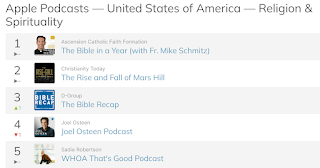
Ironically, the podcast has been a sensation of its own. Today it's ranked #2 in religion podcasts in the US. This probably says something about our our collective desire to hear grizzly tales of others' demise. It probably also points to how widespread these problems are in the church. I'm guessing it appeals to a lot of people who would like to understand a conservative brand of Christianity that prides itself on fidelity to Scripture but puts up with a bully in the pulpit. Probably all of these reasons. (As a side note, it's in very interesting company on the top 5!)

I've listened to The Rise and Fall in part because of its popularity. As an educator and lover of the church, I want to be in the loop about what people are hearing and how they are processing. If you've listened to at least part of the series, how has it personally challenged you? Leave me a note in the comments below.

Personally, I've been sobered by what well-meaning people will tolerate when a strong personality is at the helm. The podcast has given us much to lament. It renews my appreciation for institutional structures that have rigorous checks and balances in place. It's also a reminder that character matters a whole lot. For Driscoll, his popularity became the "proof" of his effectiveness and the "fruit" of "his ministry" -- but how many of those metrics could be traced to people who tuned in because they were incredulous? Just because people are listening, that doesn't mean the teaching is sound. The Old Testament prophet Jeremiah warned against false prophets who told people what their itching ears wanted to hear (Jeremiah 6:14).

If the podcast series has left you disillusioned about the church, a good next step might be to read Scot McKnight and Laura Barringer's book, A Church Called Tov (tov is the Hebrew word for "good"). It's on my short list of books to read next. McKnight and Barringer write about how to cultivate a healthy church culture where stories like this one will not keep happening. May the overwhelming popularity of this podcast awaken the church to stop tolerating abuses of power and instead cultivate communities marked by faithful and humble service!

Monday, October 11, 2021

Thankful and Not-So-Thankful: Reckoning with Our North American Legacy


Imagine this: 

You are a young mother nearing her due date living just outside of Seattle, Washington, but you fear going out in public. You know that if you give birth in a hospital, the US Government will likely confiscate your newborn and put it up for adoption. You want your baby. You are prepared to love and nurture it in your family home on the land of your great grandparents.

Sound far-fetched? 

This happened with regularity in my lifetime, in the 1970s. I learned about this travesty by listening to a children's audio book as we traveled this summer. I Can Make This Promise, by Christine Day, is the story of a girl who discovers that her mother was put up for adoption at birth, even though her birth mother wanted her and was prepared to care for her. Simply being "Indian" and unmarried resulted in the confiscation of her child. Although this particular story is fictional, it is based on history.

Imagine this:

You are a young family in British Columbia, raising your children in the community where your parents and grandparents and their parents and grandparents have always lived. One day, police arrive and take your children by force, citing the need to educate them properly. They are taken to a residential school run by the Church, where they are forced to  cut their hair, wear a uniform, and speak only English. They never return home -- not for holidays or funerals. You never hear from them again. You suspect that they are dead, but you are told nothing.

Sound far-fetched?

This happened with regularity in my Dad's lifetime, throughout the 1900s as late as the 1990s. I mention my Dad because he was born in the small town of Enderby, British Columbia to recent immigrants from Europe who spoke broken English. Just 90 minutes away was one of Canada's largest residential schools, which boasted 500 students in the 1950s and operated until after I was born. You might have seen the Kamloops Indian Residential School in the news this summer, when 215 unmarked graves were discovered there, most of them children.

Before her death, my grandmother told me a story about my Dad's birth, when the nurses whisked him away to perform an elective surgery without so much as asking for her consent. She had no intention of circumcising him because in Europe only Jews practiced circumcision (keep in mind that this is on the heels of WWII, when circumcision could be a matter of life or death). That was bad enough, but if she had been a Native American, she may never have have seen him again. My own father could have grown up in a residential school. 

Stories from these schools are nauseating -- regular beatings and repeated rape by residential school staff, starving children as punishment, and a stated policy to "kill the Indian in the child." This happened in North America. This happened in living memory.

Having recently moved from Canada to the US, my holidays are still feeling jumbled. Today is Thanksgiving Day in Canada, but Indigenous Peoples Day in the US. So today, on Canadian Thanksgiving, I'm reflecting on things that I am thankful and not-so-thankful for in relation to the history of indigenous peoples.

  • I'm thankful for my students at Prairie College (Three Hills, Alberta) who studied the history of residential schools and presented their findings to our class. You can learn more about the important work of Canada's National Centre for Truth and Reconciliation on their website.
  • As painful as it was, I am thankful to have had my eyes opened to the darker side of North American history, whose effects are still felt today.
  • I'm thankful for growing awareness of this issue, which creates space to grieve together and imagine a different future.
  • I'm not thankful for the role the church played in the confiscation of "Indian" children in the US and Canada. Mostly well-meaning folks perpetrated cultural genocide, seeing their own way of life as superior and failing to recognize how the gospel is good news for every culture, not just their own.
  • I'm not thankful for how church leaders were able to abuse children with impunity for so long. Lack of accountability put thousands of children at risk, and the generational effects of that trauma on survivors are still being felt. 
  • I'm not thankful for decades of cover up in white spaces that has continued to silence the voices of indigenous people as they cry out for justice.

Reckoning with our shared history is no easy task. Both the US and Canada have a legacy of violent oppression toward indigenous peoples. Most difficult to swallow is the church's role in that legacy. I am not equipped to outline all the ways this has been expressed, but these snapshots offer a glimpse of what I've learned in recent years.

I leave you with this new song by my friend, Brian Doerksen. Brian lives in British Columbia (and worked with me at Prairie College). In the wake of this summer's discovery of unmarked graves in Kamloops, Brian wrote this song. He recognized the need for us to sit with this hard news, to feel its sorrow, and to weep with those who have been weeping for generations. I'm thankful for his courage.


Friday, December 20, 2019

Podcast Tour: Bearing God's Name: Why Sinai Still Matters

I've had several opportunities to interview about Bearing God's Name across a wide range of venues. As the interviews go live, I'll keep adding the links below. Choose your favorite and give it a listen!

Podcast Interviews

The Naked Bible Podcast with Michael Heiser (74 minutes)
We discuss the nature of Old Testament law, the heart of biblical theology, and what it's like to be a woman in the world of biblical scholarship.
Heath in Pursuit with Heath Hollensbe (48 minutes)
This was such a fun interview! We talk about the Ten Commandments, the beauty of the Old Testament, the power of liminal space, how to find Jesus in the Old Testament, and more.
The Shaun Tabatt Show (29 minutes)
Shaun asked such great questions! We talked about the relevance of the OT and what we miss if we "unhitch" from it, the uniqueness of God's personal name, the power of liminal space, the literary structure of Exodus, the Ten Commandments, my favorite Hebrew word, the meaning of Exodus 20:7, and how it relates to the Lord's Prayer. I also tell the story of some miracle french bread.
Disrupters Podcast with Esau McCaulley (48 minutes)
Esau and I discussed my journey into biblical studies as a woman and consider ways to encourage women and minorities in scholarship. I tell stories of how I was disruptive as a kid. I claim that the lists of names in Numbers are very good news. We also touch on the book, in particular reconciling my very positive view of the Torah with Paul's view. Esau wants you all to know that he started reading my blog long before I was famous. 
Food Trucks in Babylon (Western Seminary) with Patrick Schreiner and Todd Miles (51 minutes)
In this interview I show how uncultured I am when it comes to eating out, and I make my best attempt to bridge to the disciplines of theology and New Testament studies. This was a good conversation about what's at stake when we "unhitch" from the Old Testament.
Bible Project with Tim Mackie and Jon Collins (56 minutes)
Join us as we talk about the Name Command (Exodus 20:7), how the Israelite high priest is a visual model of the role of Israel as a nation, how this relates to the temple being the "place of the name," and how God's name is profaned and sanctified. We touch on the Lord's Prayer, John's vision in Revelation, and the way the my book breaks new ground in publishing. As a bonus, we also talk about how we met and how Ray Lubeck influenced all three of us. Little known fact: Jon Collins was one of my first students!
OnScript with Matt Lynch (55 minutes)
We discuss what's new about the new covenant, what it means to be God's treasured possession, and how to interpret the command not to "take" God's name in vain. I talk about the influence of my mentor, Daniel Block. We also do a "speed round" in which I answer the question, "How do you solve a problem like Maria?"
The Outpost with Josh McNall


Radio Interviews

Prairie Radio with Dan Callaway (17 minutes)
We discuss the release of Bearing God's Name and some of its big ideas.
Songtime Radio with Adam Miller (27 minutes)
We talk about why the Old Testament is essential for Christians and how we can find grace in it.
Remnant Radio with Josh Lewis and Michael Roundtree (66 minutes)
We talk about the OT law and how it applies to Christians, how different denominations count the 10 commandments differently, what's new about the new covenant, and how Jesus relates to the law.

Wednesday, June 19, 2019

Book Award "Interview"

Richard Middleton presenting me
with the R. B. Y. Scott Award
(Photo: Shannon Stange)
Last week I was interviewed by Dan Callaway for Prairie Radio. You're welcome to listen in on the interview as we talk about my background, how I ended up at Prairie, and what I'm working on this summer. The interview was so much fun that I decided to continue it right here on my blog...

In this post, I interview Dr. Carmen Imes on the R. B. Y. Scott Award she received from the Canadian Society of Biblical Studies for an outstanding book in Hebrew Bible. (Wait, isn't that you? Yep. So you're interviewing yourself? Um, also yes.)

Carmen, how did you feel when you learned you were receiving this award?
Genuinely shocked. If you read the list of past recipients, you'll see that I'm joining an all-star list of Canadian biblical scholars. 
Why was that so surprising?
When you go through the entire process of producing a book like this, you've seen so many drafts dripping with red ink that it can be hard to imagine that what you have to say is said well enough for others to appreciate. Don't get me wrong. I like the book. I'm convinced by my argument. But each time someone in the wider world finds it helpful I am surprised and delighted all over again.
What was the occasion, and who presented you with the award?
The award was announced at the reception of the Canadian Society of Biblical Studies annual meeting. This year's meeting was held at the University of British Colombia. The incoming president of the society, J. Richard Middleton, presented the award.
Why was your book chosen?
I'll let the anonymous judges answer that question.In the words of one reviewer, “It is a persuasive, careful, and enlightening book, with implications far beyond its apparently limited subject.” 
Another reviewer said the book “shows remarkable engagement of the question, displaying a breadth of scholarship and very fine command of several methodological approaches (lexical, historical, literary, and metaphorical). The thesis is argued with logic, clarity of expression, and judicious treatment of opposing views. A long-overdue reassessment of a crux interpretum. It is deft, compelling, and convincing in the presentation of its conclusions. . . . .  its expression is clear: meticulous and well argued, with creativity of expression (even some drawings!) and the amassing of supportive ANE and biblical texts and parallel metaphors. The work of a new scholar, it shows maturity of thought and expression.” 
Did you get a plaque or something you can put on your wall?
No, but I did get a check for $500, which is far more useful.
If someone wanted to buy your book, where could they do so?
Bearing YHWH's Name at Sinai is available on Amazon or directly from the publisher. Right now Eisenbrauns is offering a celebratory 30% off because of the award. Use the discount code NR18 to take advantage of the sale! 
Are you busy writing another book?
Four, actually. I'm especially excited about my next book, which is coming out in December with InterVarsity Press. It's called Bearing God's Name: Why Sinai Still Matters, and it's already available for pre-order. I've reworked all the key ideas in my (award-winning!) published dissertation so that normal people can read it. Dissertations are technical for good reason, but my goal was to make my research more accessible for a wider audience. You can read about my other projects here. I currently have two book projects in the works on the Psalms and I'll soon start another one on Exodus.
What inspires you to keep writing?
I have always enjoyed writing, even as a child. As a professor, I see writing as a way for transformational ideas to spread beyond the classroom to a much wider audience. Books have changed my thinking in so many areas and fueled my passion for biblical studies. I hope that my books do the same for others. 

Saturday, April 14, 2018

David's Epic Fail

Prairie Chapel (Photo: Crystal Gillespie)
It's a story we've all heard before: David's notorious rendezvous with Bathsheba. But how well do we actually understand the dynamics of the narrative?

I was asked to preach on 2 Samuel 11-12 in chapel at Prairie College, and I soon found that my questions far outnumbered the answers.

  • Why is David not with his men in battle?
  • Why is he getting up in the evening?
  • Why can David see Bathsheba bathing?
  • Does Bathsheba want to be seen bathing?
  • Is it normal to bathe outside?
  • Is there indoor plumbing in Jerusalem during David's reign?
  • Is Bathsheba bathing at home or in a public pool?
  • How is a ritual bath different than a regular one?
  • Is her bath 7 days after the beginning of her period? or 7 days after it ended? (This determines whether she could have conceived during a one-night stand. See Leviticus 15:19 and 18:19)
  • How could David not know Bathsheba? She's married to one of his 30 mighty men, and the daughter of another mighty man.
  • How does she feel when David summons her?
  • Is David's primary motivation sexual or political?
  • When she sends words to David that she is pregnant, what does she hope David will do?
  • Does Uriah know what has taken place?
  • Is David trying to cover his guilt? or save face?
  • Why does David send Uriah a gift? Is this his way of buying Uriah's silence?
  • Is David trying to catch Uriah in a ritual infraction? Normally, David's men are prohibited from sexual intimacy during a military campaign (1 Sam 21:4-5; Deut 23:9-11).
  • Does David think that Uriah knows his wife his pregnant? or that he doesn't know?
  • Does Uriah guess the contents of the letter he brings to Joab?
However we answer these questions, what becomes crystal clear is that David thinks he has all the power. He is like a master chess player, shrewdly planning his moves so that his opponents are left with no way out. And who is his opponent? A member of his own team. It reminds me of another king of Israel who spent all his royal energy chasing a successful commander from his own army all through the wilderness. Doesn’t it? What has happened to David that he should become so much like Saul? Perhaps he feels Uriah is a threat. We’re not told. At the very least, Uriah stands in the way of what David wants. And David has come to believe that because he has power, he can have whatever he wants, when he wants it. Is David feeling like ‘less of a man’ because he’s not on the front lines fighting? Does this conquest of his neighbor’s wife and life restore his sense of power? If so, it shows us how twisted David’s thinking has become.

Let’s be clear: This is not about David’s sexual needs. He has 7 wives and multiple concubines by this point in the story. If he was “in the mood,” he had plenty of honorable options. David is living in a dream world of his own making, a world where he’s above the law and can have whatever he wants. To make matters worse, his men are on the front lines, far from the comforts of home and wife, fighting his battles. 

The hinge of the narrative is when God takes a page from David's playbook by sending Nathan to him. Nathan is shrewd enough to know that he must awaken David’s conscience before his rebuke will hit home. How does he awaken a king whose conscience has been lulled into delusional thinking? He tells a story. It works. In response, David unwittingly pronounces his own sentence. And Nathan goes for the jugular: “YOU are the man.”

David has a lot to say in the Psalms about those who accuse him falsely. But this time the accusation is painfully true. David has failed abysmally. David knows he is in the wrong. This is where his story becomes an example for us to follow. His response is just two words in Hebrew, “I have sinned against YHWH.” He offers no defense. No equivocation. He’s been caught in the act.


I can imagine the responses he might have given: But she shouldn’t have been naked where I could see her! But Uriah should have gone home to his wife and I wouldn’t have had to have him killed! But the Ammonites killed him, not me! David offers none of these excuses. He simply takes responsibility.

With every failure we stand at a crossroads. We can hedge and whine and deflect and give excuses, shifting the blame, or we can take responsibility, repent, and become reconciled to God.

David’s more lengthy confession is found in Psalm 51. This psalm is his cry for mercy. With no small irony, David asks God to bathe him: “Wash away all my iniquity and cleanse me from my sin! . . . Cleanse me with hyssop and I will be clean; wash me, and I will be whiter than snow.” 

May each of us have the courage to face our failures, own our sin, and receive God's mercy.

You can listen to my entire message here.

Friday, December 23, 2016

Naked Bible Podcast Interview

While I was in San Antonio for the Society of Biblical Literature meetings in November, Dr. Michael Heiser interviewed me for his "Naked Bible Podcast." The Naked Bible is among the top 25 Christian podcasts today, and I was honored to contribute to it. Dr. Heiser, a specialist in Hebrew Bible and Semitics, is known for his work on the 'Divine Council' in the Old Testament and his podcast is making biblical scholarship accessible to laypeople. (I highly recommend his introductory podcasts on the Divine Council!)

In the last 20 minutes or so of Episode 131, Dr. Heiser and I discuss my dissertation, which will come out in print in the BBR Supplement Series, published by Eisenbrauns. I have not yet blogged about my dissertation, so if you're curious about my academic work, this podcast is a great way to find out more. As a special bonus, the beginning of the podcast features Dr. Heiser's interview with Dr. N. T. Wright about his recent book entitled, The Day the Revolution Began: Reconsidering the Meaning of Jesus' Crucifixion. Reverend Wright's work has been profoundly helpful to me personally and is setting the trajectory for the direction of scholarship for decades to come.

I hope you find it helpful!