Saturday, December 26, 2020

Best Books of 2020

As is my custom, I'm writing to tell you about the most important books I read this year. The only criteria are that I read them in full and found them well written, helpful, and worth sharing. I read 45 books this year, ranging from youth fiction to published dissertations. Many of them were very good! These are the books I hope you will read, too.

Best Books Every Christian Should Read:
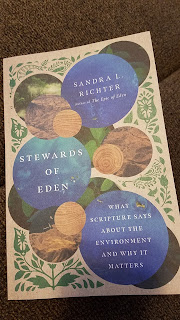
These first two are tied for best overall book I read in 2020. Both issue a timely and illuminating message for the church, and both are written in such a way that non-academics will be able to read and appreciate them. I blogged about both of them earlier this year, so I won't repeat myself here, except to say that both of them show us what's in plain sight in the biblical text that the church has often missed.

Stewards of Eden by Sandra Richter weaves solid biblical exposition with current case studies in environmental stewardship. It's a challenging and illuminating book.

Reading While Black by Esau McCaulley demonstrates the tremendous value of reading the Bible with and for the Black church. His book cuts to the heart of issues facing society today and calls us to a faithful, faith-filled response. Reading While Black is the Christianity Today best book of the year 2021 for Beautiful Orthodoxy.


Best Academic Books:

The Liberating Image 
by J. Richard Middleton is a consistently careful and thought-provoking explication of Scripture. Middleton never feels cliché or shallow, and even where you disagree, you'll find him thought-provoking. I'm grateful for his insight.

Exclusion and Embrace by Miroslav Volf came highly recommended by several friends. It is a dense read that took me a few months to finish, but his penetrating analysis was worth the effort. Volf issues a powerful call to self-giving love and charts a path for reconciliation and restoration of relationships.


Best Books for those who Write and Teach:

Adorning the Dark
by Andrew Peterson is a beautiful book about the creative process. Peterson is a songwriter whose music I discovered during quarantine, and fantasy novelist whose stories carried us through this dark year (see below). Although I don't write songs or novels, Adorning the Dark expressed powerfully the challenges and joys of any type of creative work shared with the public (including visual art and writing books of any kind). I loved it.

From Research to Teaching by Michael Kibbe releases in 2021, but I jumped at the chance to read it early and couldn't put it down. It would make the perfect gift for a recent PhD graduate -- seasoned with wisdom and practical help for navigating the transition to teaching. 


Best Books for those who Preach:

A second edition of The Art of Preaching Old Testament Narrative by Steve Mathewson is releasing in April 2021. Steve is a good writer, but more importantly an able interpreter of biblical narrative who offers practical suggestions for engaging your audience. I expect I'll turn to this again and again, not just for preaching advice, but for illuminating exegesis.

Simplify the Message, Multiply the Impact by Talbot Davis distills his many years of preaching experience into a focused model for sermon preparation. Talbot is an expert at connecting with people where they are. He preaches engaging and clear messages without notes, and he will show you how to do the same. Whether you're preaching to a full house or to a camera lens, Talbot will help you get your audience and get the message across.


Best Fiction:


The Wingfeather Saga 
by Andrew Peterson was a gift in this brutal year. My 12-year-old and I spent long evenings at home listening to Peterson read his stories on YouTube. His brilliant writing is matched by his incredible skill in voicing each character. The stories are full of high adventure but offer deep insight into human character. 

Killing a Messiah by Adam Winn is an engaging work of historical fiction about Jesus' last weeks. He weaves a plot that ushers readers into the political intrigue of first century Palestine. The storyline is complex and believable. A great read to save for Holy Week.


Thursday, December 10, 2020

Celebrating YOU!

It's been a year of all years in so many ways. Although I could list the many losses, disappointments, and kicks to the gut, today I'm in the mood to celebrate.

Today Bearing God's Name is one year old and I'm celebrating YOU, the readers who have made this a year to remember!

In the first six weeks on bookstore shelves, I had a chance to speak a handful of times. After the pandemic hit? Months' worth of speaking engagements evaporated off the calendar. Everyone says this was the hardest year of all to launch a book.

But YOU made it amazing!

So many of you have taken the time not only to buy and read the book, but to talk about it with your friends, to recommend it to your pastors and your small groups, to share about it on social media, and to post reviews. You've preached on it and used it in your classes. You've invited me to speak via Zoom to your students and congregations and ministry staff, and you've written to tell me what it has meant to you. I've been blown away by how generous and thoughtful my readers -- including YOU -- have all been. I've gained so many new friends around the globe. What a joy it's been!

In the midst of a pandemic, with so much uncertainty all around, you have used your voices to get the message out that the Old Testament still matters. You've helped Christians around the world re-discover their identity and vocation as the people who bear God's name. Thank you!!

A year later, Bearing God's Name is still hanging out at at the top of the charts. Incredible!


Thanks to you . . .

  • enough copies sold that we're on our 6th printing!
  • over 200 of you left ratings on Goodreads!
  • over 250 of you left reviews on Amazon!
  • Bearing God's Name is repeatedly ranked in the top 10 in Old Testament Bible Study, Christian Ethics, and Bible History and Culture on Amazon. 
Only readers can make these things happen!

I'm also grateful for all the podcasters, bloggers, magazines, and others who have helped get the word out:

  • 25 podcast and radio interviews
  • featured in Christianity Today, Faith TodayBible Study MagazineLibrary JournalBible Today, the Journal of the Evangelical Theological SocietyThemelios, and Servant Magazine
  • Jesus Creed Old Testament Book Award for 2020
  • Finalist for the Biblical Foundations Award in Old Testament from Midwestern Baptist
  • Finalist for the IVP Academic Reader's Choice award (just 2 months after release!)

Authors can write, but it's readers who determine its success. I am profoundly grateful for all of you. You ROCK!


Saturday, November 28, 2020

Pandemic Advent: Restoring Hope

Advent begins tomorrow. 

Usually this weekend marks a transition to the bustle of holiday events -- school parties, work parties, family parties, neighborhood parties, concerts, dramatic productions, travel, shopping. For most of us, the 2020 advent season will be much lower key. Concerts are cancelled. Many stores are closed. Parties are limited or not allowed. Travel is complicated.

Perhaps this year, we will finally catch the spirit of Advent.

As one devotional resource puts it, "Advent is a season of expectant waiting, tapping into the sense we have that all is not well, the longing for the world to be made right again. It's a season for restless hearts and people weary of a broken world who want, with all our being, to know there's more than this." (Seeking God's Face: Praying with the Bible Through the Year, 23)

If ever there was a time when we were collectively aware that all is not well, it's now. We long to break free from the dark clouds of the pandemic that shadow every empty square on the calendar.

This year I had the honor of contributing to an Advent devotional for Christianity Today, along with John Goldingay, Fleming Rutledge, Vincent Bacote, Ken Shigamatsu, Thabiti Anyabwile, Rich Villodas, Marlena Graves, and others. You can access it freely using the links below. Join us as we consider together the HOPE of Jesus' coming and of God's transformative power.


This year, more than ever, we know how much our world needs this.

If your year has been like mine, then you are acutely aware of your own need for transformation. The fallout of disrupted plans and routines this year has exposed places in our hearts where we have clung to the wrong things for security.

At minimum we are tasting the bitter tears of grief mixed with anticipation of Christmas. This year won't be the same. There are empty seats at the table, unfulfilled hopes, lonely hearts, and cancelled plans. May our disappointments turn our collective gaze to the author of hope. In him alone will we find strength for a new year that offers little certainty.

Week 1

Week 2

Week 3

Week 4

May the first coming of our king bolster our hope in his imminent return to make all things new!

Tuesday, October 6, 2020

The Influence of John H. Walton on Biblical Studies

If you looked at my academic transcript, you might notice that although I studied at Wheaton College, I never officially enrolled in a class with John Walton. But if you concluded from this that he hasn't influenced me, you'd be sorely mistaken. Sitting in my classes or reading what I've written or what I assign my students to read, you'd see that Walton's influence is pervasive. I consider him one of my most influential mentors. 

Actually, I did sit in on one class with Walton as a PhD student, his "Ancient Near Eastern Backgrounds." That class opened up a whole new world for me--the ancient world of the Bible. Walton modeled for us how to read Scripture well by understanding the ancient context in which it was written. He repeatedly insisted that the Bible was written for us, but not to us. The benefits of access to written Scripture are enormous, but if we think that the Bible addresses us directly, we are bound to misunderstand its claims. 

I want to be in the ZOOM where it happens . . .
(photo: C Imes)

One way to measure the influence of John Walton is by the work of his students. In August I had the joy of joining a Zoom call to surprise Walton with a Festschrift in his honor. The German term Festschrift means "celebratory writing." In this case, a group of more than 20 former students of Walton who are now biblical and theological scholars themselves contributed essays in his honor. The volume. published by Pickwick, is finally available! It's appropriately titled, For Us, but Not To Us: Essays on Creation, Covenant, and Context in Honor of John H. Walton.

John was totally surprised. We spent 45 minutes talking about his influence on us as scholars and as people. A few themes emerged. In addition to the ways he trains his students to do rigorous work and his commitment to accessible writing that will benefit the church at large, John is a wonderful mentor and friend. He churns out books faster than I can read them, yet he never seems hurried. He walks slowly and always has time for students. He once agreed to meet with me before 7am to discuss a paper I was writing. He and his wife Kim are famous for having students in their home, and he has a special place in his heart for the children who tag along. Each year he invites former students to have breakfast with him at the SBL annual meeting. He foots the bill and wanders happily from table to table, visiting with us and asking us about our work.

John Walton thanked us for honoring him.
Adam Miglio is the masked man in the background.

I'll never forget the time I encountered "Dr. Walton" in the hallway and he told me it was time to start calling him "John." Although John has never supervised a doctoral student, he has actively and deliberately invested in the next generation of scholars, treating us as colleagues and friends. We hope that our volume shows the fruit of that generous investment.

The title of my essay shows the indebtedness of my thinking to Walton. In the vein of his famous "Lost World" series of books, I've called it “The Lost World of the Exodus: Functional Ontology and the Creation of a Nation.” In it, I argue that Exodus is a creation story -- not so much the material creation of something from nothing, but the bestowal of order and function on the Hebrew people, making them a new nation. Here's a sneak peek: 


It's been almost two years of keeping this secret, so I'm delighted that we can finally share it with the world! Special thanks to Adam Miglio, Caryn Reeder, Kenneth Way, and Joshua Walton for their skilled editorial work, organization, and communication. It was an immense privilege to contribute to this project. 

Thursday, September 17, 2020

My Surprise Citizenship Story

If you've read Bearing God's Name, then you've already heard the surprising story of my citizenship. Some readers told me it even made them cry! I also tell my story in the companion videos produced by Seminary Now, and they've given me permission to share the clip with all of you here. 


This is a taste of the content you'd get if you watch the whole series. We recorded videos to go with each chapter of the book. Each video lasts less than 10 minutes and they work with or without the book. Best of all, subscribers get access to all of the great teaching videos at Seminary Now. You can learn from John Walton, Scot McKnight, Brenda Salter McNeil, Esau McCaulley, David Fitch, and many more!

Is your small group looking to level up their learning?
Do you want to stop scrolling and start being intentional about what's feeding your brain?
Seminary Now is a great way to do that. I'd love to know which videos you decide to watch.

Thursday, July 23, 2020

Lament's Crucial Role in the Ministry of the Church

In my last post, I discussed three misconceptions about lament. Now I'd like to highlight four reasons why lament is essential to the ministry of the church. I'll be drawing on the excellent work of a Ugandan author, Emmanuel Katongole, catholic priest and professor at Notre Dame. His book, Born from Lament: The Theology and Politics of Hope in Africa, is one of the best on this topic.

Did you know that laments outnumber any other type of psalm in the Bible? This may come as a surprise because most of us rarely hear lament psalms in church. The truth is, they make up 40% of the book of Psalms! (See Katongole, 104)

Not only that. By my count almost 25% of the psalms include "imprecatory" language, which is when the psalmist prays for God to bring harm on his enemies. For reasons I'll share below, I believe that these psalms are for Christians, too. Why can we not get along well without lament? Here are four reasons:

1. God's character is the basis of lament.
As Emmanuel Katongole reminds us, 
"At the heart of Israel's social, political, and religious life is the central conviction and experience of Yahweh as a saving God. Yahweh is not only the creator of the world and sovereign ruler of nations; Israel is God's chosen nation, which, through a covenant relationship, enjoys God's special favor and protection. For biblical Israel, therefore, safety and security are found not in military strength or wealth or technological advantage, but in the covenant relationship with Yahweh. Thus in the moment of crisis, because they believed that God can, should--and indeed, would--do something to save them, they complained, mourned, wept, chanted dirges, and cursed." (Born from Lament103-104)
This point is especially true of imprecatory psalms (the ugly, violent-sounding ones). If we cut out the violent parts of the psalms, we deny part of God’s essential character. YHWH’s self-description in Exodus 34:6-7 highlights divine mercy, but it also says of God: “forgiving iniquity and transgression and sin, yet by no means clearing the guilty, but visiting the iniquity of the parents upon the children and the children’s children, to the third and the fourth generation” (NRSV). The God of the Old Testament is YHWH, the covenant-making and redeeming God who rescues and saves, who demonstrates love and who takes sin seriously.

Would we prefer it otherwise? Would we prefer a world where rampant evil goes unchecked? Where corrupt despots get rich by oppressing others? Would we prefer for people to be allowed to destroy each other’s lives and reputations by spreading false rumors about them with impunity? Or are we grateful that God wields his power in loving ways by putting a stop to injustice? 

If we believe that God takes sin seriously, then we can accept the Bible's invitation to pray that he will act to bring the unrepentant to justice. 
2. Jesus modeled lament.
The book of Hebrews tells us that even Jesus lamented. "During the days of Jesus' life on earth, he offered up prayers and petitions with fervent cries and tears to the one who could save him from death, and he was heard because of his reverent submission." (Hebrews 5:7)

Jesus' tearful prayers did not disqualify him. He was still "without sin." And here the author of Hebrews says that his lament was evidence of "reverent submission." Remember that on the cross Jesus prayed Psalm 22:1: "My God! My God! Why have you forsaken me?" This, too, was a faithful way to pray in the midst of his darkest hour. If Jesus is our model, then lament is an indispensable part of faithful discipleship.
3. Without lament, our worship spaces are less safe.
We live in a world full of brokenness at every level ranging from international to intensely personal. The people walking through our doors (or tuning in) on a Sunday morning are the same people who are enduring hardship throughout their week. If our church services are mostly a pep rally or an exhortation to "trust more," and fail to reckon honestly with brokenness, we essentially send people elsewhere to find solutions to their problems. Introducing lament in corporate worship creates space to be real -- to bring our pain to God and cry out for healing.

When we don't acknowledge pain in church, we get less of God and less of each other. As my friend Amy Oden recently put it, "I find more of God when I am most angry with him." Expressing our true emotions in his presence opens us up to meet him in deeper ways. It also opens us to each other.
Why would we deny this opportunity to our congregations? I can think of one reason why: FEAR. We fear that if we create space for lament, people will be offended or discouraged. But in reality, the opposite happens. By restricting our prayers to praise, we deny people access to the full message of Scripture. We lose people who think that their lives and emotions are too complex for the church. If your congregation is likely to be offended by lament, then they have not embraced the whole counsel of Scripture. Teach them what the Bible says about it. Cultivate a space where people can pray how they feel and in so doing discover that they are not alone.
4. Lament is the foundation of social justice.
The consequences of neglecting lament go beyond our local congregation. Not only will individuals not feel that the church is a safe place to bring their whole selves, but the church will lose its ability to impact the wider culture by addressing societal brokenness. 
Katongole explains, "In the end, the loss of lament signals of loss of passion for social justice. A church that has lost its nerve to lament before God will likely lack the nerve to confront oppression and be prone to support the status quo. But that is also the reason why an attempt to recover the language of lament is about solidarity with those who suffer" (183).
The historic failure of white evangelicals to lament racial injustice unveils the root of our problem--we see racial discrimination as something happening to somebody else and being done by somebody else. By identifying with neither the perpetrators nor the victims, we maintain distance. As long as we are distant we cannot be part of the solution. Unless we see crimes against people of color as crimes against our fellow humans, we excuse ourselves from taking action.  
If we cannot corporately bring to God those problems that overwhelm us, where will we bring them? If we are not comfortable creating space for our brothers and sisters to pray and weep, how can we even begin to work with them to find solutions? If their grief does not become our own, on what basis will we build unity? Where else will we find the resources to address whatever threatens to undo us? The first step in imagining a different kind of future is to grieve together and to grieve deeply over what has been done and what is being done.
If we want to (1) know God, (2) follow Christ, (3) minister to broken people, and (4) make a difference in a broken world, then lament is essential. On its own, lament is not enough. It is not the whole answer. But without it, we lose our grip on the resilient hope of the gospel.

------

For more on lament, see my interview with Remnant Radio. 
For more on imprecatory prayer, see my blog post for the Political Theology Network.

Monday, July 20, 2020

Announcing . . . Companion Videos for 'Bearing God's Name'

I've been holding in a secret for almost six months (which might be a record for me). I've dropped a few hints, but wasn't allowed to say anything official until now. TODAY is the day I finally get to tell you about it!

Back in January, I was invited to fly to Chicago to film a video series based on my latest book. We filmed the entire series on the campus of Wheaton College (where I got my doctorate) in a single, grace-filled day. It was surreal to return to the very place where I discovered the truths that I share in Bearing God's Name: Why Sinai Still Matters. It was so meaningful to be on site, rehearsing the content that has captured my attention for almost 10 years, so that I could share it with all of YOU. I'll show you the building where it all happened.


We recorded 10 short videos, one for each chapter of the book. If you're not a reader, these videos will convey the essential content of the book. If you've already read the book, these videos will reinforce the key ideas and help you share them with your small group. 

You can check out the trailer here.

As a special bonus, I'll even take you with me to the Marion Wade Center on the campus of Wheaton College, where you'll see the desk on which J. R. R. Tolkien wrote Lord of the Rings and the wardrobe handmade for C. S. Lewis and his brother by their grandfather. (If you've already read the introduction to Bearing God's Name, you can probably guess how this relates to the book!)

Beginning today, you can access my video series and many others for personal enrichment or to explore with your small group. The project was envisioned and executed by an exciting new initiative hosted at Northern Seminary called Seminary Now.
 
Seminary Now is a new, on-demand streaming video platform that provides exclusive Bible, theology, and ministry courses from today’s leading teachers, ministry practitioners, and authors.

Like Netflix or Masterclass, subscribers get unlimited access to all courses—available on smart phone, tablet, and TV devices. You can earn also a certificate from Seminary Now by completing a learning track.

Visit SeminaryNow.com for a free preview of the new course offerings. Here's the best part: when you join, you can not only access my videos, but also every other course on the website. Join today and access exclusive content from yours truly, Scot McKnight, John Walton, Brenda Salter McNeil, Ruth Haley Barton, and many more. At checkout, receive a limited-time 15% discount (pay only $17/month or $153/year) with coupon code TAKE15. Or check out the group pricing for your staff and lay leaders.

This is a fantastic opportunity for an individual, couple, or small group that wants to dig deeper into Scripture and learn from some of today's top thought-leaders.

Please forward this opportunity to others who you think would be interested in this new resource and like and share SeminaryNow.com on social media: Facebook, Instagram, and Twitter.